



We’re long past calling ourselves beginner birdwatchers, though we still hesitate to say we’re professionals. Yet when I count how many years we’ve been doing this seriously, I was surprised. Birding became more than a passing interest when we lived in Quito, Ecuador, surrounded surrounded by cloud forests and rich bird diversity. That was back in 2013! We had always been naturalists, casually using binoculars to observe wildlife, but Ecuador transformed our curiosity into a full-blown obsession. Thank you to my birding muse, the Violet-tailed Sylph.
Even so, we’re not experts. We rarely ID birds solely by their calls and we don’t always know every species we see. When facing a myriad of sparrows or gulls, I have been known to throw up my hands in failure. But we’ve honed our skills on familiar trails, getting to know the common birds, and slowly building our list of easily recognized ones. What we do have is a reliable set of tools that makes birdwatching more enjoyable, productive, and immersive.
It Starts With Affordable Birding Binoculars
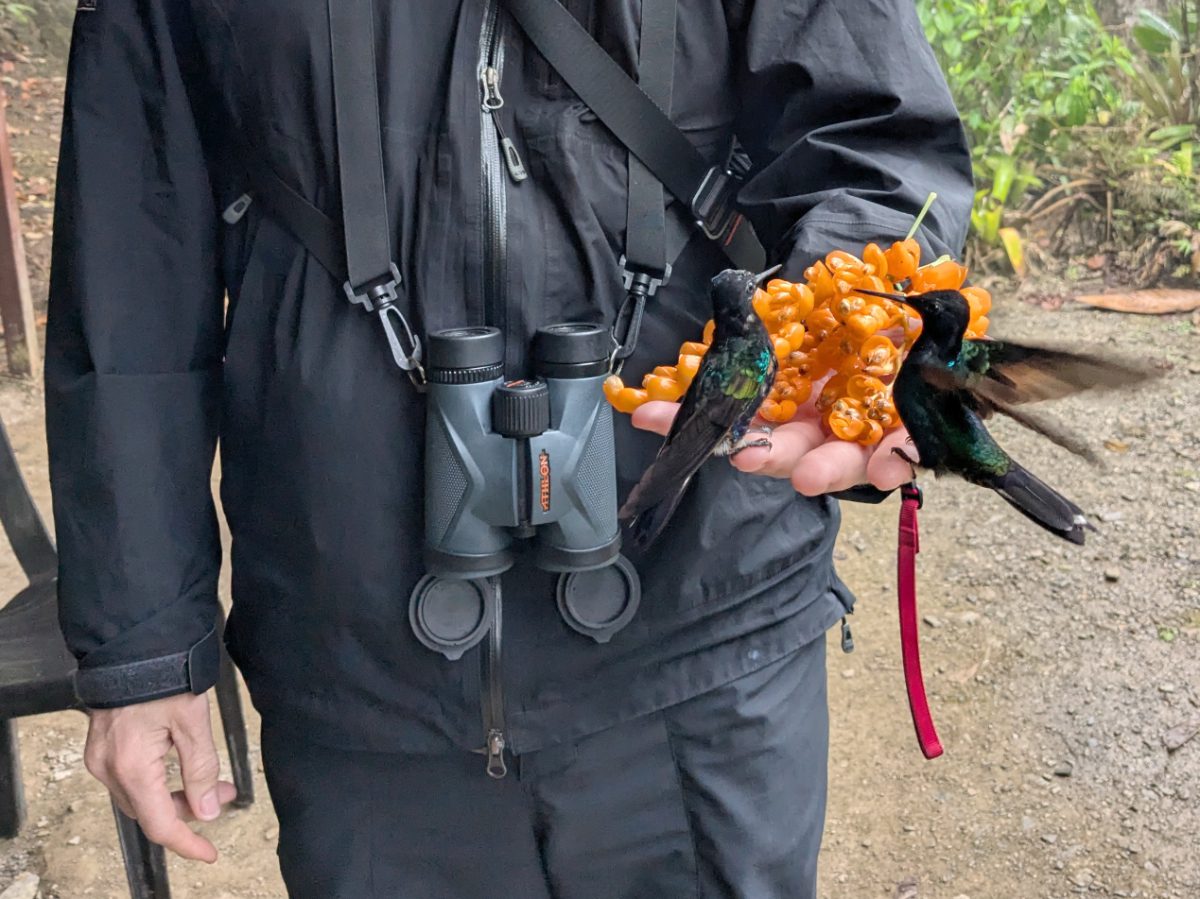
Binoculars are the essential birdwatching tool. After testing the incredible Swarovski AX Visio last year, we fell in love. But let’s face it—owning a pair is still a distant dream. Until then, we use our trusted Athlon Midas 8×42 binoculars.
While they don’t match Swarovski’s pristine clarity, they offer impressive performance at a much more accessible price point. If you’re just getting into birding and aren’t independently wealthy, these are a solid choice. If you’re confident in your ability to quickly spot and track birds in dense canopy or distant perches, consider upgrading to the Athlon Midas 10×42, which gives you a little more reach.
Binocular Harness
One of the first upgrades we made? Ditching the neck strap. If you’re serious about birding for hours on end, a binocular harness is an ergonomic game-changer. Rather than leaving your neck sore and tired, a harness distributes weight across your shoulders and back, keeping your hands free and your binoculars close.
Ours is adjustable to fit different body types and secure enough to prevent bouncing as we hike. With a bit of leather trim and a tactical aesthetic, it even looks good in the field. While we purchased ours at different birding lodges in Ecuador, a similar one is available on Amazon:

Apps for Birdwatching: Tools We Use in the Field
Before we ever pull out a camera, we reach for our phones. Birdwatching apps have become some of the most essential tools in our kit, especially when traveling, exploring new regions, or learning unfamiliar species.
eBird
eBird is far more than a place to keep a life list. Used thoughtfully, it’s one of the best bird identification and learning tools available.
When you open an eBird list for a specific region, it shows only the most likely birds you might encounter there. Seasonal or infrequent visitors are marked with a yellow half circle, while truly rare sightings appear with a solid red circle if you expand the list.
That context matters.
On one trail, I was convinced I was looking at a Swainson’s Thrush. I submitted the sighting anyway, adding a note explaining what I saw. An eBird volunteer reviewer flagged it and helped me work through the ID. The bird was actually a Hermit Thrush, a species I didn’t yet know.
Now, when I’m on that same trail, I know that in summer I need to pay close attention to the differences between the two—but in winter, only one of them is likely to be present. That kind of learning sticks. eBird has made me a better birder.
Important tip: Download eBird before heading out into the field. You’ll need to add regional bird lists to your database, and those downloads require a strong Wi-Fi connection for fast, reliable setup—something that’s often hard to find once you’re on the trail.
Merlin Bird ID
We use Merlin in two distinct—and complementary—ways.
First, Merlin integrates seamlessly with eBird. If you’re reviewing a checklist and aren’t sure what a bird looks like, you can tap the Merlin icon to see photos, read descriptions, and learn behaviors that help with identification in the field.
Second—and this is where Merlin really shines—we use it to listen to the soundscape. Merlin’s sound ID feature helps identify bird calls in real time.
A quick and important note: you’re asked not to add birds to eBird that were identified only through Merlin unless you can confirm them yourself. If you can identify birds by sound, you can mark them as present in eBird with an “X.”
Even so, Merlin is incredibly useful. Hearing a call identified gives us valuable clues about where to look:
A hawk or raptor? Look up, way up.
A brown creeper or woodpecker? Scan tree trunks.
A songbird? Focus on mid-canopy or edge habitat.
It turns passive listening into active observation—and often leads us straight to the bird. Like eBird, Merlin has improved our skills in the field.

Last but Not Least: Clothing for Birdwatching
Truthfully, you don’t need any special clothing to be a birdwatcher. Birding can happen anywhere—even from the comfort of your living room window, assuming you have a bit of sky, a garden, or a tree to watch.
That said, if you decide to head out into the field, we hope you’ll learn from a few of our mistakes.
Never wear white.
I was once gently but firmly told to cover up by Ángel Paz, often called the Antpitta Whisperer. My long-sleeved white birding shirt, while practical in theory, was likely to scare antpittas away.
In shady forest conditions, bright white acts like high beams from an oncoming car—it can startle or even temporarily blind birds, causing unnecessary stress. Since then, we’ve made a conscious effort to wear dull, muted colors that blend into the environment.
That’s easier said than done, especially for female birders. Recently, though, brands like Columbia have improved, offering shirts in greens and earth tones (and even black—though that’s not ideal in hot climates, since it absorbs heat).
We also almost always wear long pants and long sleeves.
Birdwatching and bugs tend to go hand in hand, and a bit of fabric goes a long way toward comfort.
None of this is a hard-and-fast rule—but thoughtful clothing choices can make you less intrusive, more comfortable, and ultimately a better guest in the birds’ world.

Wrapping It All Up: A Birdwatching Kit That Grows With You
Birdwatching doesn’t require expensive gear, expert-level skills, or perfect identification abilities. It starts with curiosity—and grows through practice, patience, and thoughtful choices. Whether it’s using apps like eBird and Merlin to learn what’s around you, choosing binoculars that fit your budget, or wearing clothing that respects the birds you’re hoping to see, every piece of your kit should support connection, not consumption.
We’re still learning. We still make mistakes. But when we spend time outdoors, nature us something new—and that’s what keeps us coming back. Wherever you are on your birdwatching journey, we hope our experience helps make yours a little richer.





Deja una respuesta