

First published on 3 de Abril de 2026 • Last updated on Abril 3, 2026
This page may contain affiliate links; if you purchase through them,
we may receive a small commission at no extra cost to you.
We arrived in Alangasí on Good Friday with our friends from Texas and Jacquie, our friend and local guide, after spending the day in Quito’s Historic Center, where we watched the well-known procession named for Jesus del Gran Poder. Needless to say, we were tired but looking forward to a smaller ceremony and celebration of Holy Week.
It would be my second time in Alangasí for Good Friday, but our friends and my husband, Scott, had never been to this small Andean town with outsized traditions. We about to experience something very different from Jesus del Gran Poder. One event urban and minutely planned, the other rural with room for surprises.
A Family Welcome to Alangasí
Our visit began at the home of Doña America. Our hosts included her daughter, María Isabela and son-in-law, Pablo.
Doña America’s tiny living room had space for three or four people to sit comfortably, but we weren’t really anxious to sit. Instead, I walked around looking at the knickknacks. I fell in love with a set of miniatures hanging on the wall, images of local animals like condor, spectacled bear, and white-tailed deer, each artistically burned into small pieces of wood.
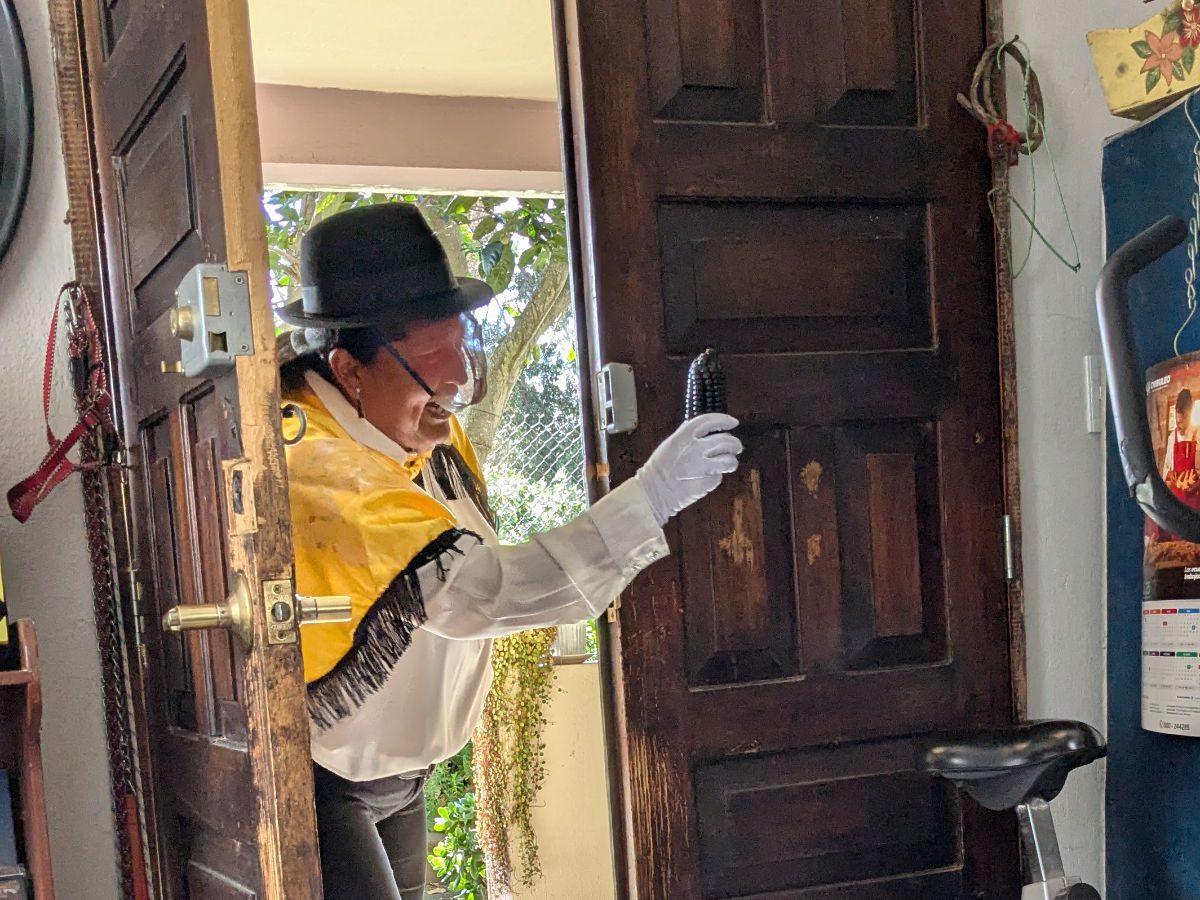
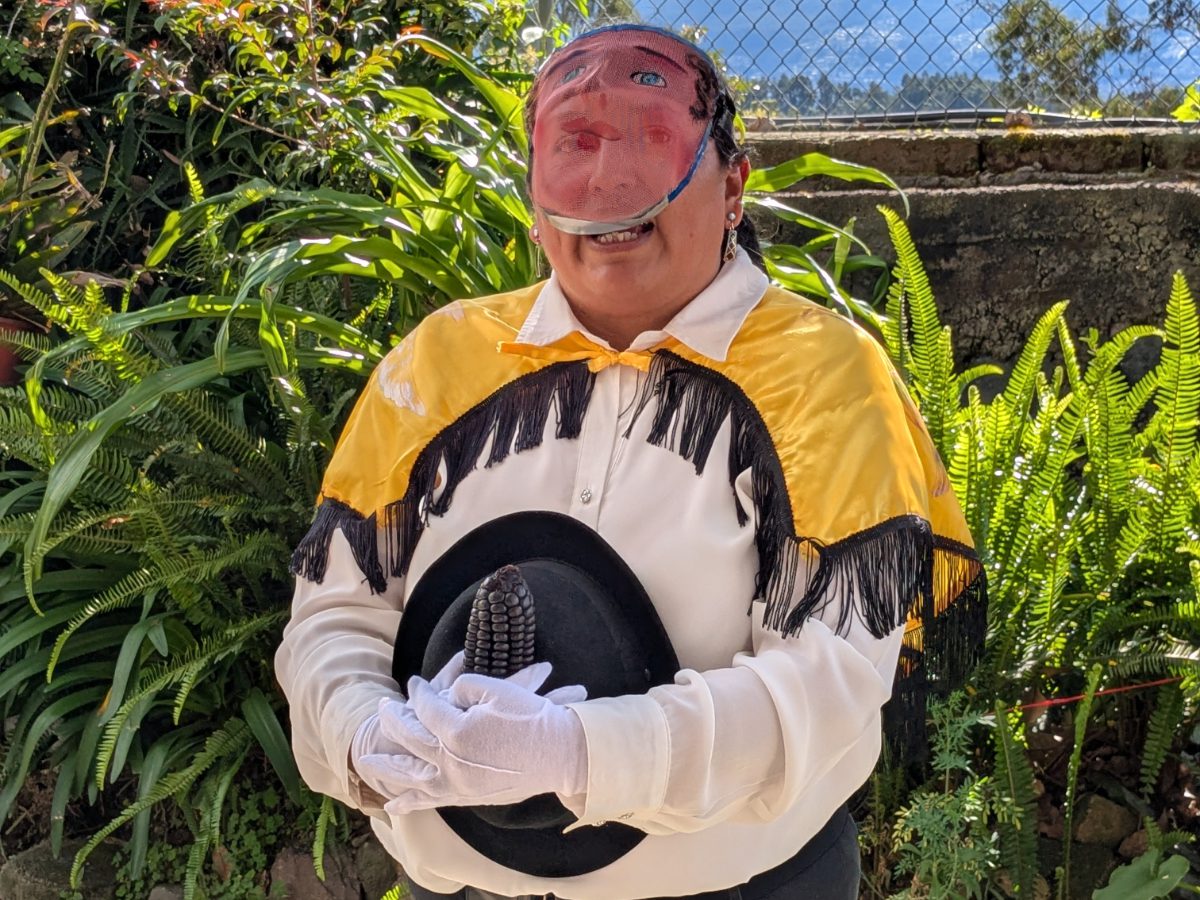
María Isabela disappeared for a few moments before reappearing in a bright yellow silk cape with black fringe, white shirt, dark pants, and a mesh mask painted with the pink face, blue eyes, and tiny mustache.
The Dance of the Ruku
She was dancing the role of the Ruku, a character whose name in Kichwa means “old man.” The figure appears in celebrations like Inti Raymi and Corpus Christi and is often paired with the Palla, representing Pachamama.
María Isabela is part of Warmi Ruku, a group in Alangasí that shares ancestral knowledge and traditional skills through the work of its 60 members. Watching her dance made me wonder what it would be like to see the entire group in action!
From Garden to Table
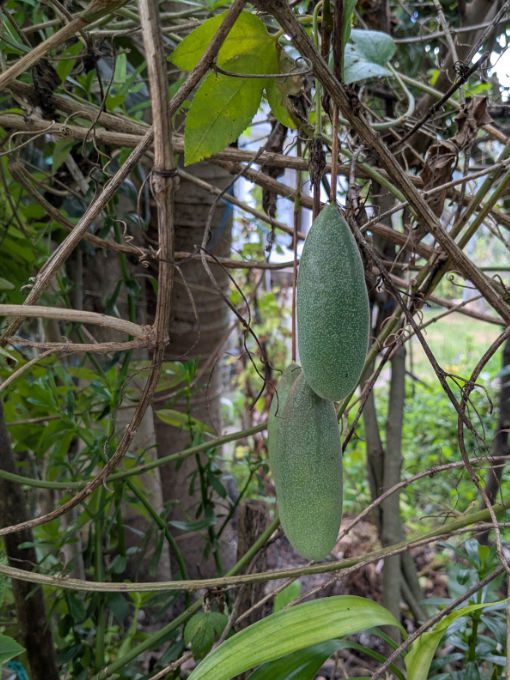
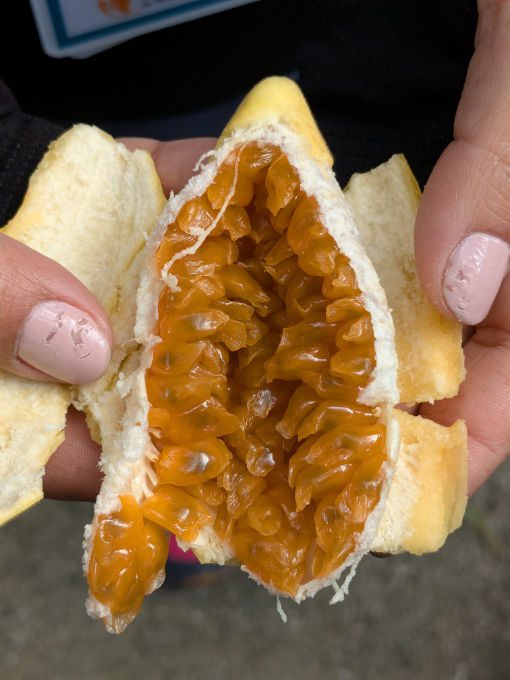
Still in costume, María Isabela took us on a tour of their garden. We were regaled with herbs both medicinal and culinary, fruits like taxo and uvilla, and animals like chickens and guinea pigs.
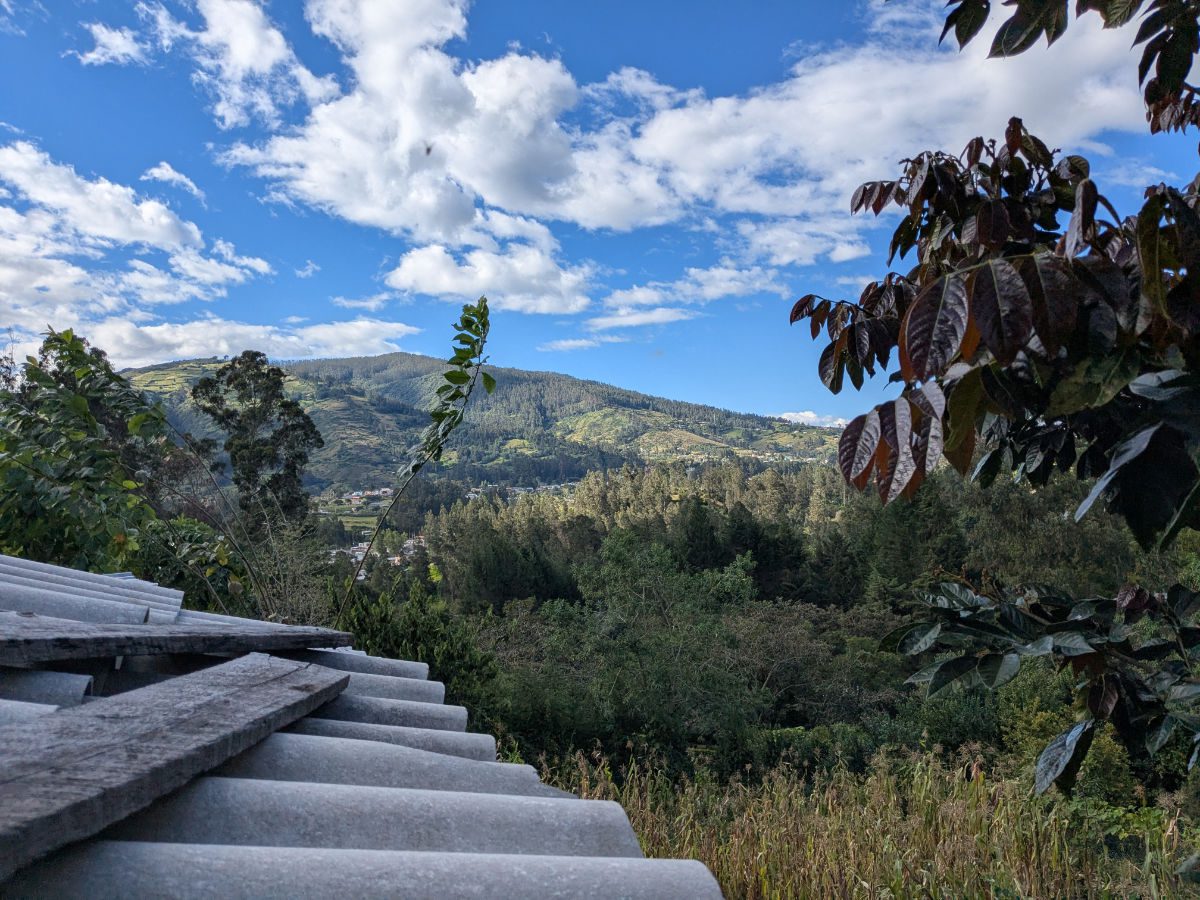
The view from their garden is pastoral, rolling hills with a patchwork of homes, fields, and forest under a bright blue sky studded with white clouds.
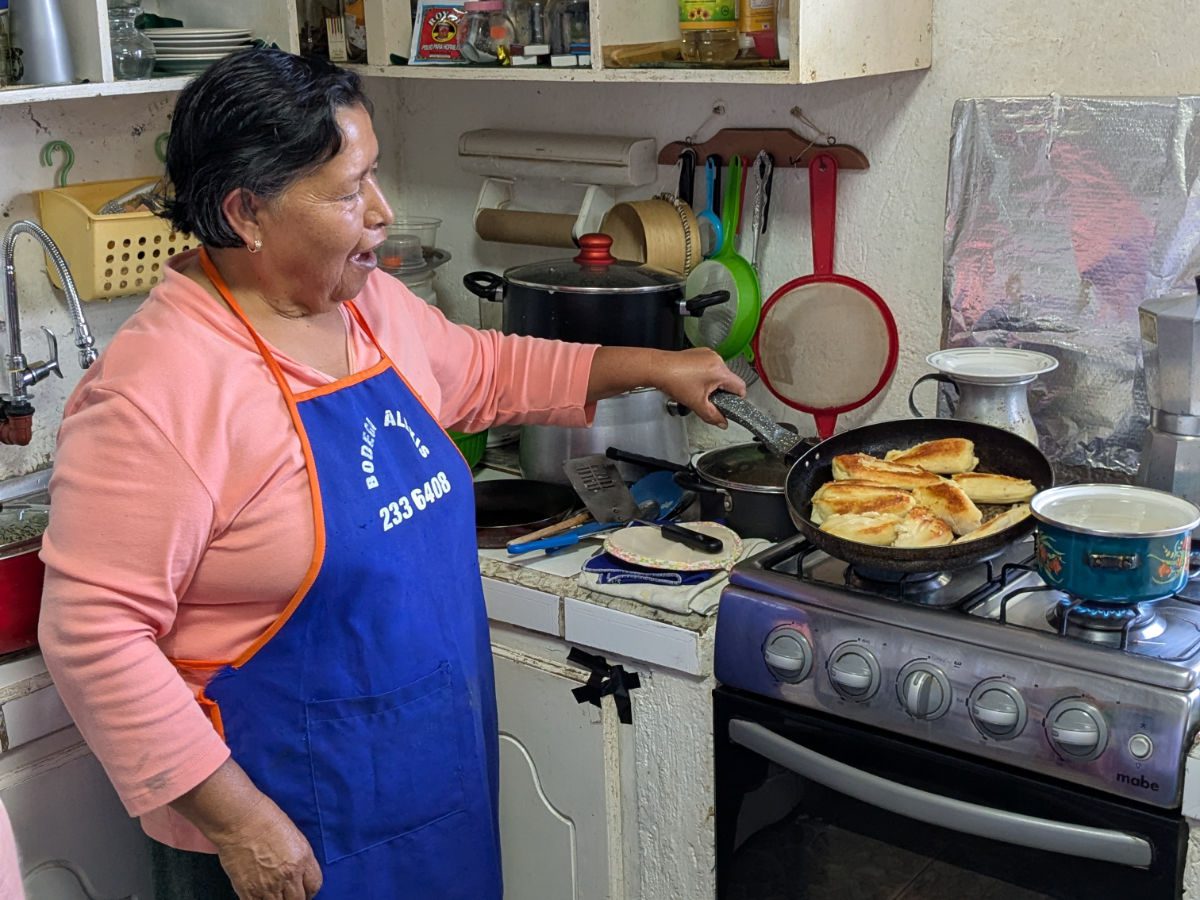
Doña América then invited us into her home to enjoy a small meal before heading to the central plaza of Alangasí. We dined like friends and family around an extended table and mixture of chairs and dinnerware in the kitchen, where we could see the chef in action.
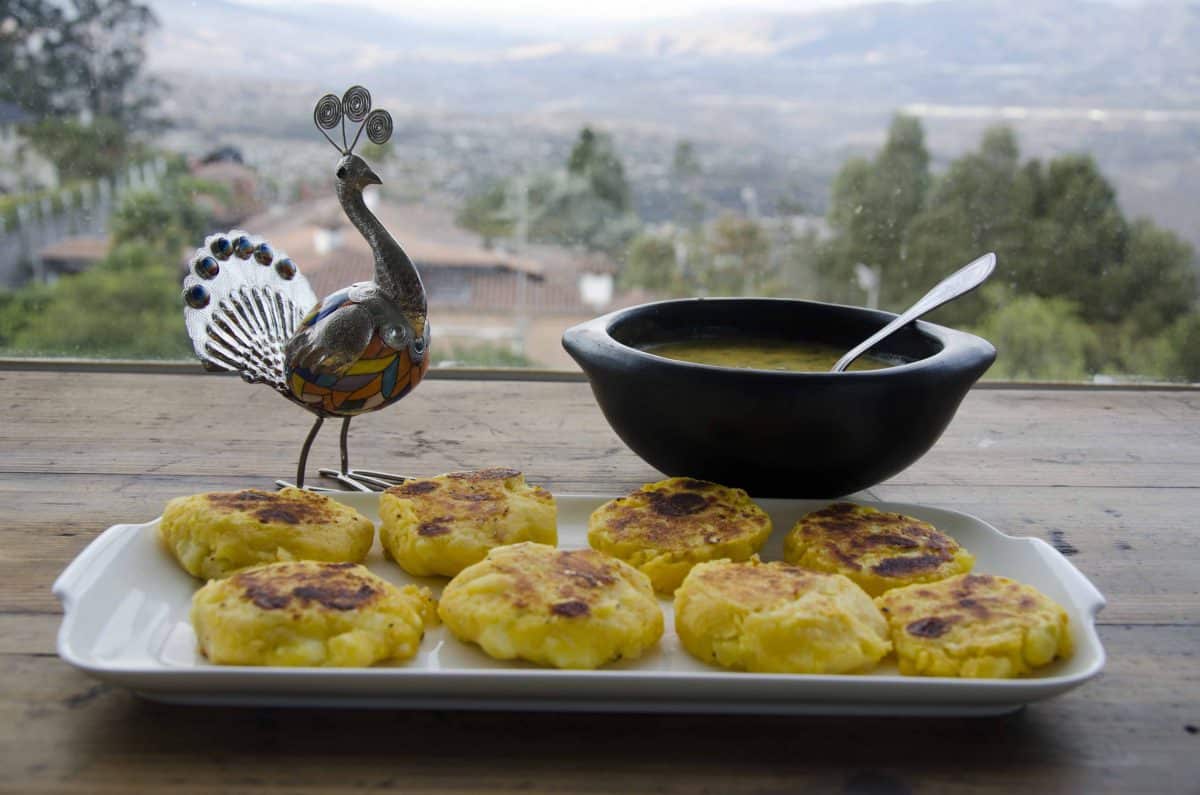
And chef she is, Doña América, as the dishes she served surprised the palate and were absolutely delicious. She served traditional dishes like humitas, boiled potatoes, and ají.
Her specialty was an oven-roasted guinea pig. One of our friends was unsure about trying it, the other game for the new experience. Neither were disappointed.
Scott and I dug in and were amazed. We’ve eaten guinea pig many times, sometimes good, sometimes chewy and almost inedible. But when offered food by a host, we eat. Diplomatic training comes in good stead.
I have to say, this cuy was the best I have ever tried. No photos, I’m afraid as I was too busy licking my fingers.
Though we were being welcomed into a family home, this was not an informal visit. Through Jacquie, the family was compensated for their time, their food, and what they shared with us. We were invited and we paid our way. This is what thoughtful tourism can look like.
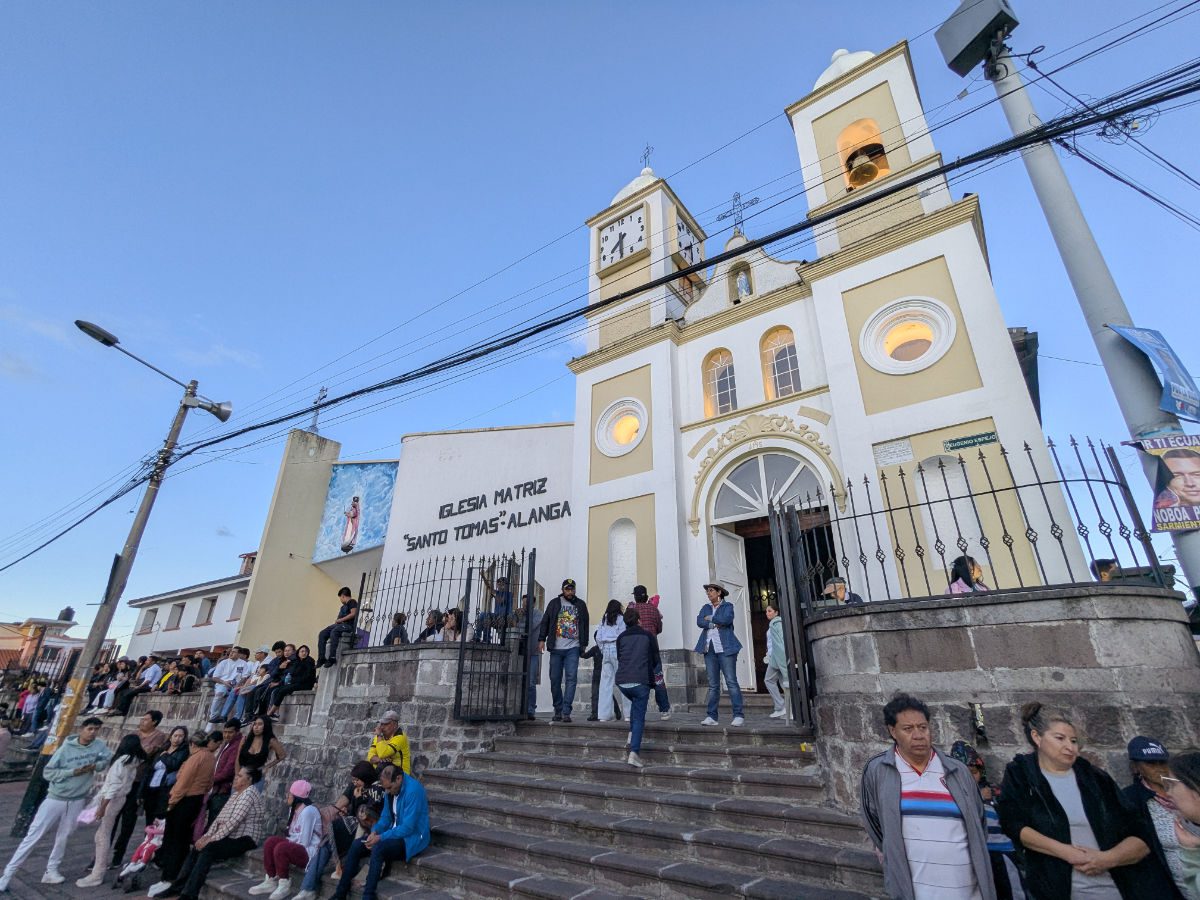
Alangasi’s Plaza on Good Friday
This invitation extended beyond the family home. The family accompanied us downtown, providing a local introduction to their community.
The plaza was buzzing with activity when we arrived, vendors selling treats, families strolling the park, a band getting ready to play, and a steady stream of people coming in and out of the church. We took a quick turn around the park, stopping at each of the statues representing the characters important to the region: Ruku and Palla, Cucuruchos and Danzantes, Aya Huma and Sacha Runa.
Then it was time to enter the church… it was already full but Doña America and Pablo had saved us a place. I knew what to expect this time but it did nothing to take away from the experience. This is an event I could attend again and again.
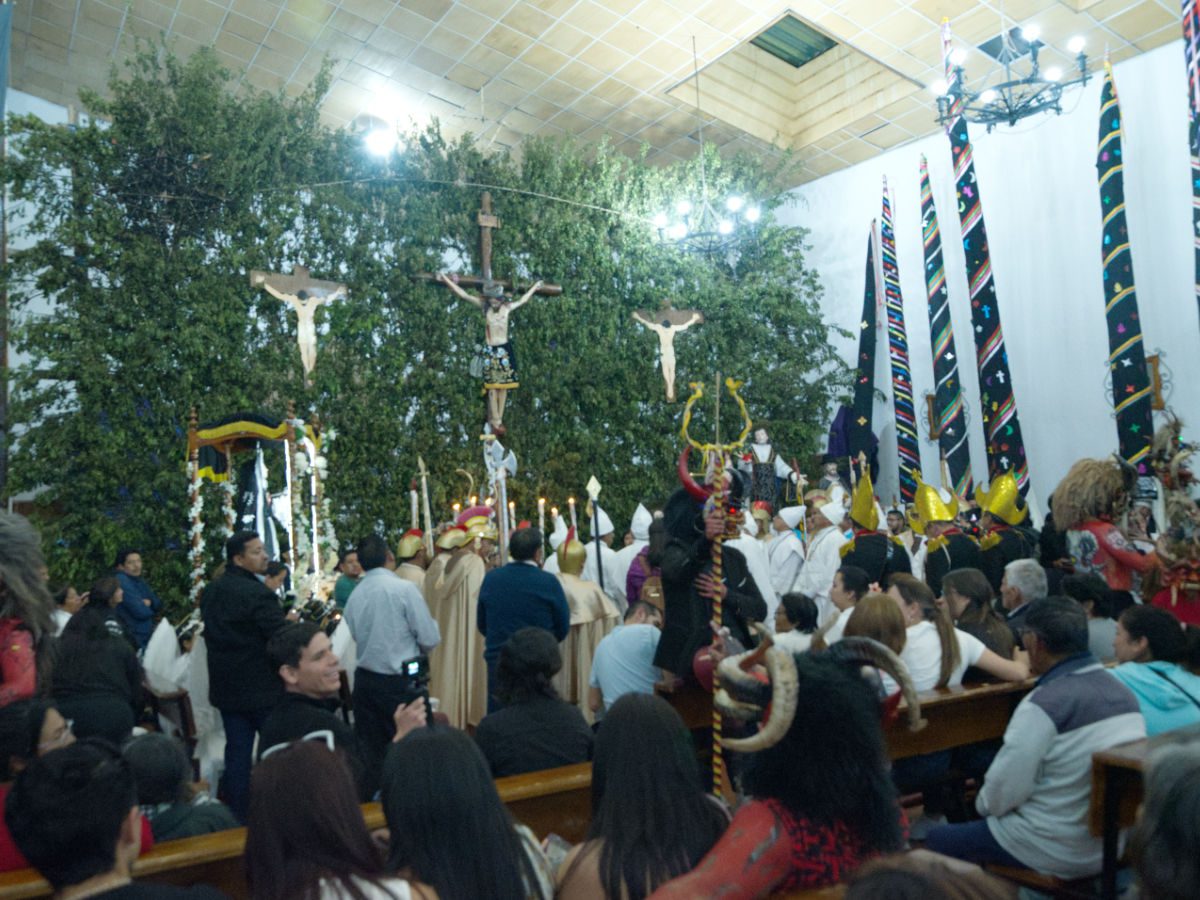
A Religious Pageant at Alangasí
What followed was more of a play than a religious ceremony.
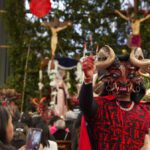
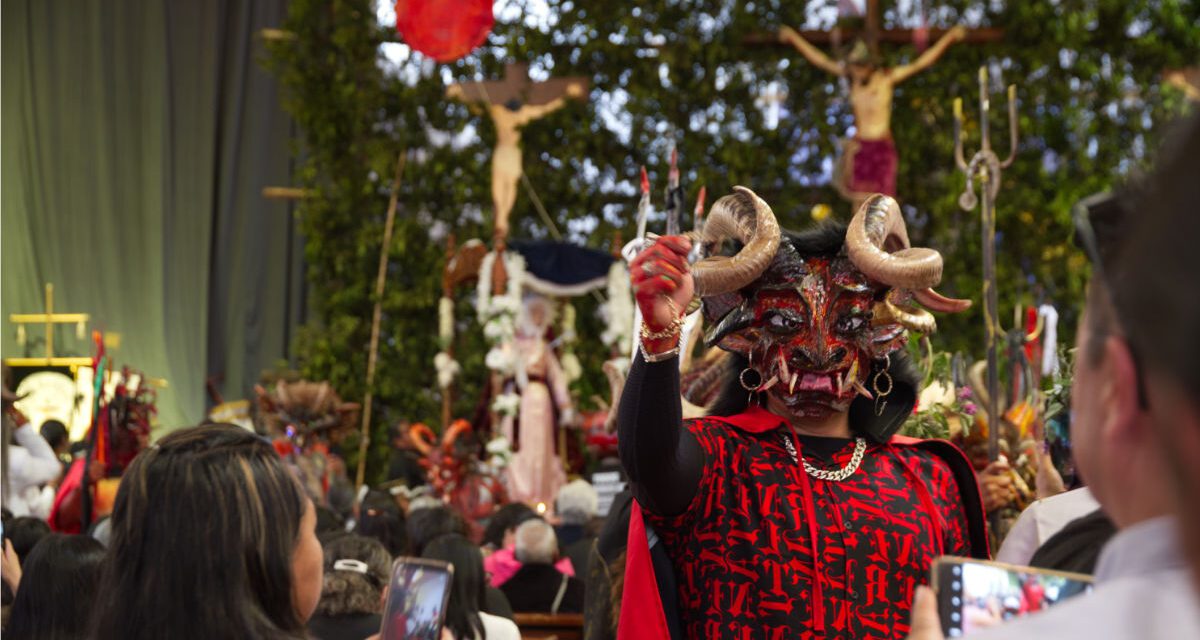
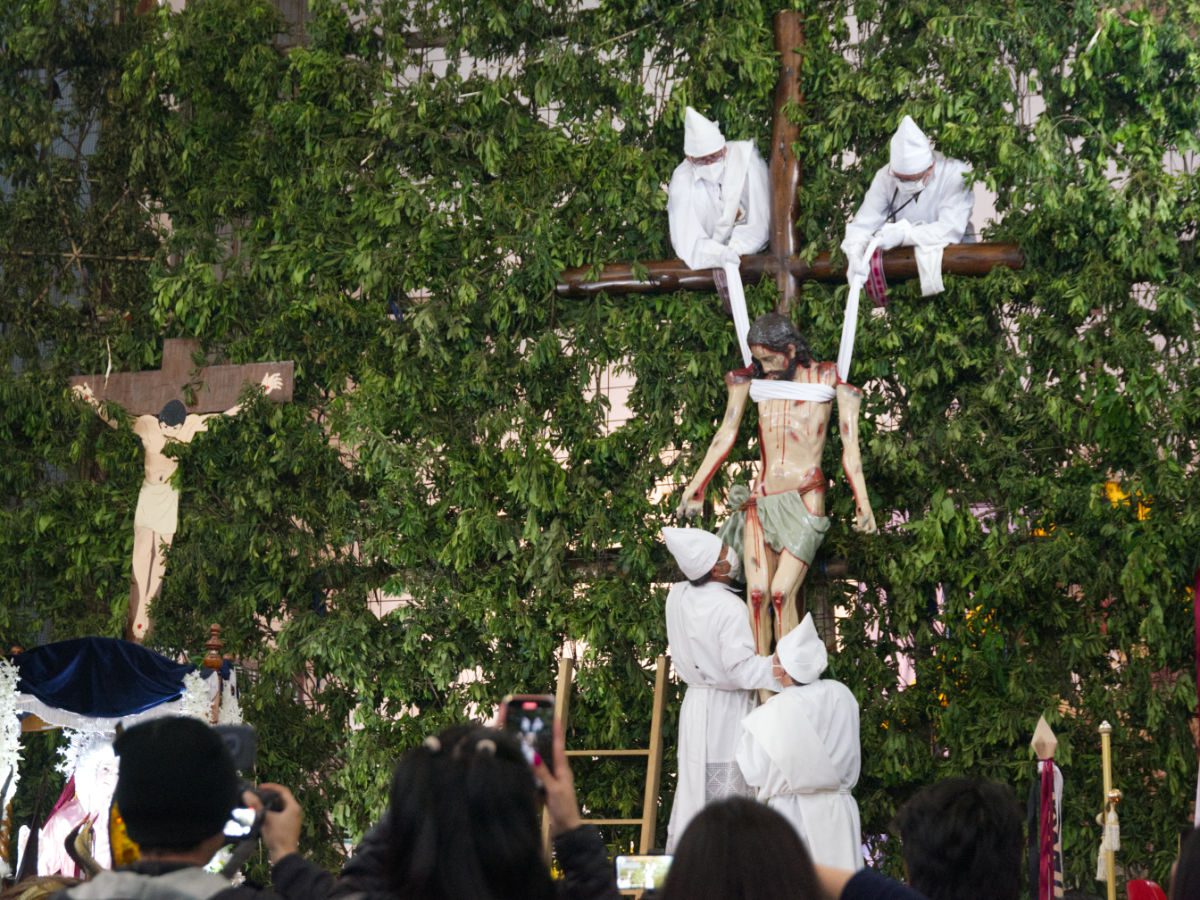
The stage was set. The altar was hidden by a huge screen of greenery from which hung three crosses – two painted on either side of an actual cross with a lifelike wooden statue of Jesus in the center. He wore a crown of thorns and a covering of black velvet embroidered with blue and gold over his loins.
Almas Santas, young men wearing huge cone-shaped hats, several meters tall, draped in black and decorated with colorful ribbons, entered the church.
Well… hat isn’t really the right word. These are unwieldy spires, too tall to enter while wearing them.
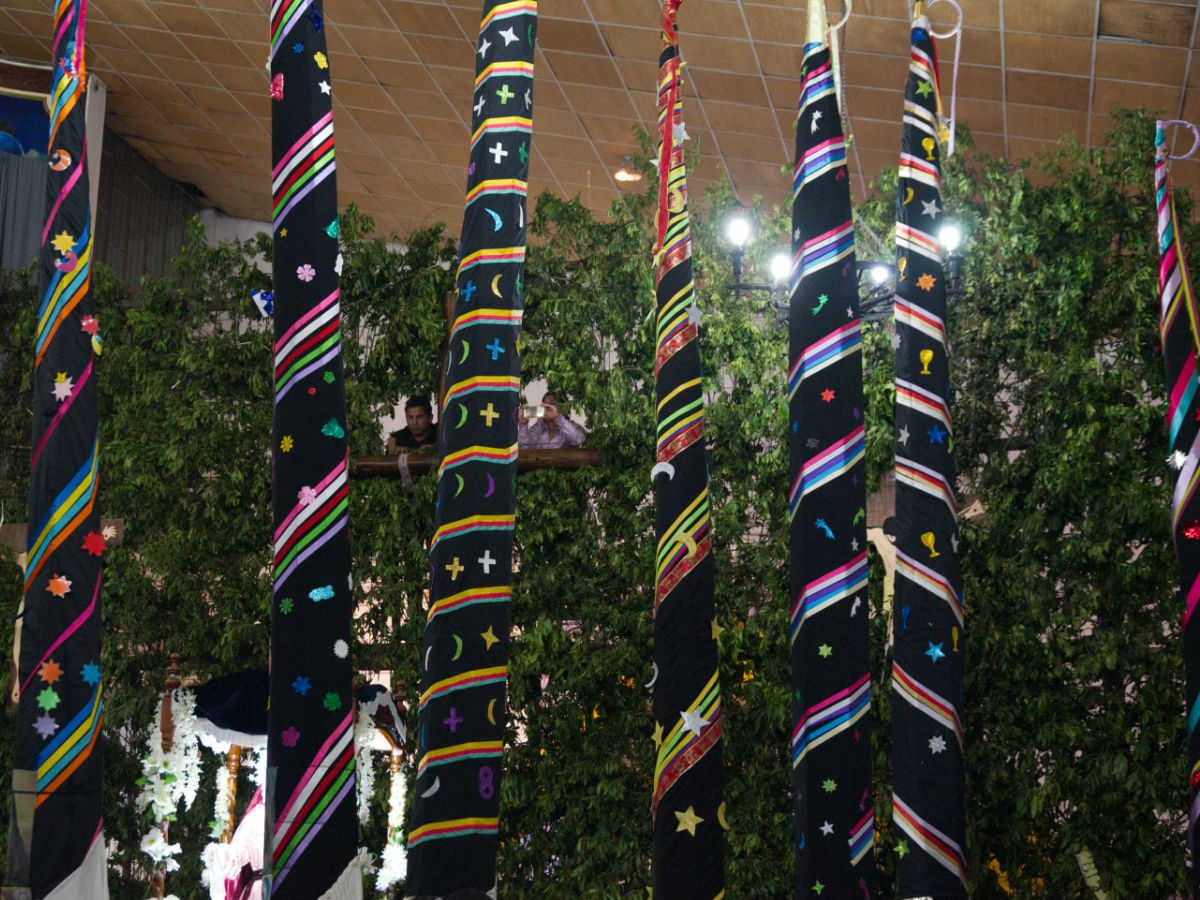
Instead, they were carried in like long planks of wood. Once inside the church, each man, with help, lifted the spire onto his shoulders, holding it upright with both arms. It clearly took strength, and more than a little coordination.
A dozen Almas Santas entered one after another, lining up on either side of the stage before removing the spires and setting them against the wall.
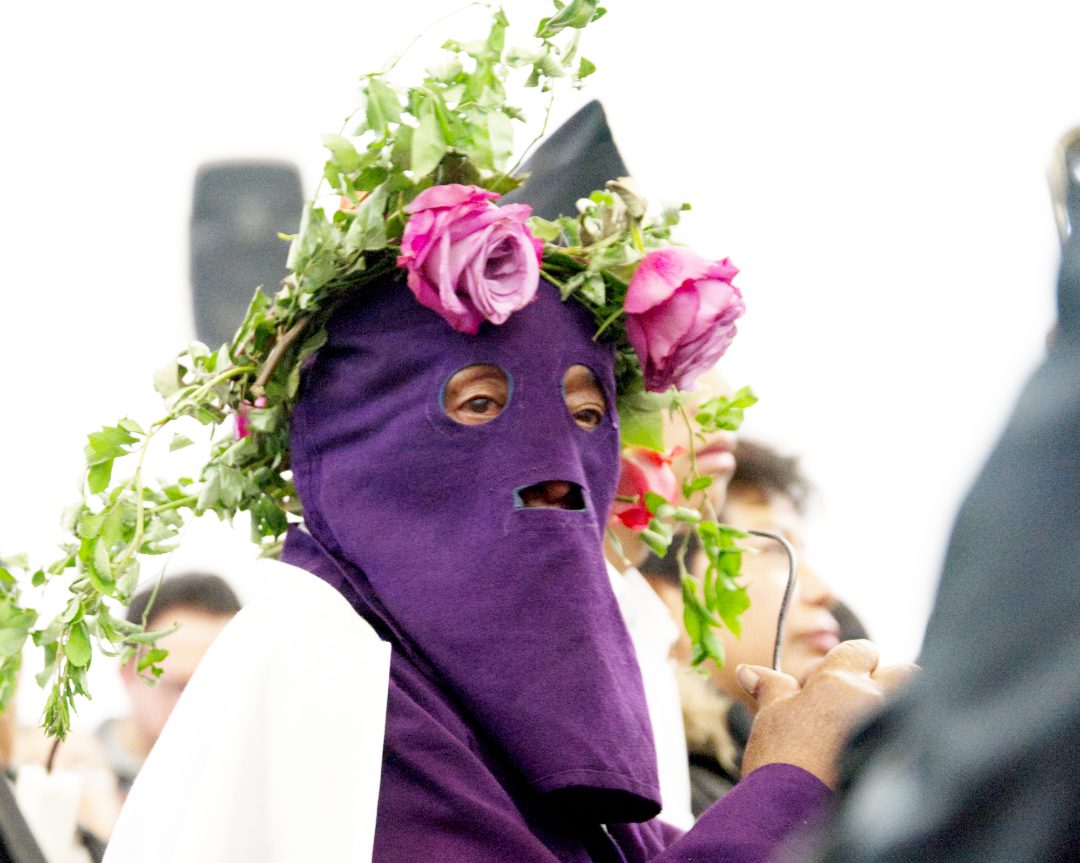
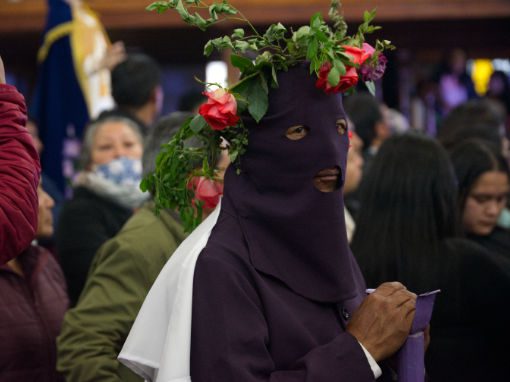
Other arriving characters included a troupe of little girls dressed as angels all in white, Roman soldiers with gold foil hats, purple robed Cucuruchos crowned with roses.
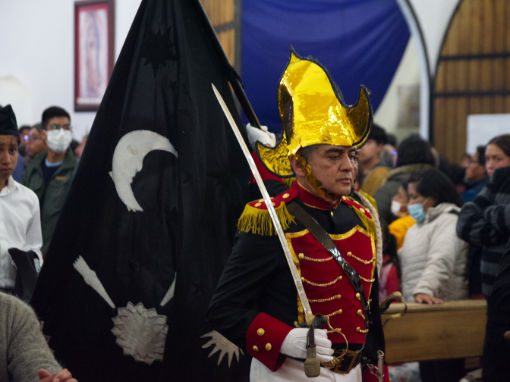
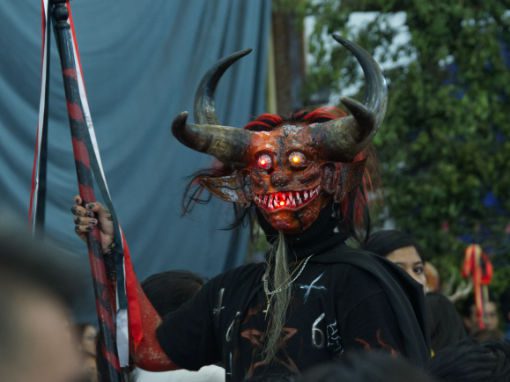
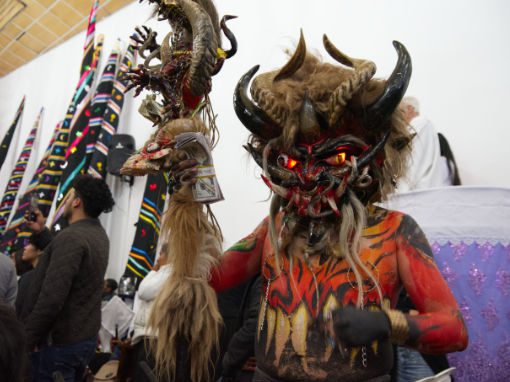
And then there are the devils. So many devils. They tease and startle the congregants. Children hide behind parents and young women pretend to be offended but flirt right back.
The devils’ headdresses are handmade, some passed down from father to son, others worthy of a modern horror film. All have horns, some real and others made of papier-mâché. Music from the band outside reverberated into the church itself, a general march encouraging all to enter.
The story to come is a sad one. It is a retelling of Jesus being taken down from the cross. It sounds dark and sad, and it is. But it is also joyful and surprising.
The priest narrates the event but, otherwise, fades into the background. The angels and the soldiers all play their roles but the most intriguing part was played by several men who marched in a single unit, all dressed in white, including pointed beanie like caps and matching gloves. Two of them climbed up behind the green backdrop and popped their heads through the hedge at the height of the cross. Another man dressed climbed a ladder from the front, slightly lower down. Even more waited below on the ground.
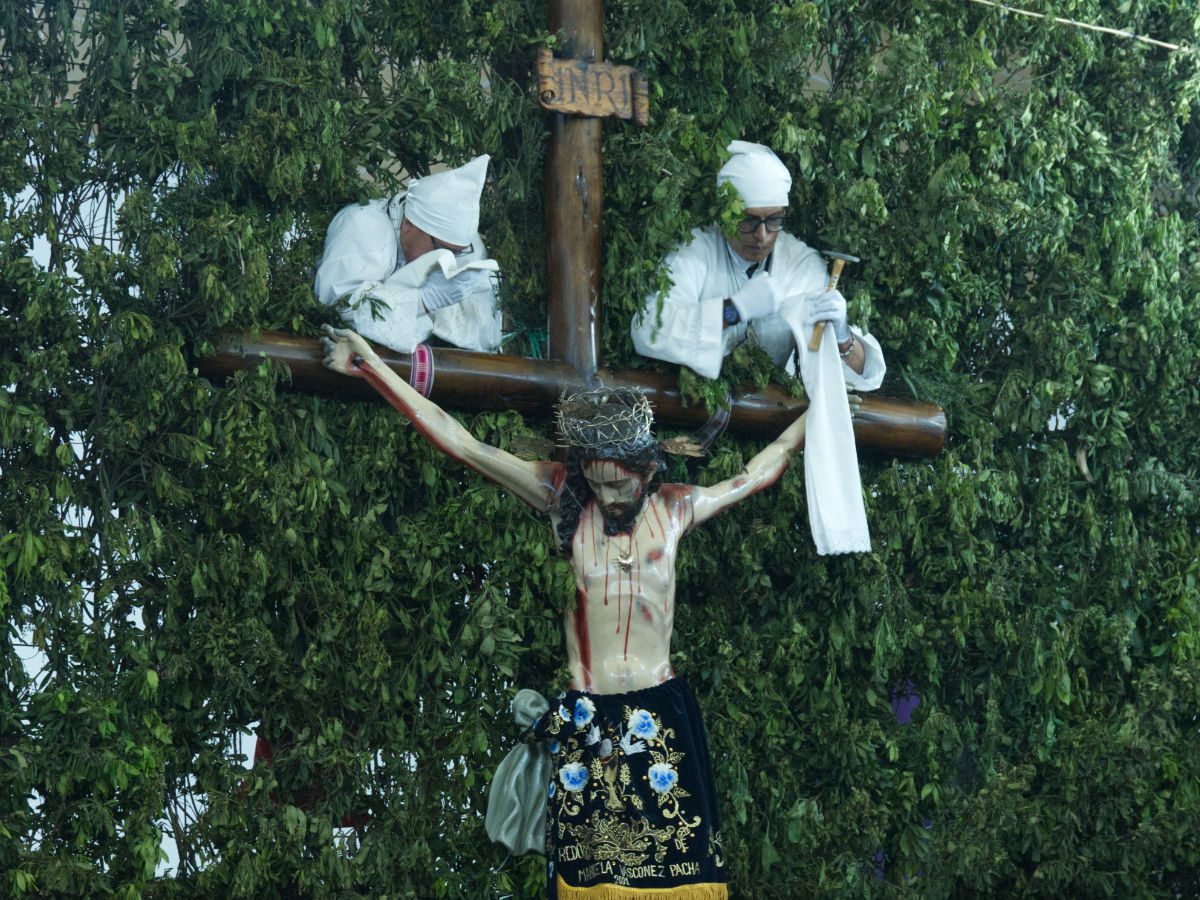
Very carefully, the two men up high removed the crown and each nail, gloved hands placing the holy relics in white towels to prevent anyone from mistakenly touching them.
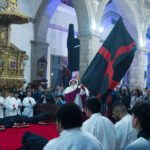
Next, they slowly wrapped a band around the body so that Christ could be slowly lowered to the ground, where he was wrapped all in white and carried to the back of the church where he was placed in a brightly lit, clear glass casket.
The Procession Begins
As the story moved from the church onto the streets, the congregants all tried to leave at the same time. The goal was to be outside to welcome the procession.
First came the Almas Santas, carried by multiple hands, taking care not to hit the low-lying powerlines outside the church. One by one, the spires were once again lifted to young men’s shoulders and they lead the way into the night.
Roman soldiers congregated. Two statues were carried out on individual palanquins.
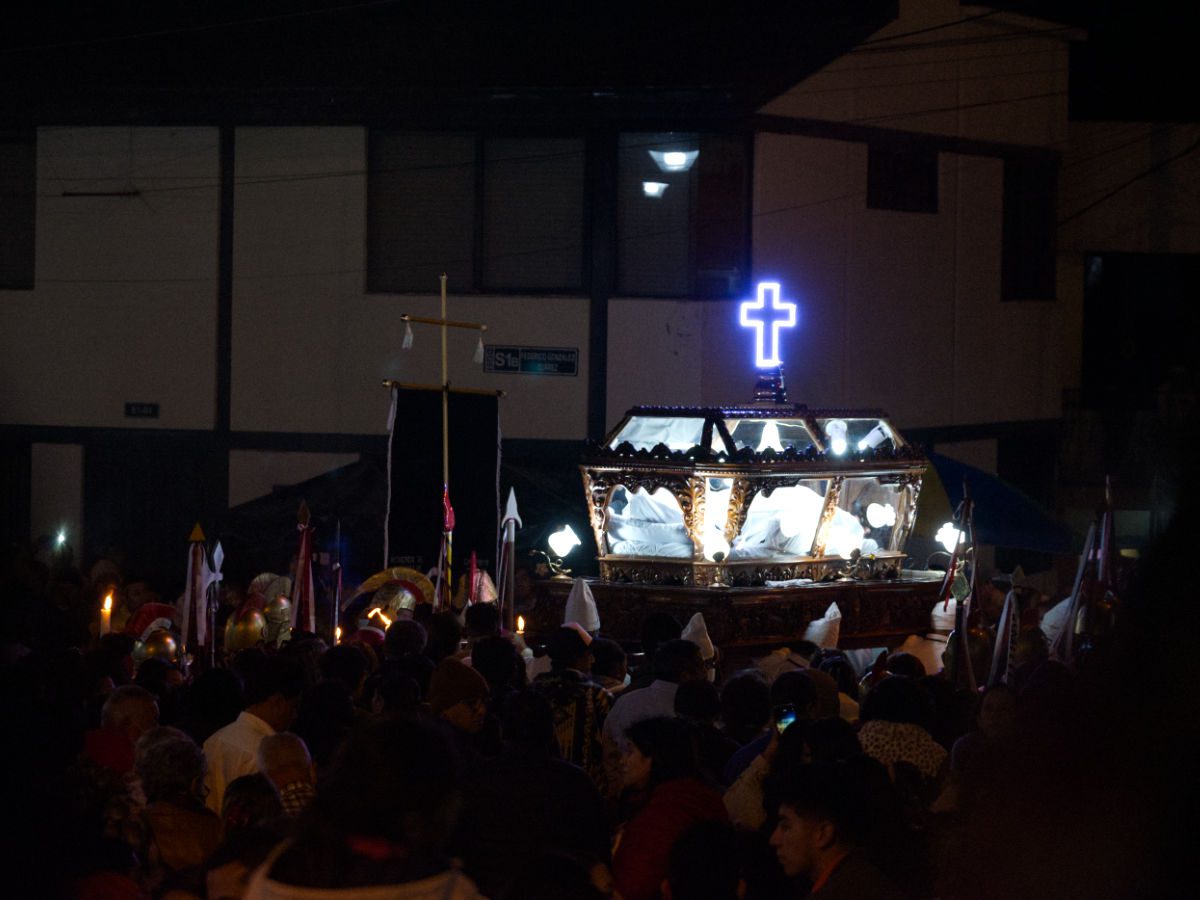
Then the moment the crowd was waiting for – the casket carrying Jesus arrived on the steps. Through the glass panes, only his face was visible; his body remained draped in white.
Slowly, the manuever down the steps soon followed by one more statue, the Virgin Mary. Then the procession moved towards the dark streets to begin its pilgrimage through town.
My time in Alangasí has been enriched by one family, María Isabela, her husband Pablo, and her mother, Doña América, whose generosity made this experience possible. I am grateful for their hospitality and for welcoming us into their home and community.
If you are interested in experiencing Good Friday in Alangasí in a thoughtful and respectful way, feel free to reach out. We’re happy to help connect you with local partners.