

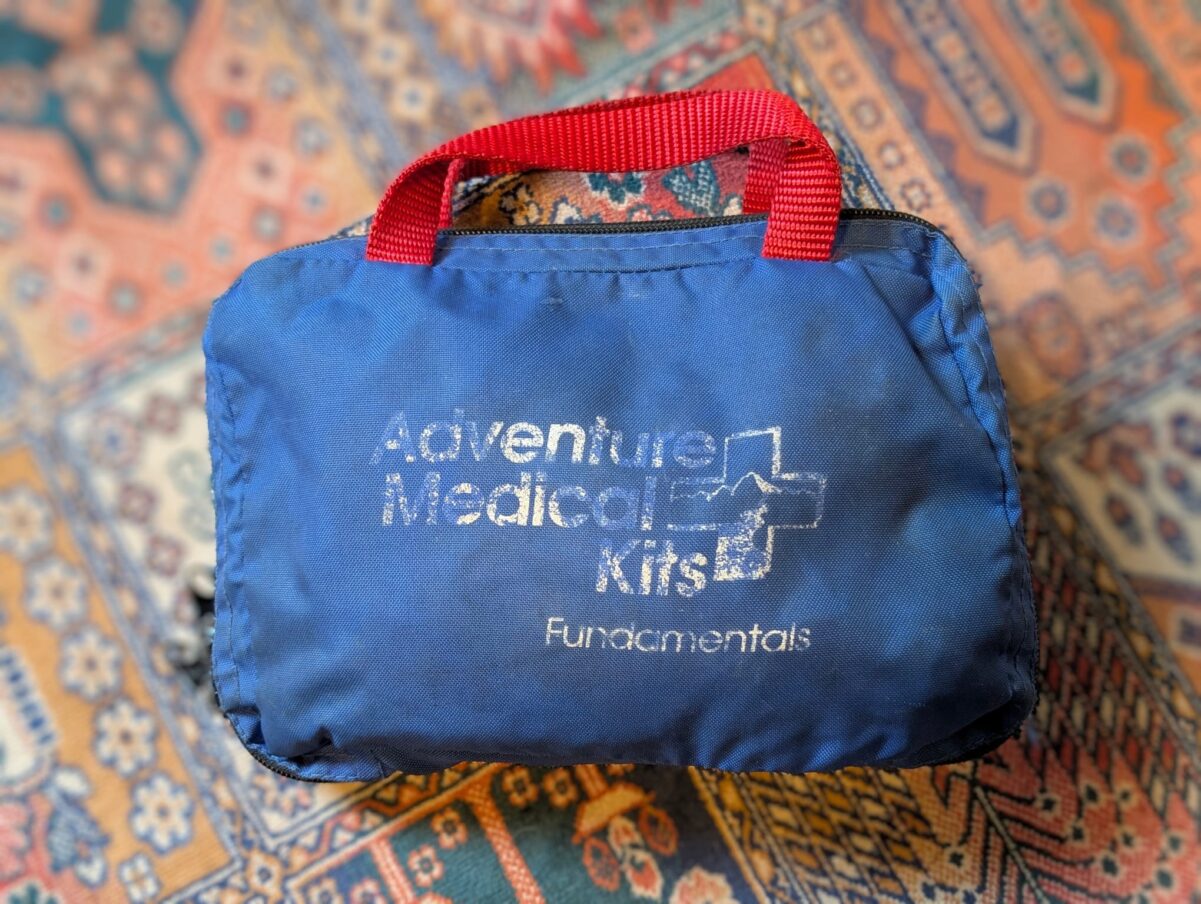
We’ve owned our Adventure Medical Kit for so long that the name has nearly worn off the zip-up bag. It’s been through more trips than I can count, and it’s the first thing that goes in the pack. Scott generally stows it with his gear and it is ALWAYS used in one way, shape, or form every single trip.
We’re packing for Ecuador right now, which means restocking it. Yes, while we can buy most of this in South America, it doesn’t make sense to. All of these items are cheaper in the United States and some of it isn’t easily available overseas. More importantly, the last thing you want is to be looking for a pharmacy while you’re also looking for the nearest toilet. So we bring the basics, and here’s what’s in our bag.
The base kit: Adventure Medical Kit
Today’s version comes in different packaging than ours, but it’s still watertight, ultralight, and bright yellow, which makes it hard to leave behind. Adventure Medical Kit
It covers the basics: bandages, gauze, an elastic bandage, insect sting relief wipes, tweezers, and a safety pin. These are the things we regularly use up and replace. We top up these items almost every trip:
- Moleskin for blisters: moleskin
- Alcohol swabs: alcohol swabs
- Ibuprofen: ibuprofen
- Acetaminophen: acetaminophen
- Aspirin: aspirin
- Allergy relief: the kit includes diphenhydramine, but I prefer Zyrtec: Zyrtec
The tools we use most
The most-used item in our whole kit is a pair of short, squat tweezers for pulling splinters. We added a needle to ours, but the kit also includes a safety pin. Either one works once you’ve sterilized it with an alcohol wipe or the flame from a match.
For bites, we like After Bite sticks. We also bring them as gifts to people in Ecuador, because they don’t exist there. For cuts and scrapes, our ointment of choice has always been Neosporin, and we carry hydrocortisone cream for itchy bites and rashes.
Bugs and sun
We spend a lot of time outdoors when we travel, so we make sure we have plenty of Picaridin, which is our DEET replacement. Sawyer works really well for us.
Sunscreen isn’t technically first aid, but it’s a pharmacy purchase and it belongs on the list. We recommend a reef-safe one, like Florida Glow or Onsart.
Why reef safe? After traveling in the Galapagos Islands, we learned a lot about how sunscreen can harm coral and other marine life. The beautiful Las Grietas swimming hole can look downright murky after a weekend of plunges from hundreds of tourists wearing regular sunscreen that washes off in the seawater. Very few people bother snorkeling there anymore. No fear… you can help prevent this from happening in other waterways. Amazon makes it easy, too. Look for the “reef safe” and “Hawaii compliant” tags when you shop.

Stomach trouble
This is the section nobody wants to write, and everybody ends up needing.
- Pepto-Bismol for light issues like an upset stomach or mild cramping: Pepto-Bismol. One note: it contains a salicylate, as aspirin does, so don’t take the two together.
- Imodium for diarrhea: Loperamide hydrocloride (the generic is just as good on this one).
- Anti-nausea medication. I have a prescription from my doctor that works well for me. If you can’t get one, Driminate is a highly rated over-the-counter option. This works well for long trips on curvy roads and for unrelenting vomiting from food poisoning. For the later, you might also want to call your doctor (more on that below).
- Preparation H. It’s recently made our list. Technically not a stomach issue but definitely along the GI tract. Even if it’s offered overseas, I don’t want to explain what I need to a pharmacist, and I’m not sure my Spanish, however good, is up for that conversation. Preparation H
Altitude and long travel days
Zaca Recovery chewable supplement is great for high altitude, and also for recovering after a long day of travel in the dry air of an airplane and airport. You can read Scott’s full review here. For acetazolamide and other altitude medication, start with our altitude sickness article and talk with your doctor.
High altitude also means dry lips. I carry my trusted Burt’s Bees, and my favorite flavor lately is pink grapefruit, found in this four-pack.

Malaria medication: only for deep Amazon
We take malaria medication when we go deep into the Amazon. The Andean slopes and the immediate lowlands are a lot less of a worry, so we’re not taking it on this trip. When we do, we get a prescription from a doctor first.
Our own experience: Malarone has worked really well for us on short trips. I avoid doxycycline, which gives me a blinding headache. That’s just me, so it’s a good reason to ask your doctor about your options.
Talk to your doctor or a travel clinic well before you leave, since most regimens start before you arrive and continue after you get home. Check the CDC’s current guidance for Ecuador before you go.
Masks for long flights
Our favorite is the Well Before 3D PRO Loops KN95. It comes from a sample pack they sent us, and it’s available in all kinds of colors when you buy direct from their website. The mask feels a little cushy when you open it. The ear loops are adjustable and comfortable, and this pro version has padding along the top rim, so it’s gentle on your nose on long flights.
If you just want black or white, you can buy in bulk on Amazon.

Why we buy single-use for travel
At home, we don’t use individual packets of anything. For travel, they’re much lighter, and you can tuck them wherever you need them: a couple in your carry-on, some in your backpack, some in your first aid kit.
- Electrolyte packets. We like Ultima Replenisher, which comes in flavored individual packs. They’re light, easy to stash in a carry-on, and helpful for stomach trouble, long travel days, and altitude.
- Eye drops in individual vials, which help with dry plane air and dust: eye drops
- A single-use thermometer. They are lightweight and spot-on. A small package should be plenty to keep you stocked up unless you have an unlucky trip: thermometer
Buy there, or bring it?
Many of these are available in South America, and if you forget something, you’ll be fine. But we’d rather have the basics in our bag when we need them than lose half a day tracking them down. And a few things, like malaria medication and prescriptions, aren’t something you want to improvise abroad.
Keep any prescription medication in its original, labeled packaging, and check the rules for the country you’re entering. This is what works for us, not medical advice, so check with your doctor about what’s right for you.
Medical emergency coverage
A first aid kit handles the small stuff. It doesn’t help much if something serious happens a long way from a hospital, or if you just aren’t sure whether what you’re feeling is a big deal.
That’s why we’re Global Rescue partners. You can call their team 24 hours a day, whether it’s a true emergency or a question like “should I be worried about this?” Think food poisoning that isn’t improving, a prescription you’ve run out of, or a symptom you can’t judge on your own. If you do need rescue or evacuation, they coordinate it from start to finish.
We wrote up how it works, and what we actually used it for in Peru, in our full Global Rescue article. If you’re comparing options, it’s worth knowing that travel insurance and Global Rescue aren’t the same thing. Insurance helps with expenses, while Global Rescue helps get you to the care you need.

Prepare for the worst, hope for the best
As the old saying goes: prepare for the worst, hope for the best. That’s what military life taught me, and the lessons show up all through this article. Pack these things even if you think you won’t need them, and you won’t regret it.
What’s the one thing you never travel without? Leave it in the comments below!



Deja una respuesta