


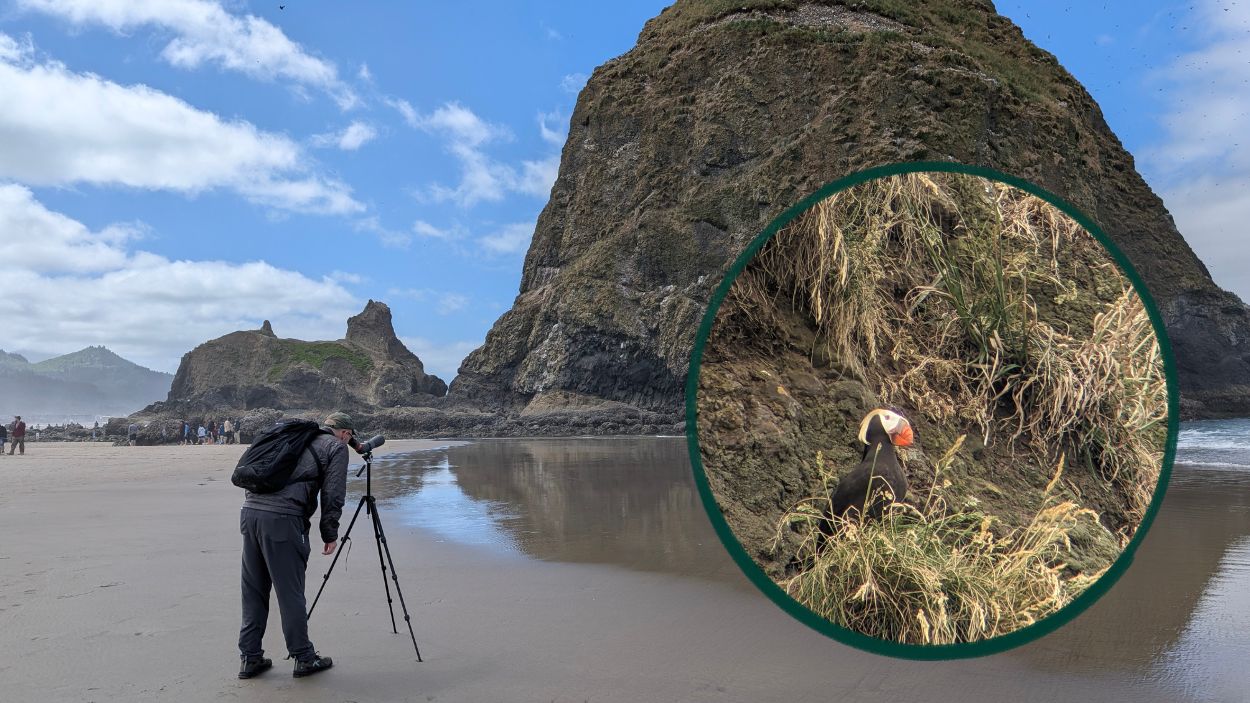
Does a casual birder needs a spotting scope? Ask AI and the answer is no, scopes are heavy and expensive. Scott thinks a little differently. In the right conditions, a spotting scope like the Maven CS.1.A. can make the difference between simply spotting a bird and observing it well.
Angie and I have been interested in birds for decades, but it wasn’t until we lived in Ecuador that we became “birders.” We bought the books, planned trips around birds, and took thousands of photos. We definitely caught the bug, but we’re still pretty casual about it. We don’t do life lists or memorize bird calls or correct idenfitications on eBird or things like that. We’ve always found binoculars to be more convenient for our style of birding, leaving the spotting scopes to professional birding guides and hardcore birders.
Well, after six years of Oregon birding, we recognized there are some situations where a spotting scope might be really nice to have. It is especially helpful in places like marshes, large ponds, and the sea shore. Or when an interesting bird is nesting at the top of a huge tree and it’s just not possible to get close enough for a good look.
So I did a bit of research to figure out what would work for us and approached some companies to test out their beginner level scopes. Maven Outdoor Equipment Company very kindly agreed to send us their CS1.A Spotting Scope to try out.
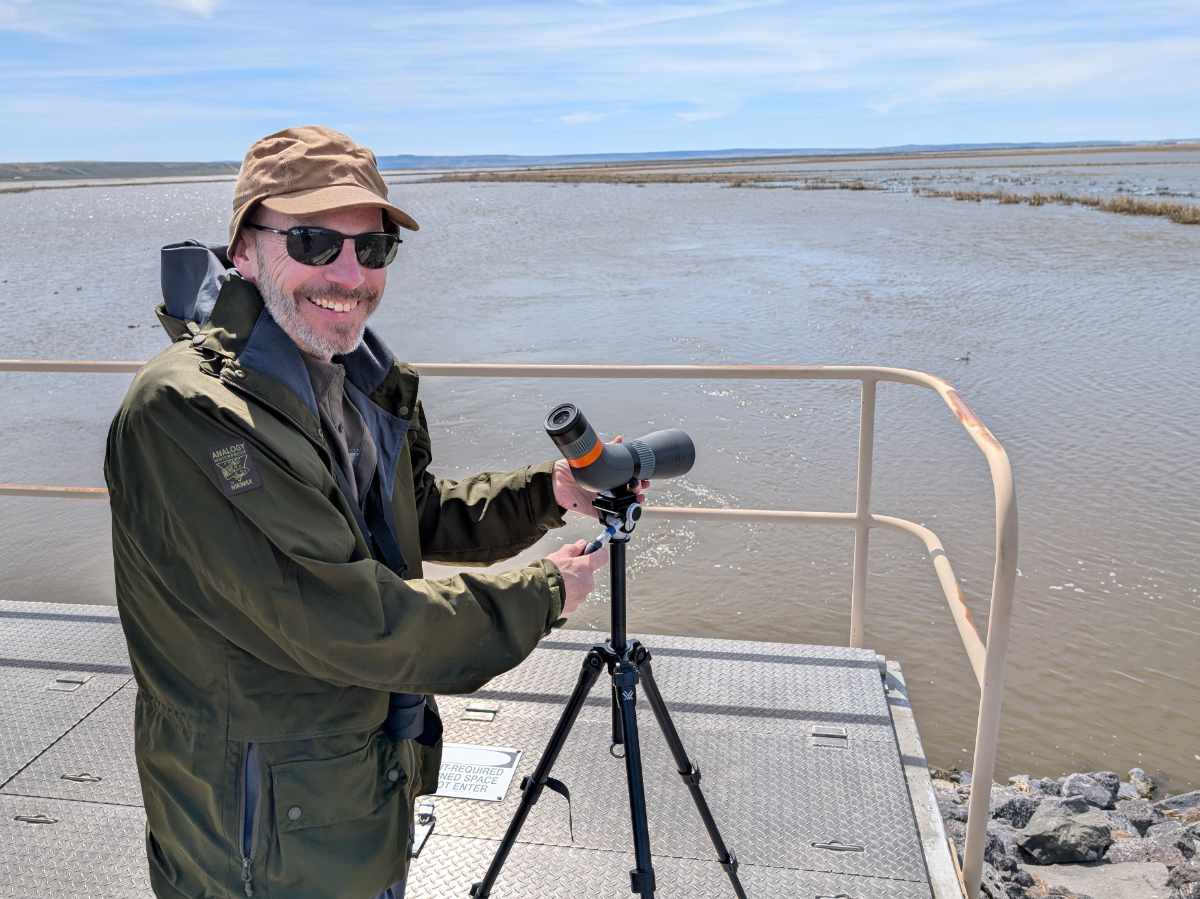
Maven’s CS1.A Spotting Scope
The CS1.A in a mid-level scope using the same glass as Maven’s award winning C-Series binoculars. Here are the specs with some explanation:
Length: 11.4 in – Pretty good size for taking in a backpack. Other scopes can be 14 – 16 in.
Weight: 40.4 oz – Again, pretty good. Those larger scopes come in at or over 60 oz.
Magnification Range: 15x – 45x
This varies a lot across different scopes and can change with different eye pieces with ranges from 10x to 66x or higher. The rule of thumb is “the higher the magnification, the narrower the view.” For less experienced birders, the 15x setting allows for a larger field of view which makes it easier to find the bird against the background. Then the 45x setting zooms right in for great detail without feeling like you’re looking thru a pipe.
Objective Lens Diameter: 65MM
The objective lens is the one on the “big end” of the scope and works like the pupil of your eye. A bigger one lets in more light, allowing for use across a wider variety of light conditions. 65MM is a middle of the road size. I’ve seen from 56MM on some compact scopes up to 85MM on some of the professional level scopes.
Aluminum/Polymer Frame – This helps with the weight but may not be as robust as the magnesium frames you’ll see in higher end scopes.
Waterproof and Fog Proof – The scope is tested to the IPX7 standard of waterproofness and is nitrogen purged to prevent fogging. This level of water and fog proofing are pretty standard on better quality scopes.
Lifetime Warranty – Maven has one of the better warranty policies in the business. If an item gets damaged or is defective, they will repair or replace it. You don’t find that with a lot of companies.
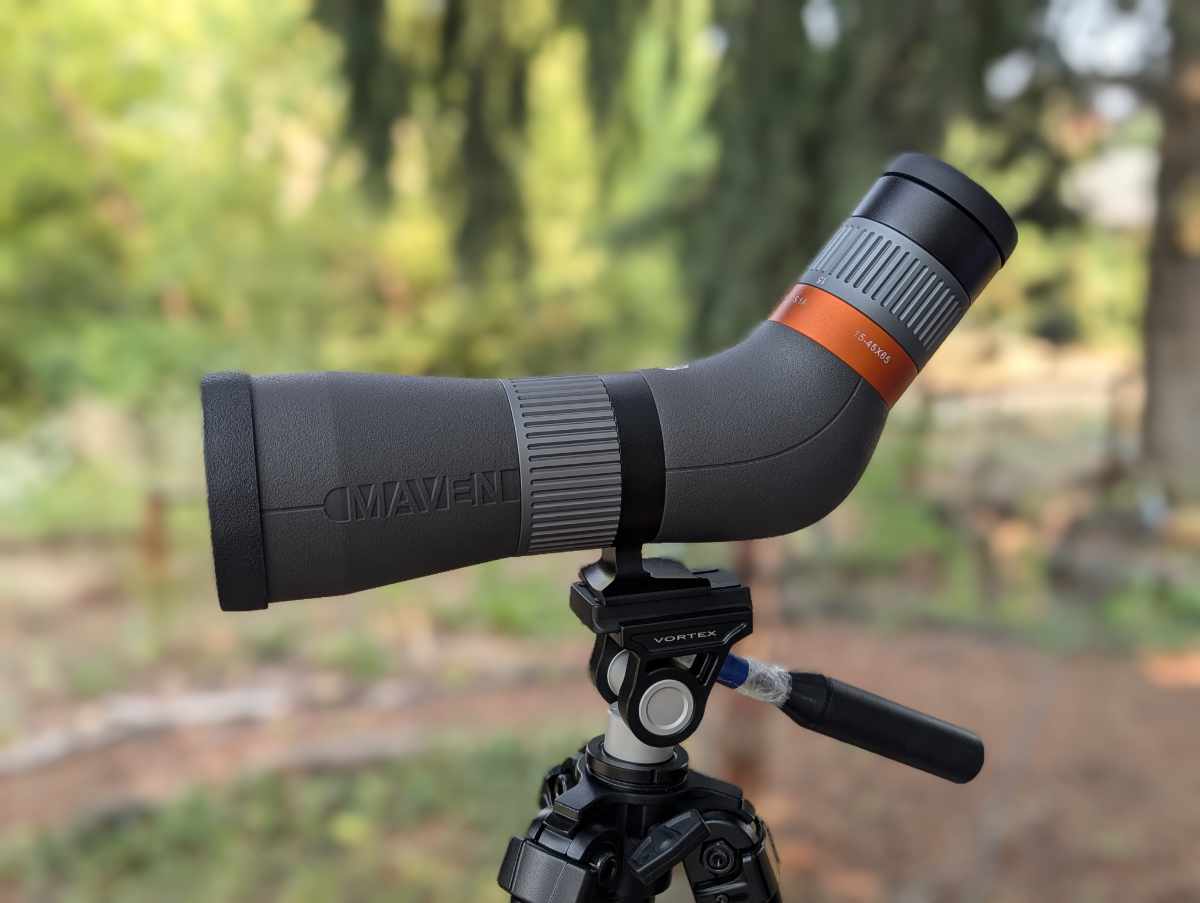
So how’d the CS1.A do in the real world?
We used the scope at three different locations in order to get a feel for how the scope would perform in different environments.
The first was the Wapato Access Greenway on Sauvie Island, about 25 mins outside Portland. It’s a great place to see a variety of birds; from four species of woodpecker to hundreds of transient waterfowl. But you can’t get super close to the water, which is good for the birds but less good for birders. So we figured it’d be a great place to start.
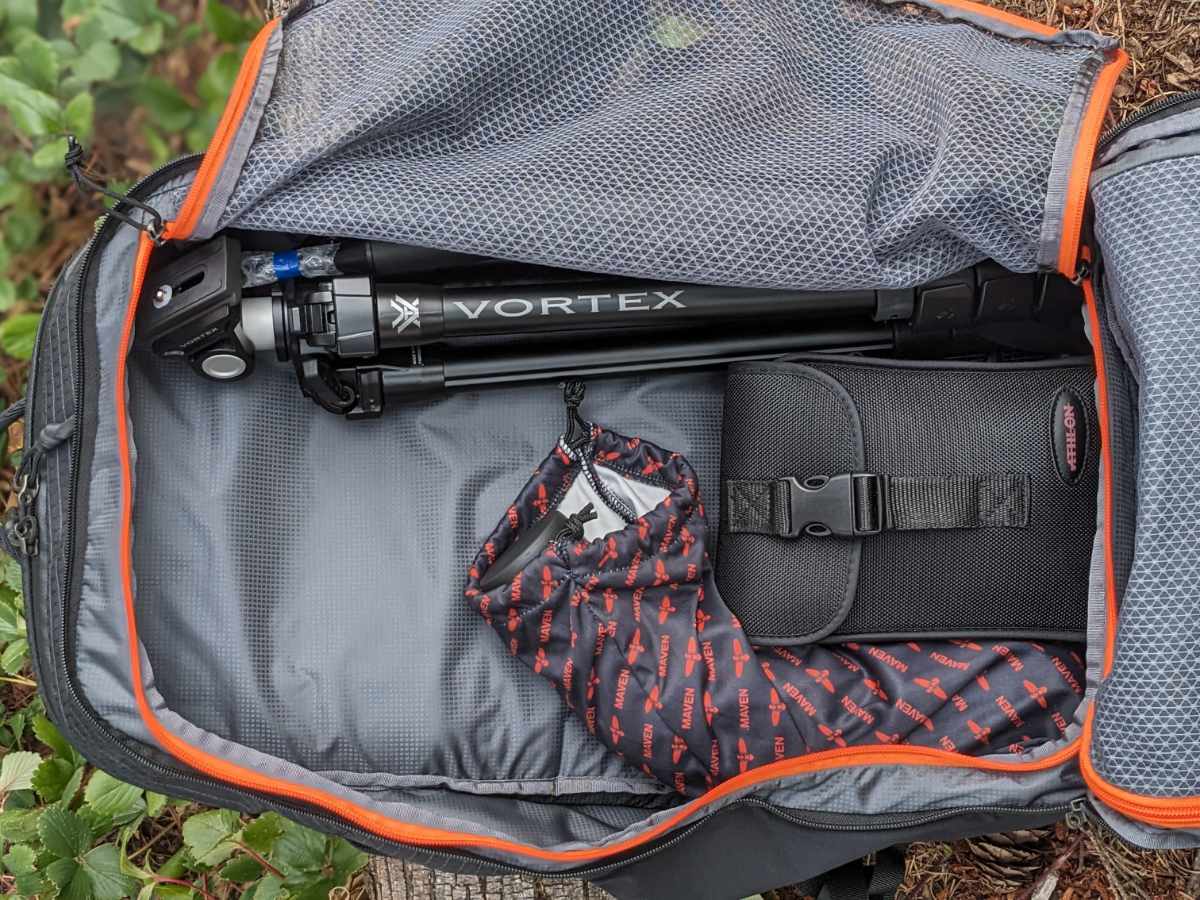
Because it’s a two mile loop, I loaded up the GORUCK GR3 I was testing with the scope, tripod, binoculars and my camera bag insert.
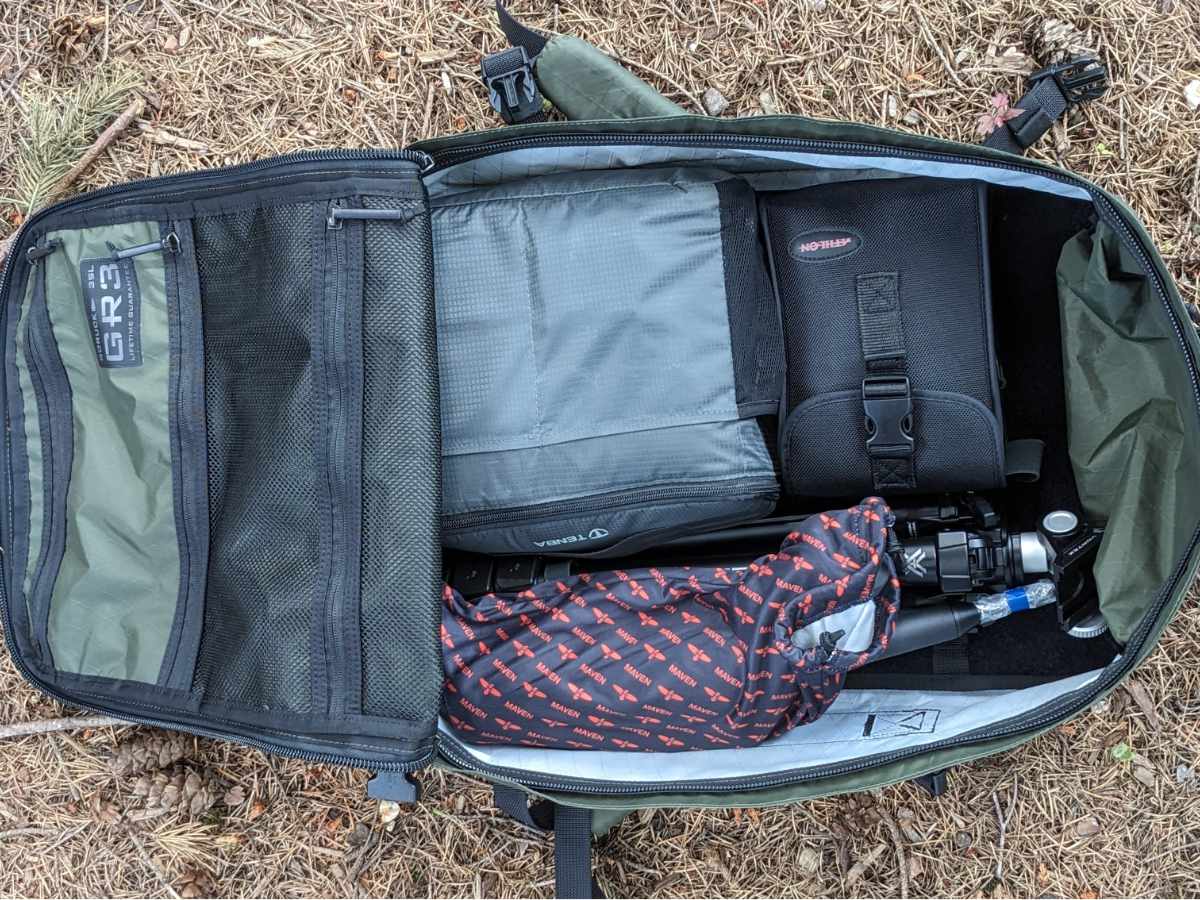
Everything fit surprisingly well in the pack. I was able to cinch down the pack so the items didn’t move around much as we walked. For longer or more challenging hikes, I think you’d want to invest in one of the covers offered on the Maven website to make sure the scope was protected from bouncing around.
The scope weight was a big positive here. I didn’t really feel like I was carrying much at all.
There was a bit of a learning curve putting everything together for the first use. In hindsight, it would have been much easier to try out equipment at home before taking it to the field. All told, it was maybe 15 mins of testing out different ways to search with the scope and how to find what one saw in the binoculars with the scope. Landmarks and low magnification to start were the key take-aways.
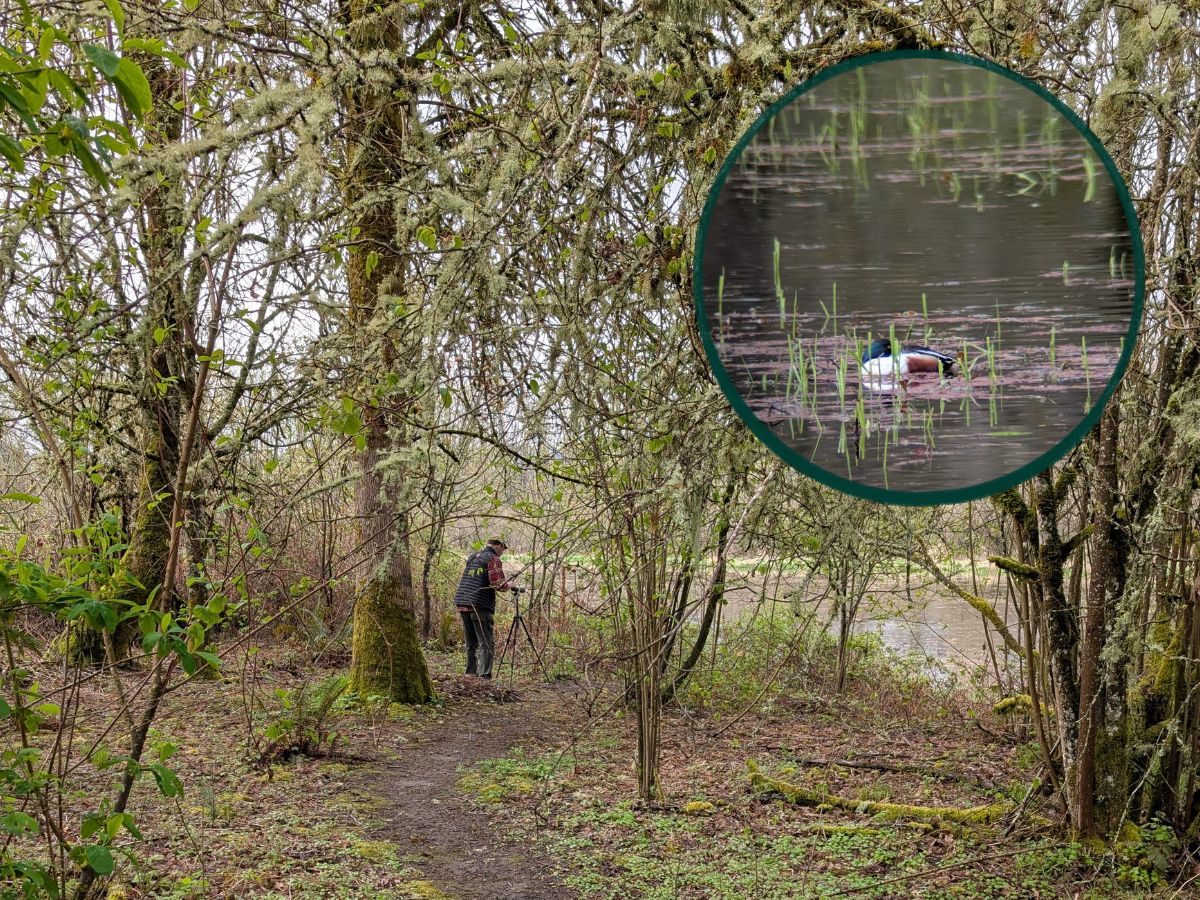
The scope did great. The image was really sharp, with good color and the scope was easy to zoom. The birds cooperated by not moving quickly across the surface of the pond.
Testing the Scope at a Bird Festival
The next test location was during the Harney County Bird Festival in and around the town of Burns and the Malheur National Wildlife Refuge. The terrain here is a mix of high desert, marsh, riverine and farmland. Due to the distances involved between hotspots, most of our time was spent birding from the car.
Raptors were a big draw at the festival and the wide-open spaces made them easy to see over long distances. For example, this well-known Bald Eagle’s nest near Historic P Ranch is easy to see in the distance but tough to observe with binoculars alone.
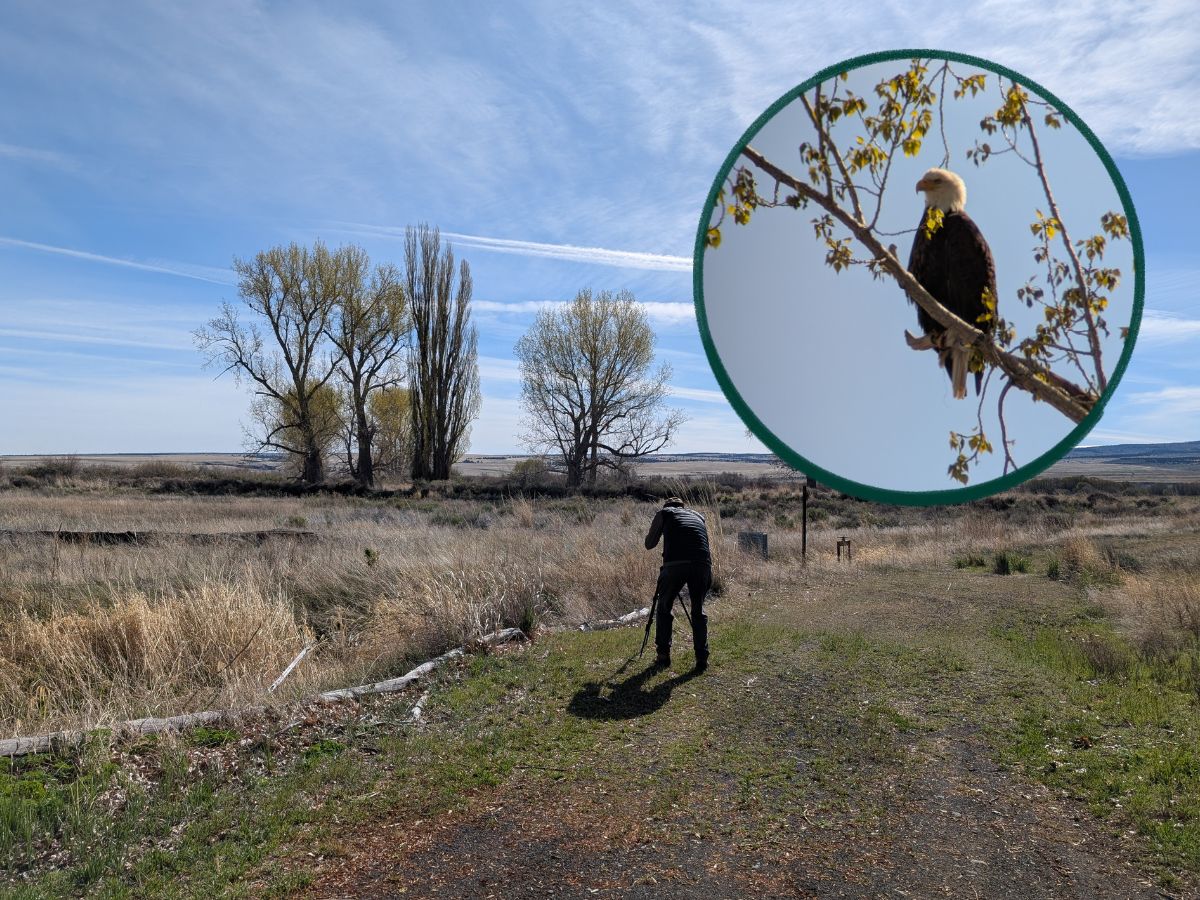
Birding along the road also gave us plenty of opportunities to see raptors on telephone poles and agricultural equipment in the farm fields. They often remained perched, giving me the opportunity to photograph the same bird with different magnification. In this series of three photos, a Swainson’s Hawk was on topa a power pole about thirty yards from our truck.
The first image is taken with an Olympus OEM1 with a 300mm lens. The second using a phone through the scope at 15x magnification and the third at 45x magnification. With practice, the photos with the camera through scope could be a satisfactory quality for online sharing.
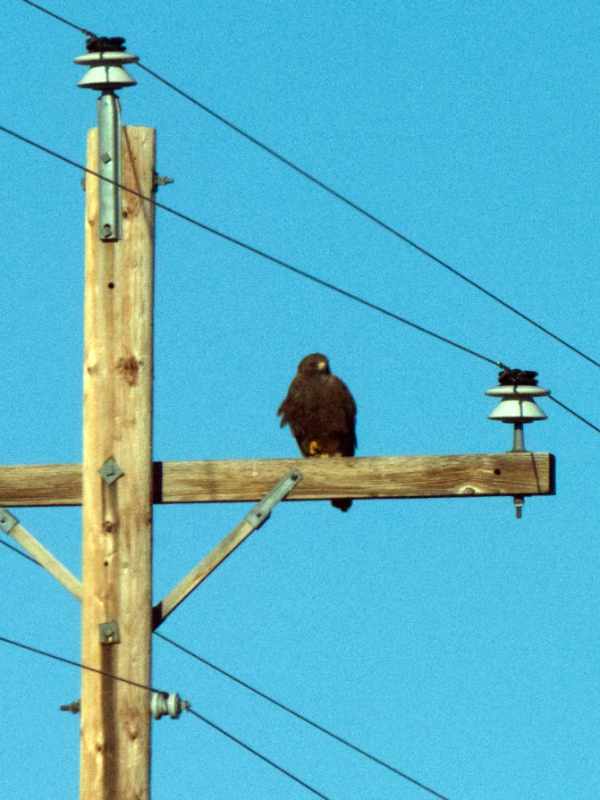
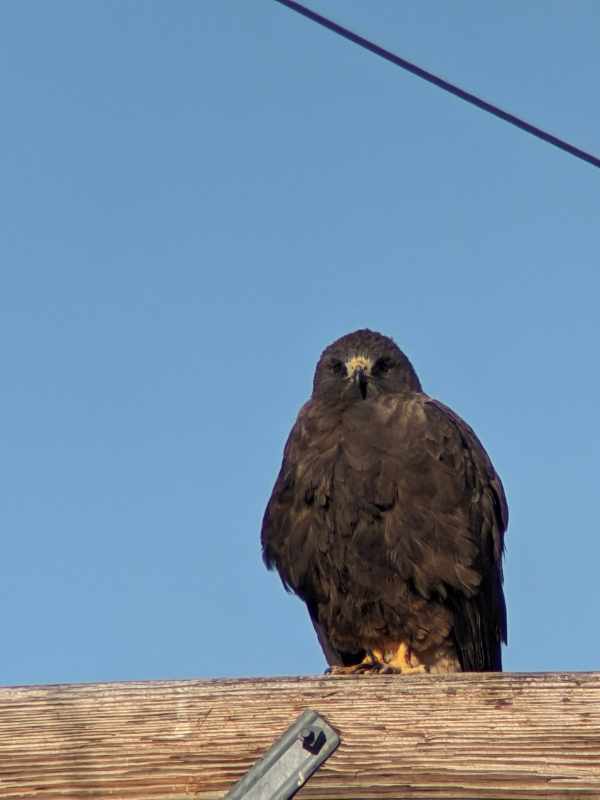
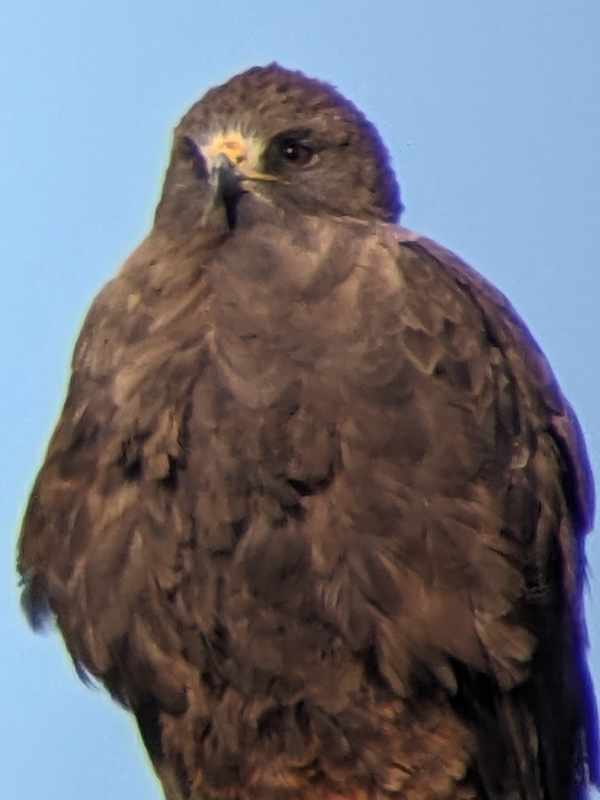
That third shot – I’ve never been able to take a photo like that in the wild. Super cool!
Testing the Scope at Haystack Rock
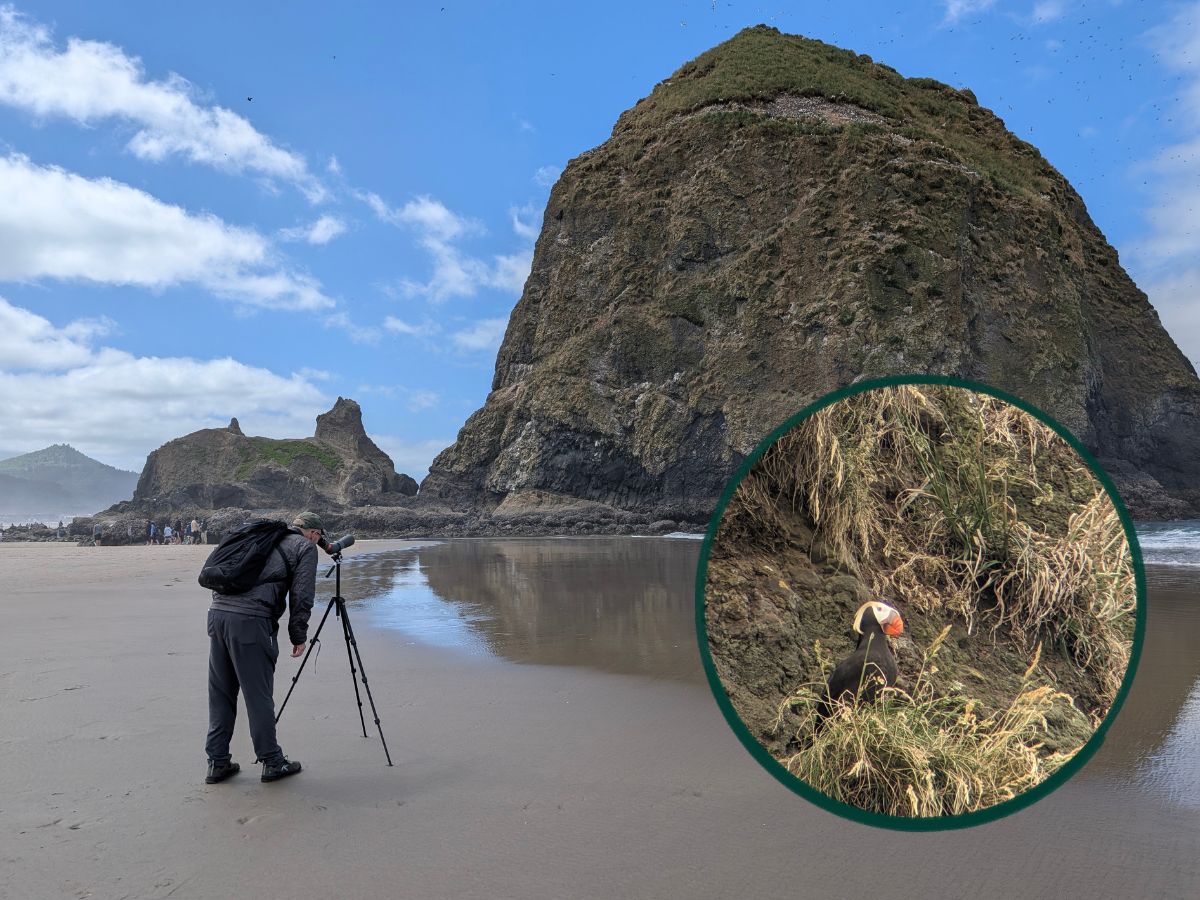
The last place we tested the CS1.A was at Haystack Rock on Cannon Beach. There was a super low tide and the Tufted Puffins were nesting. That minus tide allowed for both great tidepooling and closer access to Haystack Rock. It was a perfect example of when it pays to have a spotting scope.
I used the Aero Jet Backpack from Gossamer Gear to carry the scope and gear. It’s a little smaller and lighter than the GR3 and I really enjoyed testing it on a trip to Peru. The Aero Jet handled the weight with no problem during the couple of miles of beach hiking we did over the course of a weekend.
We were about 50 yards from Haystack Rock, with hundreds, if not thousands, of birds flying around and landing on its face. It’s hard to tell from that photo, but Haystack Rock is over 230 feet tall and at least 200 feet across. To say it was difficult to find the Puffins on the rock is an understatement.
So, we did our best to see the Puffins flying and then attempted to follow them to see where they landed. Then we’d use our binoculars to confirm or (mostly) deny if they were actually Puffins. After about an hour, I began questioning if they were actually nesting here at all.
Then we just got lucky and found a Puffin amongst a crowd of Common Murre about 175 feet up the face. After a little more work with the binoculars, we were ready to use the scope and what a huge difference that made!
We went from the Puffin being tiny but identifiable in the binoculars to filling most of the view with the CS1.A.
Bottomline for the Maven CS1.A Spotting Scope – Highly Recommended
I really was surprised at how much I enjoyed using the Maven CS1.A spotting scope. It’s compact size, light weight, and optical quality won me over. I’ll still be a binocular first kind of birder, but those Puffins convinced me that there is certainly a place for spotting scopes, even for the casual birder.
Pro Tip – Maven is a direct to consumer company. That means you can’t find their products in sporting goods stores, which makes it hard to try one out before you buy. To overcome this, they have a demo program that allows you to purchase a lightly used, like-new, spotting scope to try at home for two weeks. You can decide to keep the demo, get a new/custom one or return it for a full credit (minus shipping). Demo items are 5% off full price.
Maven CS1.A Spotting Scope
Your purchase helps support our website at no extra cost to you.



Deja una respuesta