

First published on 26 de Junio de 2026 • Last updated on Junio 26, 2026
This page may contain affiliate links; if you purchase through them,
we may receive a small commission at no extra cost to you.
«Get on the raft.»
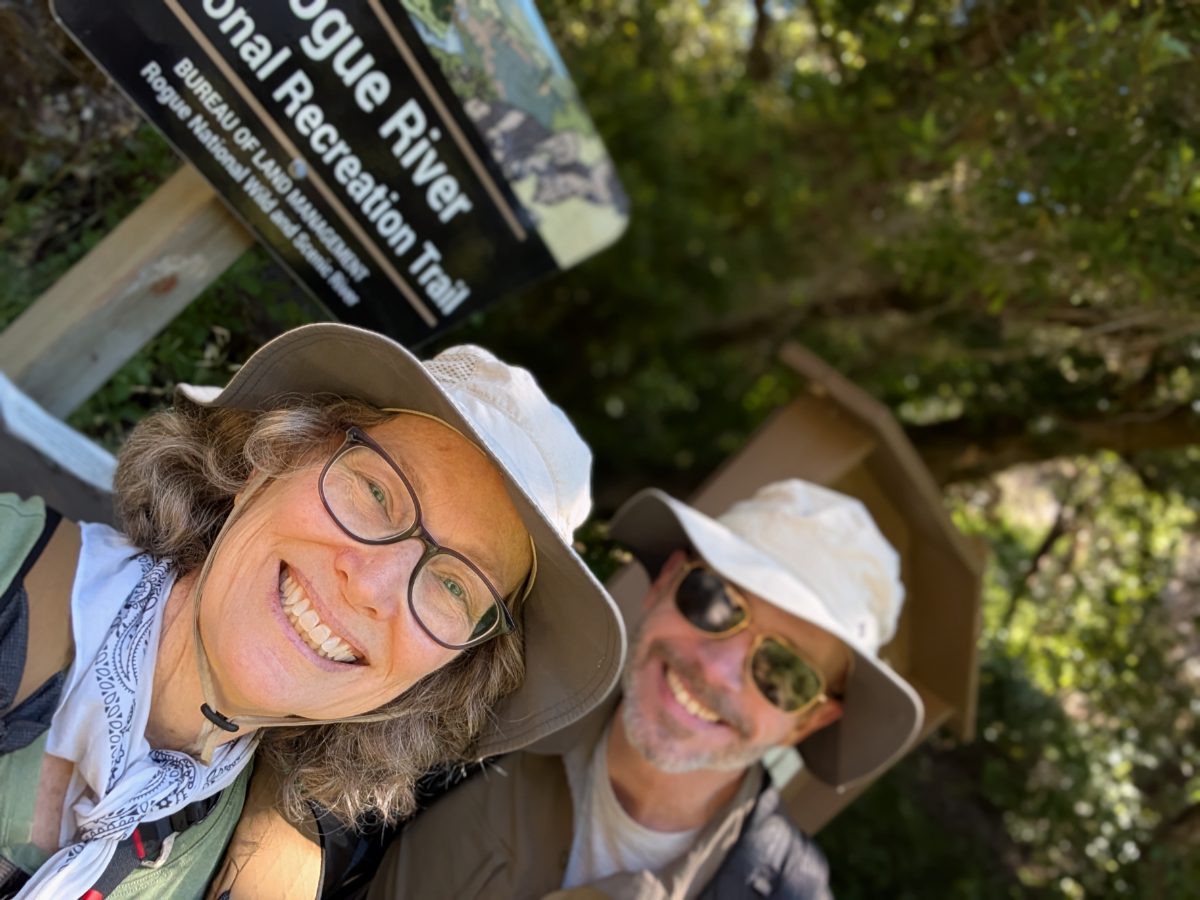
I was sitting in the sand at the edge of the Rogue River, a few feet from the raft I’d been riding downstream. My husband Scott and I were about to hike up to the Rogue River Ranch, a historic pioneer farm, and then on to Inspiration Point — supposedly the prettiest view on the entire Lower Rogue River Trail. Our rafting guide had told us not to miss it.
But the woman planted in a folding chair beside me, feet rooted in the cold water, wasn’t having it. She and her friend had hiked that exact stretch the day before. «Full sun the whole way,» she said. «Hotter than hell. And the best rapids are still to come.»
So there I sat, caught between opposing sets of advice: our river guide, who said hike and the women on the shore, who said don’t.
Why We Booked a Rogue River Raft/Hike Trip in the First Place
A few months earlier, Scott and I had met Patrick of Oats Marketing at a Travel Massive event in Portland, Oregon. Our first coffee meeting turned into two hours of conversation that no one really wanted to end. Patrick then invited us to join his team on a float down the Rogue with one of his clients, Orange Torpedo Trips as a way to continue the conversation.
When we looked at the options, we were drawn immediately to the raft/hike combination. As avid hikers, the idea of covering ground on foot appealed to us. But the published itinerary listed daily distances of 12+ miles, more than I could reliably hike.
A few years ago, I was diagnosed with MS. At the time, I was unable to walk a mile without beginning to limp, dragging my heavy right foot as if it wore a hiking boot twice the weight of my left. I’ve worked hard since then, eatingly cleanly, stretching unnaturally tight muscles, and generally rebuilding my ability to walk without pain. I had also started a medication that helps keep flares at bay. Today, we hike 3-5 miles with no problem. I’m willing to push to 8 miles in the right conditions.
But heat is the thing that still gets me. Overheating can bring old symptoms roaring back — my right leg seizing up, my balance going, my ability to find words or finish a thought scattering like the gravel under my boots. My husband has learned not to ask me questions when I get like this; my brain just spins and finds it near impossible to land on an answer.
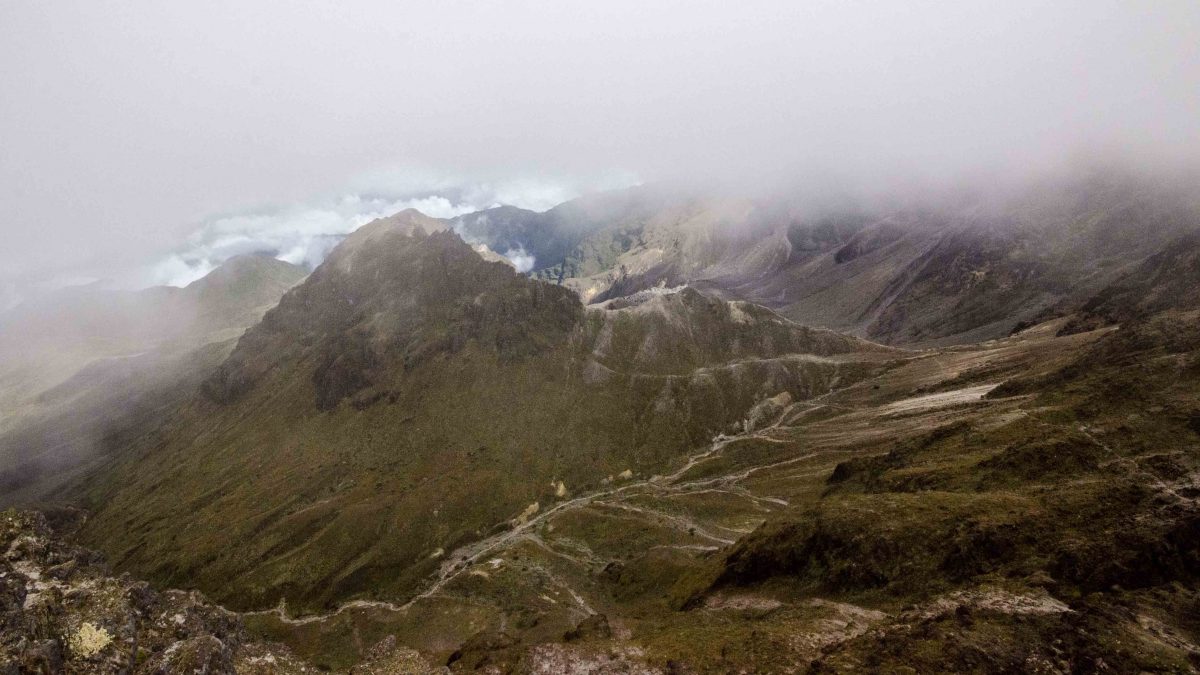
A trip that let me choose, mile by mile, whether to hike or raft felt like a great way to approach this challenge. If my leg gave out, as it once did on the Inca Trail in Ecuador, I wouldn’t be stuck choosing between pushing through an injury or holding up the whole group. I’d just get on the raft.
Day One: Late Start, Hot Day, Cool River Welcome
We met our guides at Orange Torpedo’s headquarters in Merlin: Billy, 40-plus years on the river, all gruff wisdom and barbed wit, and Grayson, a third-generation guide who somehow managed to pilot a raft through moving water and tell a story at the same time, never losing the thread of either one. There was something about his easy energy that reminded me of my own sons.
From there it was a short drive to the put-in, where our group sorted itself by activity: hikers, runners, kayakers, rafters, with most of us mixing and matching as the days went on.
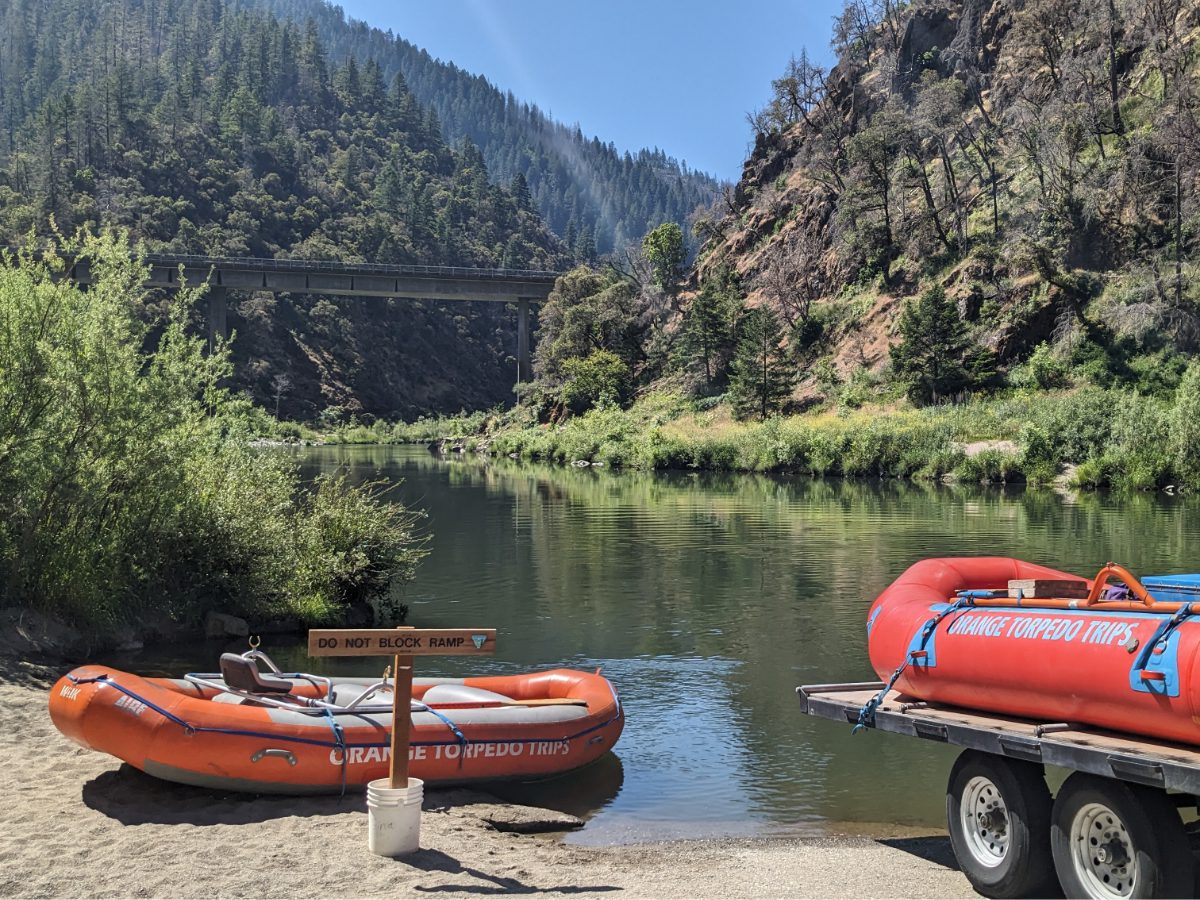
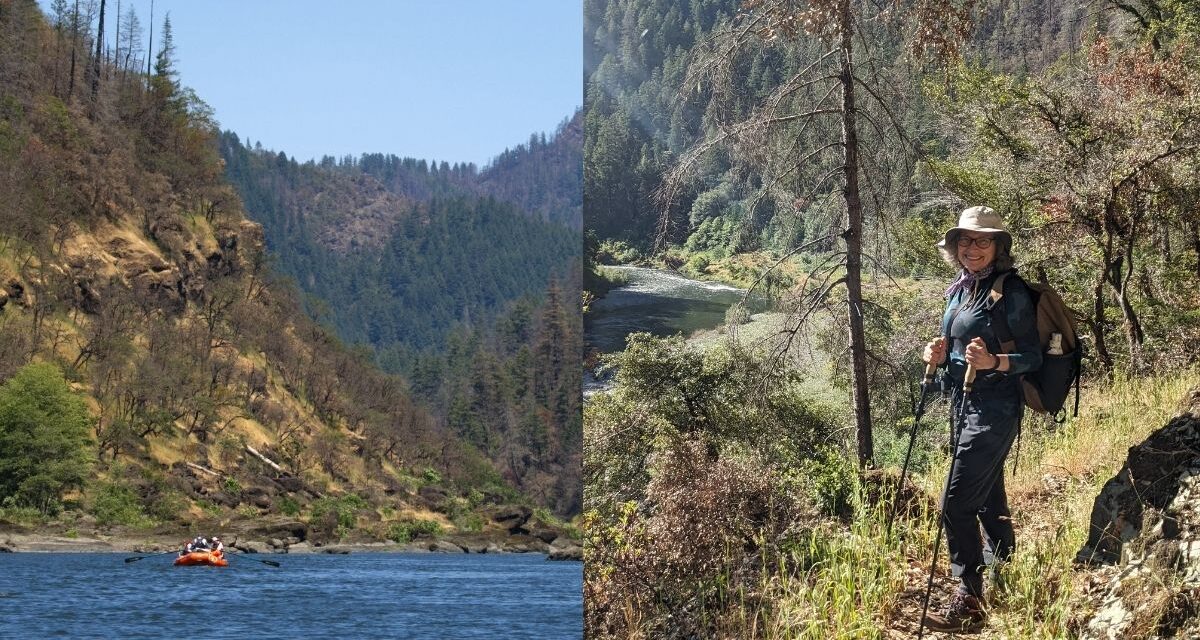
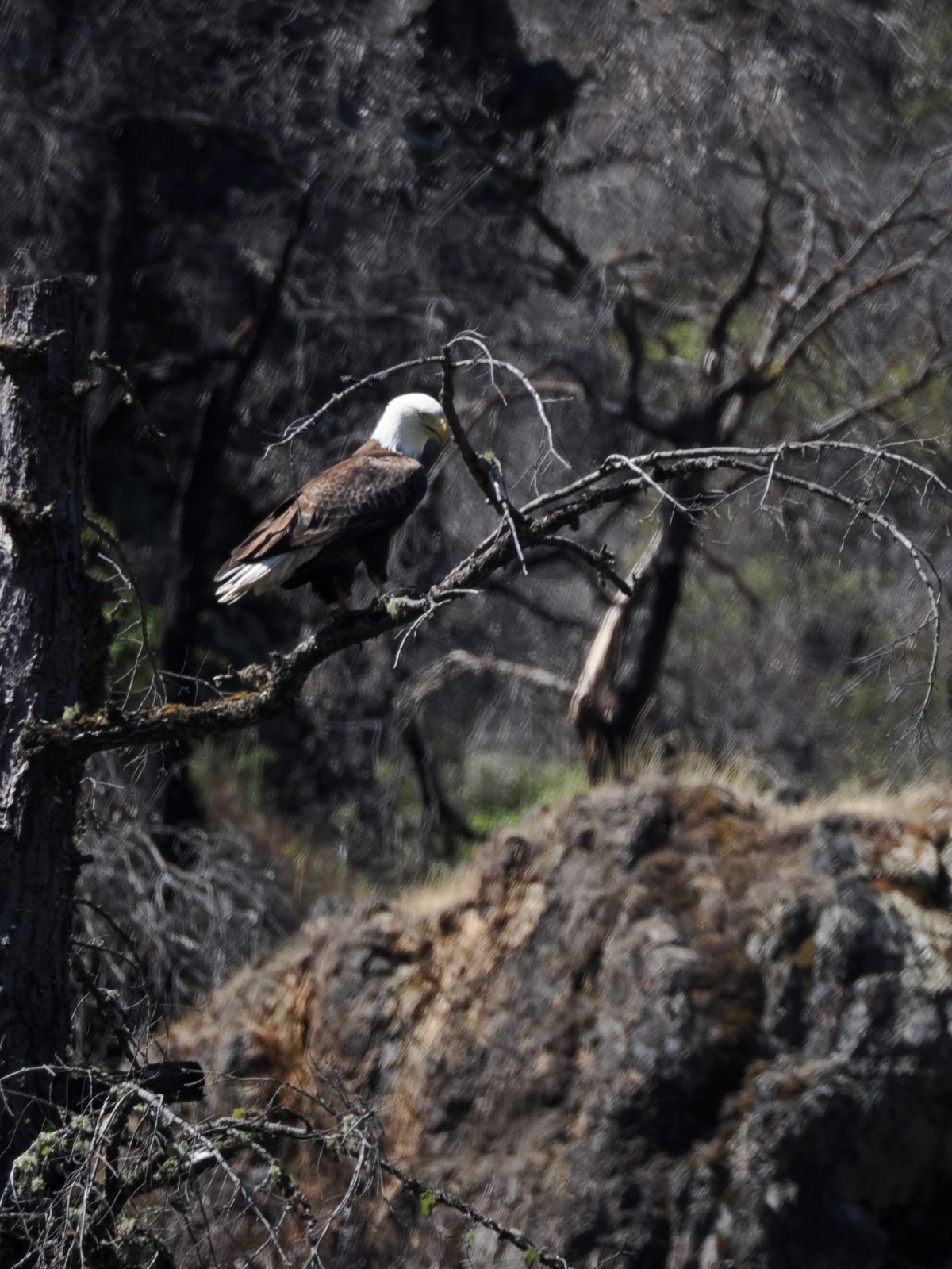
The first hike started around 11 am, already pushing 85 degrees, on a trail with little shade climbing the base of a mountain on the northside of the Rogue River, the side that sees the most sun. I dipped my bandana in the river, tied it around my neck, as someone hollered and pointed towards a tall dead tree on the other side of the river. A Bald Eagle perched high above, a great sign as I started walking, thinking more about the wildlife I might see rather than the heat of the day.
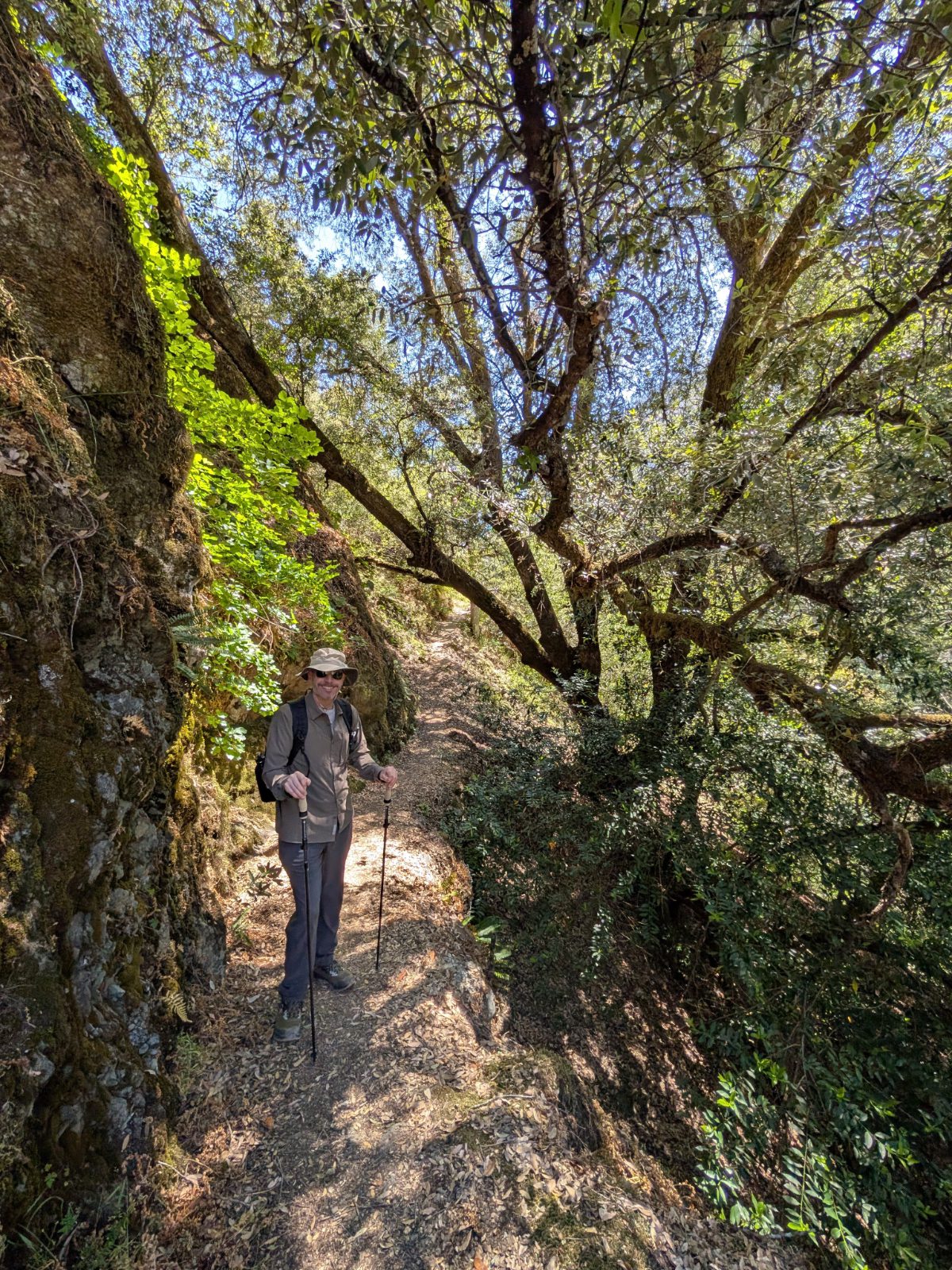
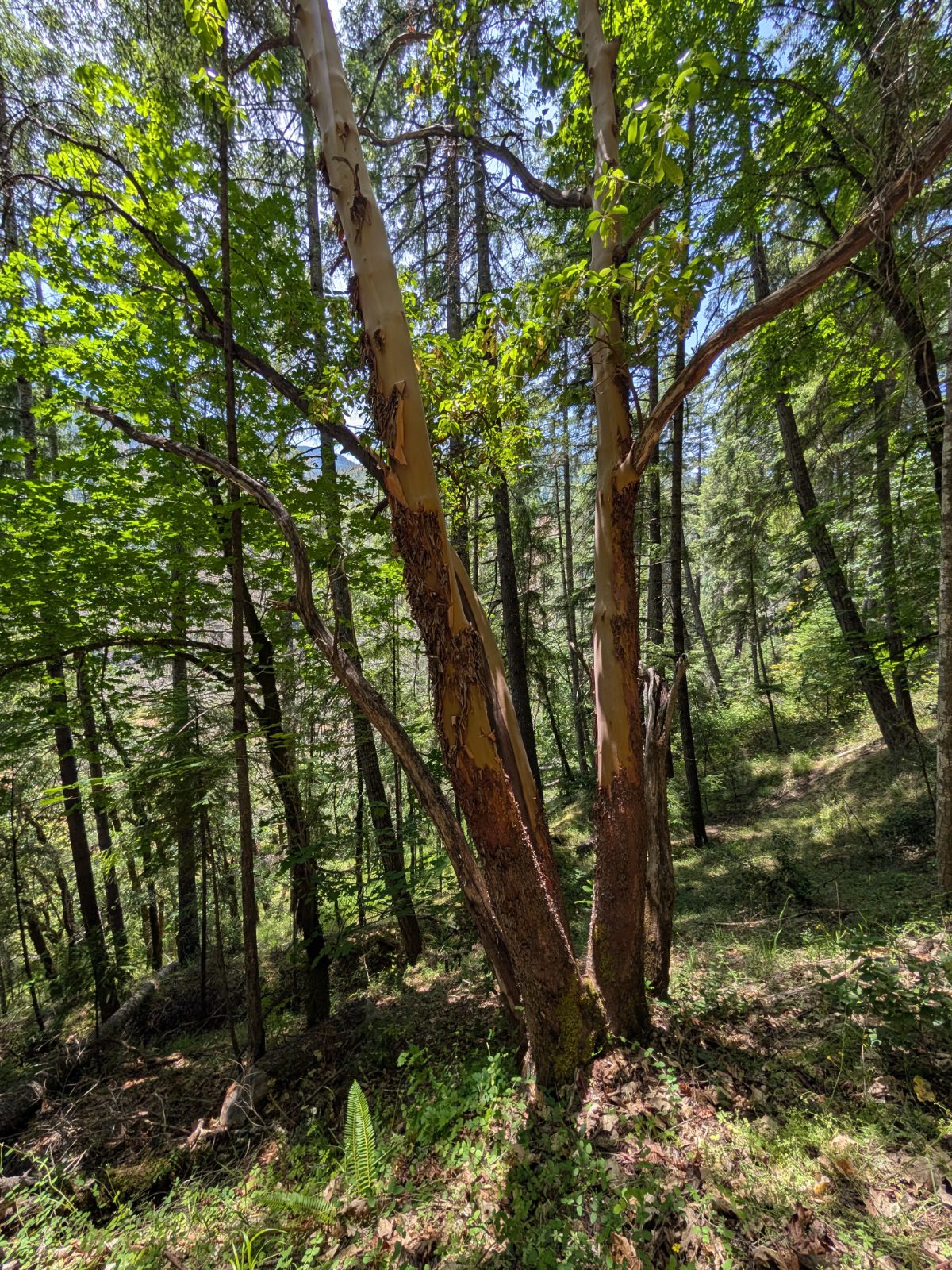
The trail wove in and out of shade — madrone and scrub oak overhead, hidden creeks slipping over cobbled rock, Indian paintbrush and wild farewell-to-spring lighting up the dry slopes.
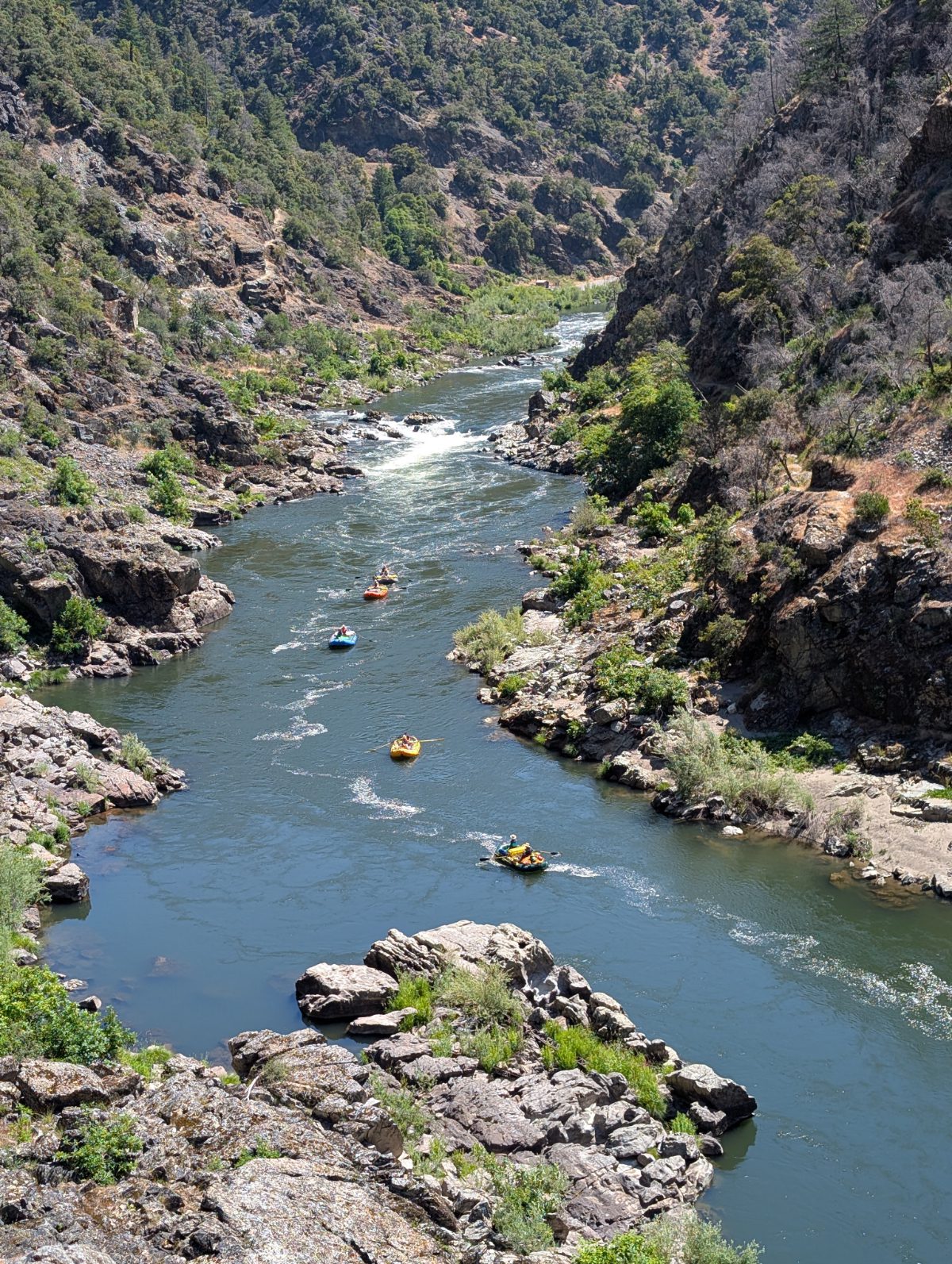
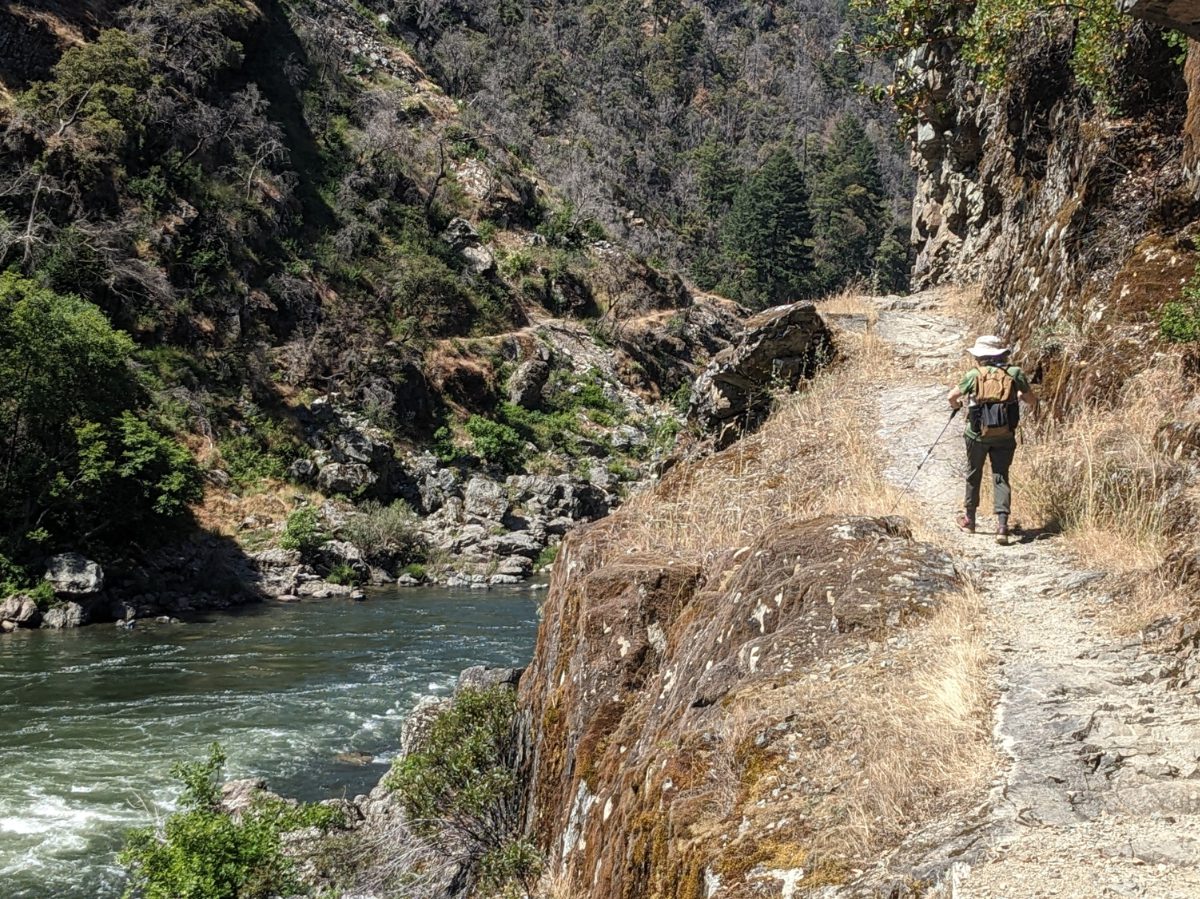
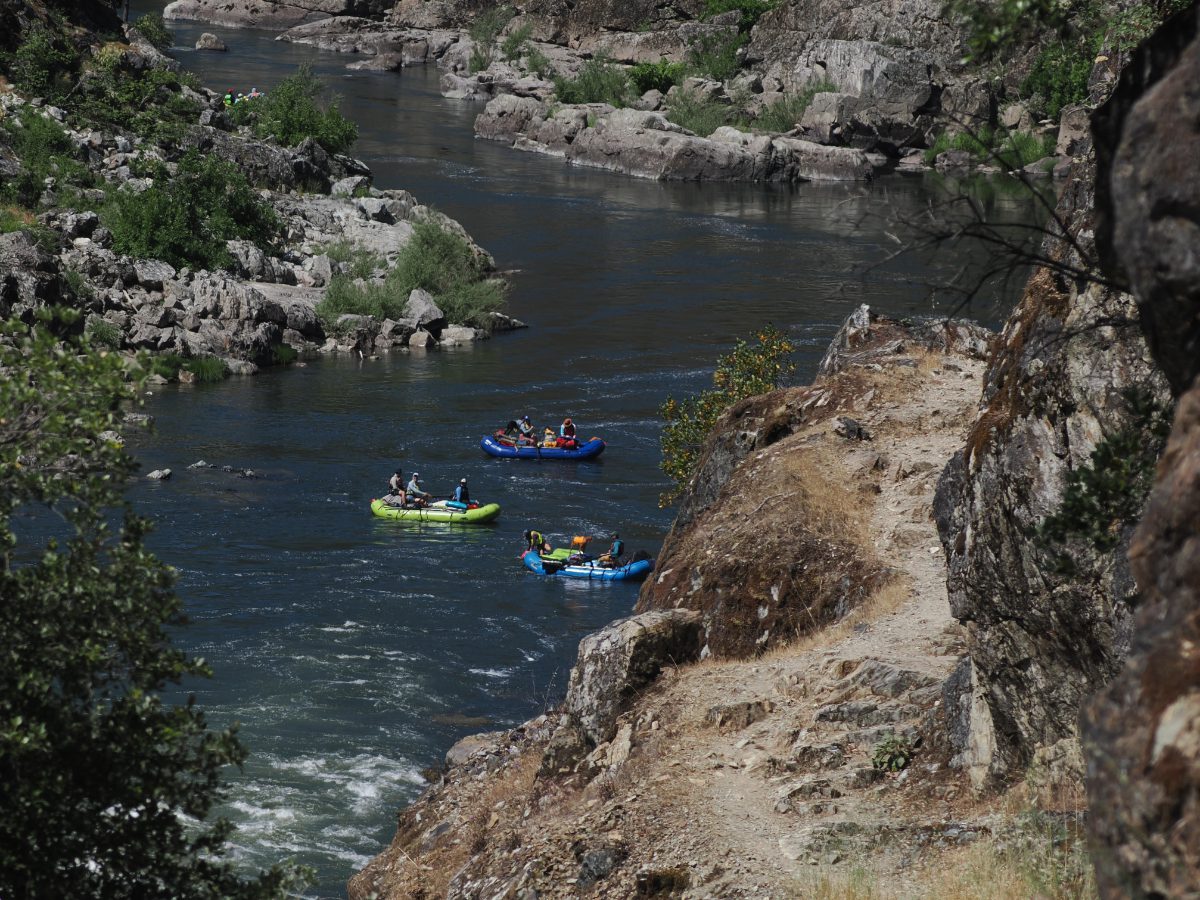
At one point, a single sharp horn blast echoed up from the river below, and we spent a good half mile speculating about who was crazy enough to be honking at tourists out here. It turned out to have nothing to do with us at all — the horn signals to the next raft in line that the Fish Ladder is clear. The Fish Ladder is the bypass that guides use to get around Rainie Falls, a Class V drop most rafts won’t run. One horn blast, one raft through at a time.
We covered the 4.4 miles to lunch in good time, though at one point, we saw Billy looking up at us from the river as we chatted with locals at an unbelievably high water mark from the Christmas Flood of 1964 when the Rogue crested 15 feet above flood stage in Grants Pass. They were happy to be revisiting a trail they hadn’t hiked in years. Even from so far away, Billy’s message was loud and clear. Stop jawing and get hiking. We followed suit.
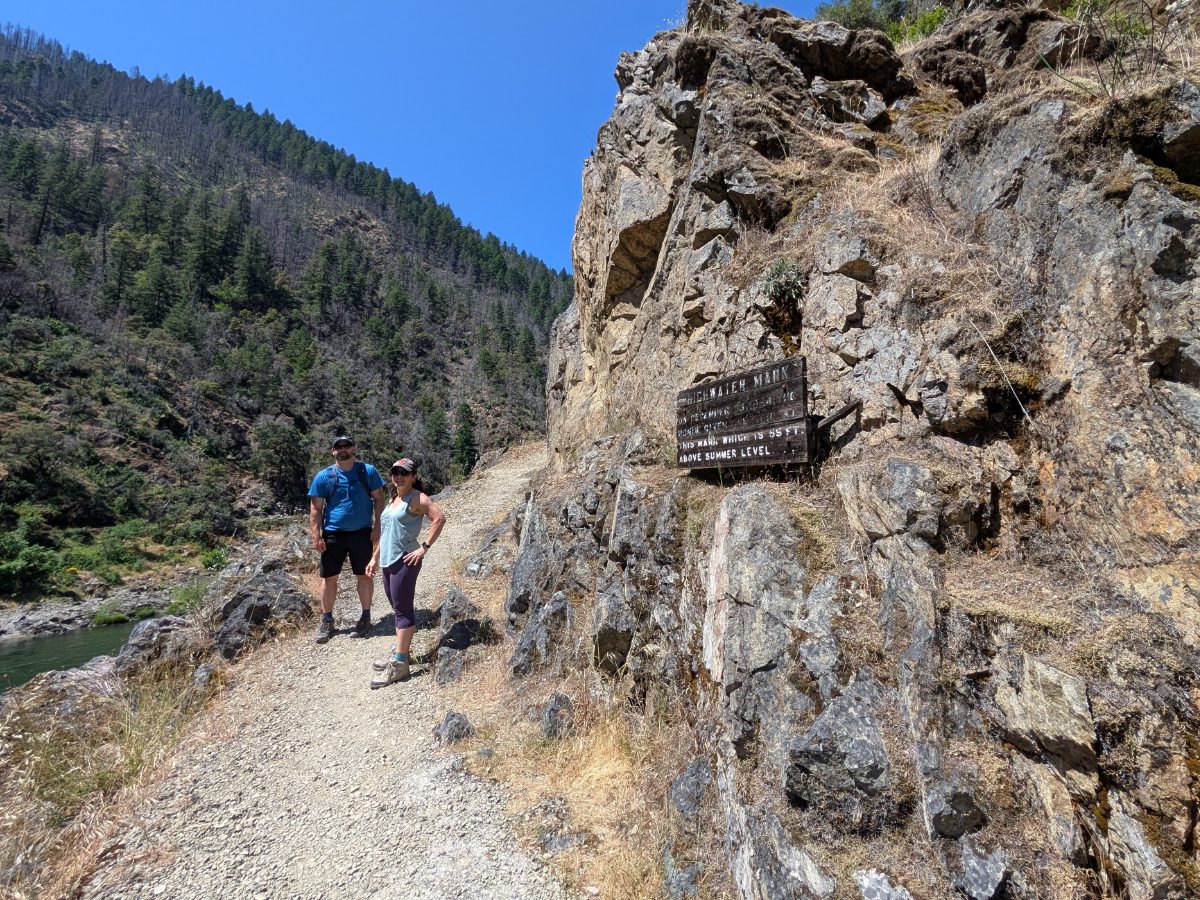
We slipped into the small lunch gathering just as Billy was laying out the sandwich fixings. Most folks had found a place to perch in the shade on the tripod camp chairs just a few feet from the water’s edge. The runners had been resting a while but we had made decent progress with the two other hikers… not as slow as we might have been.
After lunch, we hopped into Grayson’s raft, learning to line up crack to crack to avoid being thrown overboard on a rough wave. Yes, that is butt crack to the crack between the seat and the side of raft. The advice was great though Grayson seemed to know how to hit the rapids just right. We got wet enough to cool off but never so off-balance we thought we might tip in.
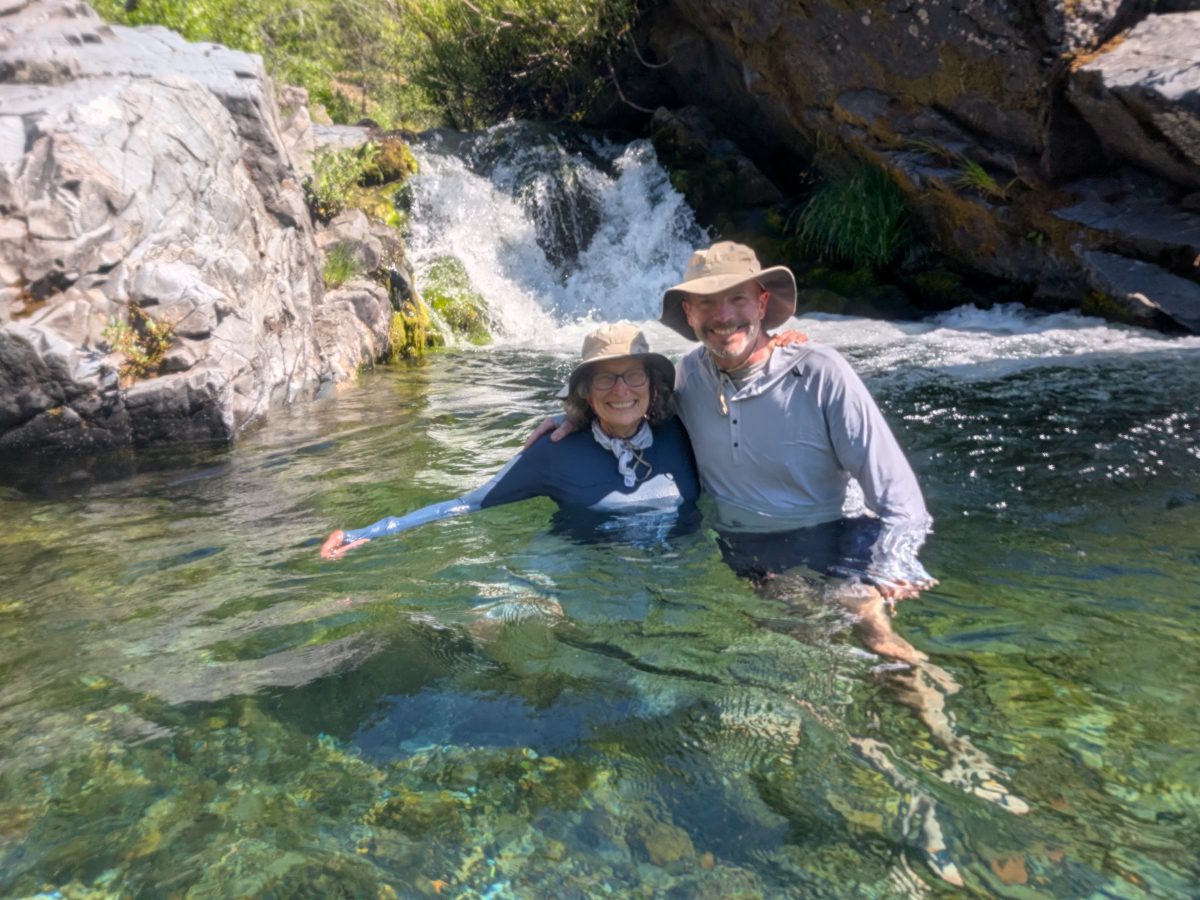
He announced each set of rapids by name and sprinkled stories about the river in between. Knowing how much I was enjoying the cool water, he offered us a surprise visit to his favorite watering hole at Howard Creek, a lovely pool formed by a stream tumbling from the south face towards the river, enlarged by a handful of artfully placed stones. This cold-water plunge did more to soothe my overheated body than any spa treatment ever could.
The afternoon was delightful with a bright blue sky, a kaleidoscope of blues, greens, and grays reflecting off the water, and the cheerful back and forth conversations on the boat. It seemed like no time had passed before we heard a friendly hello from a fisherman on the rocks. Beside him, two young boys pranced like ponies and hallo-ed to Grayson, seemingly an old friend. We had arrived at Black Bar Lodge.
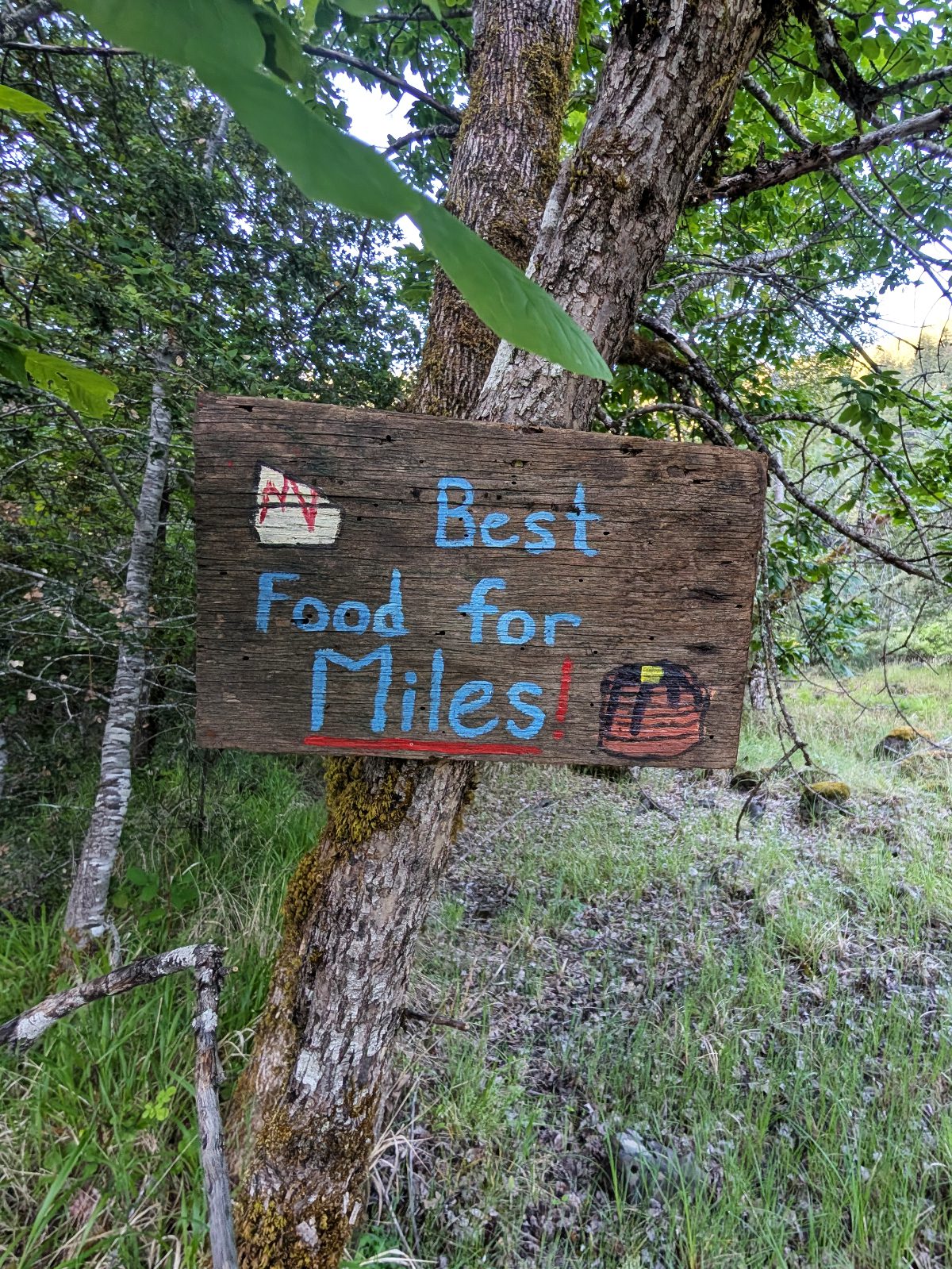
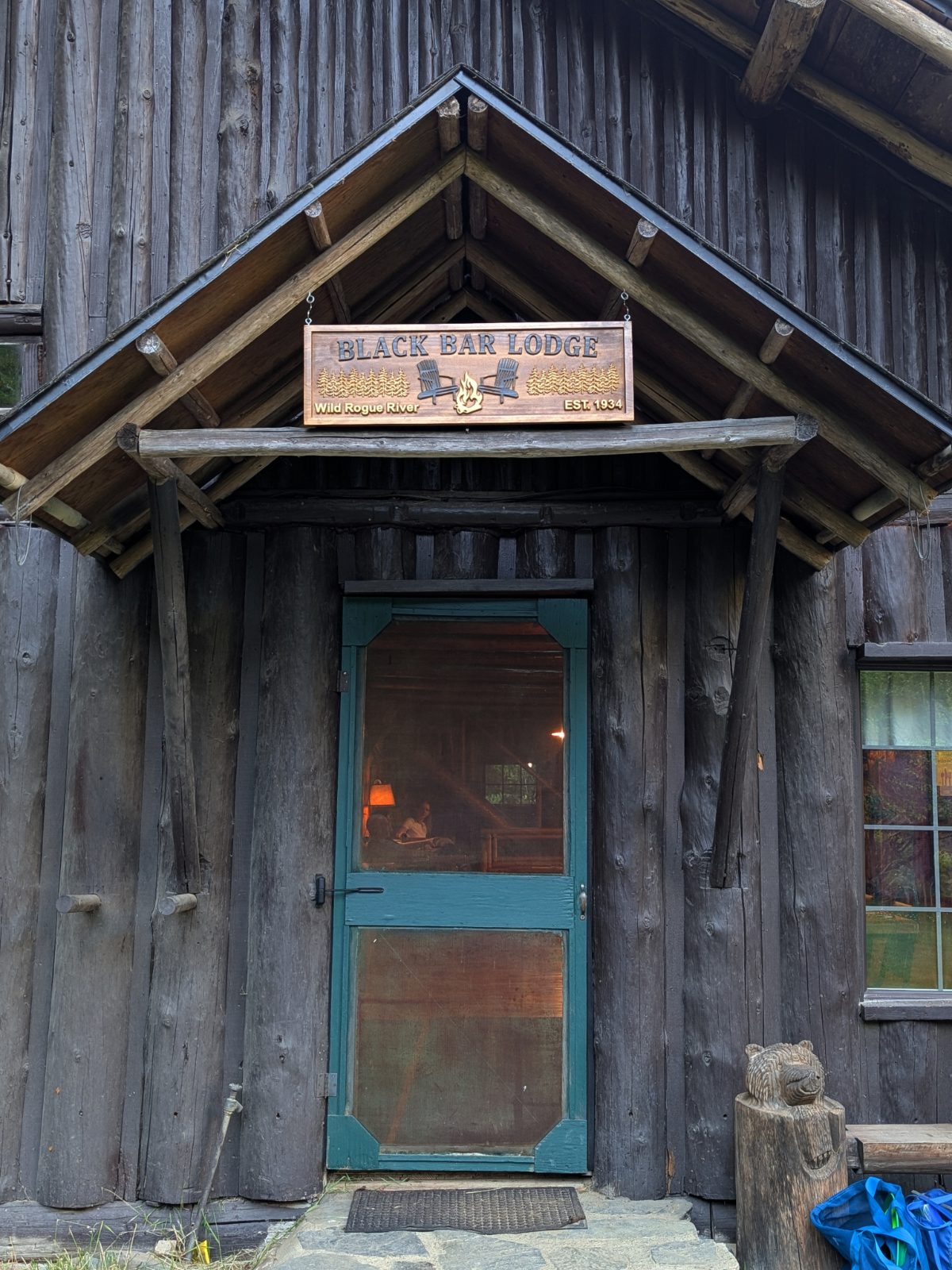
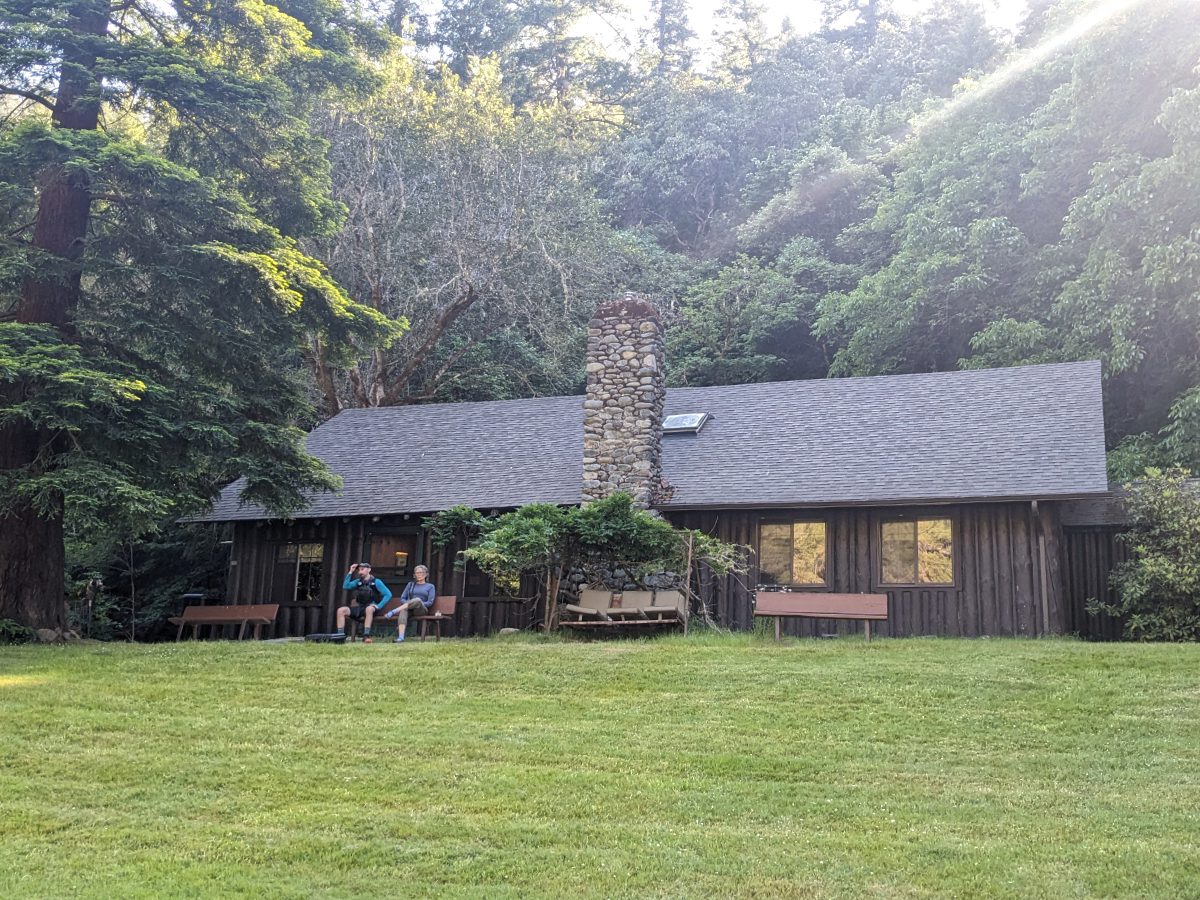
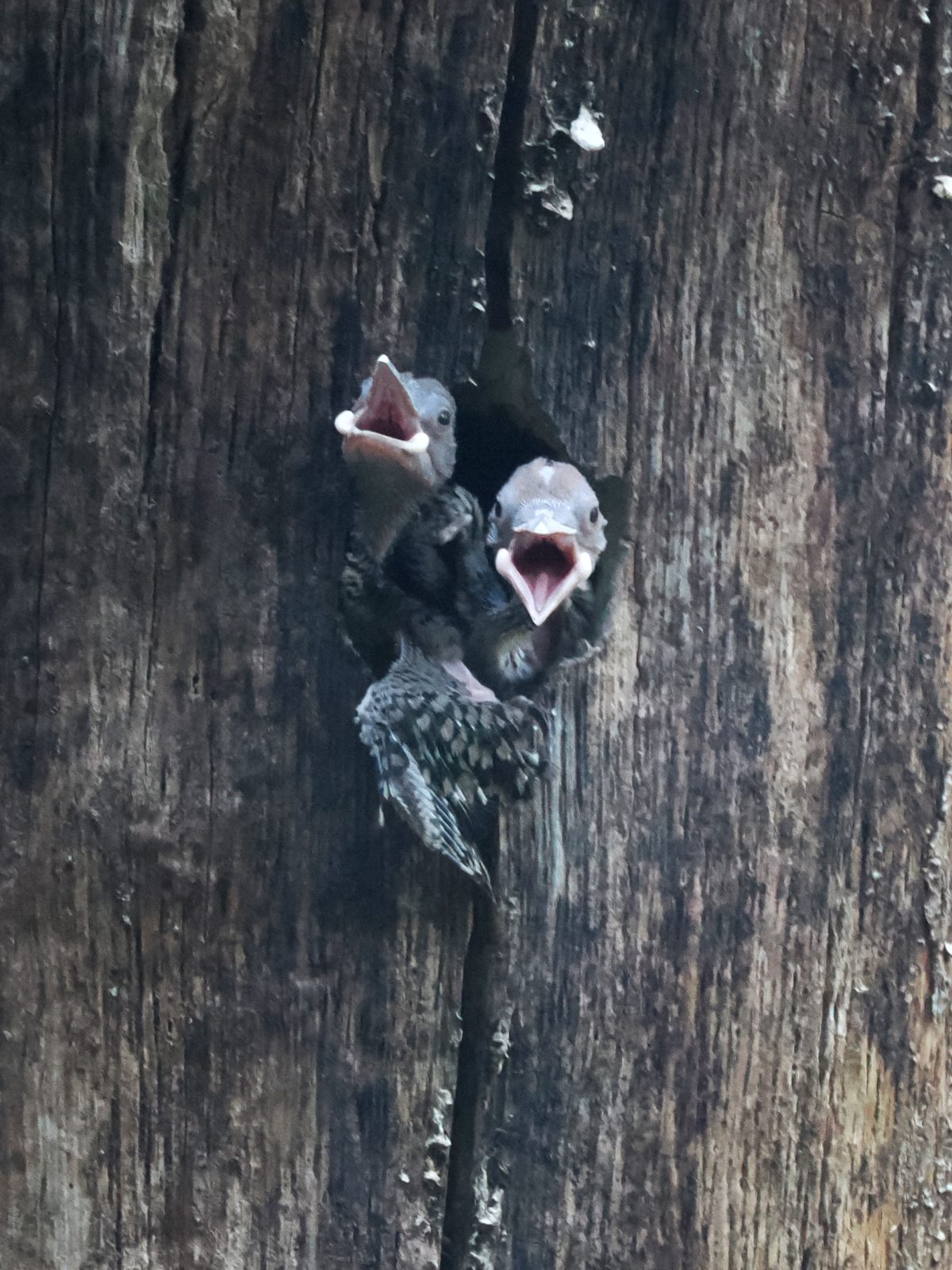
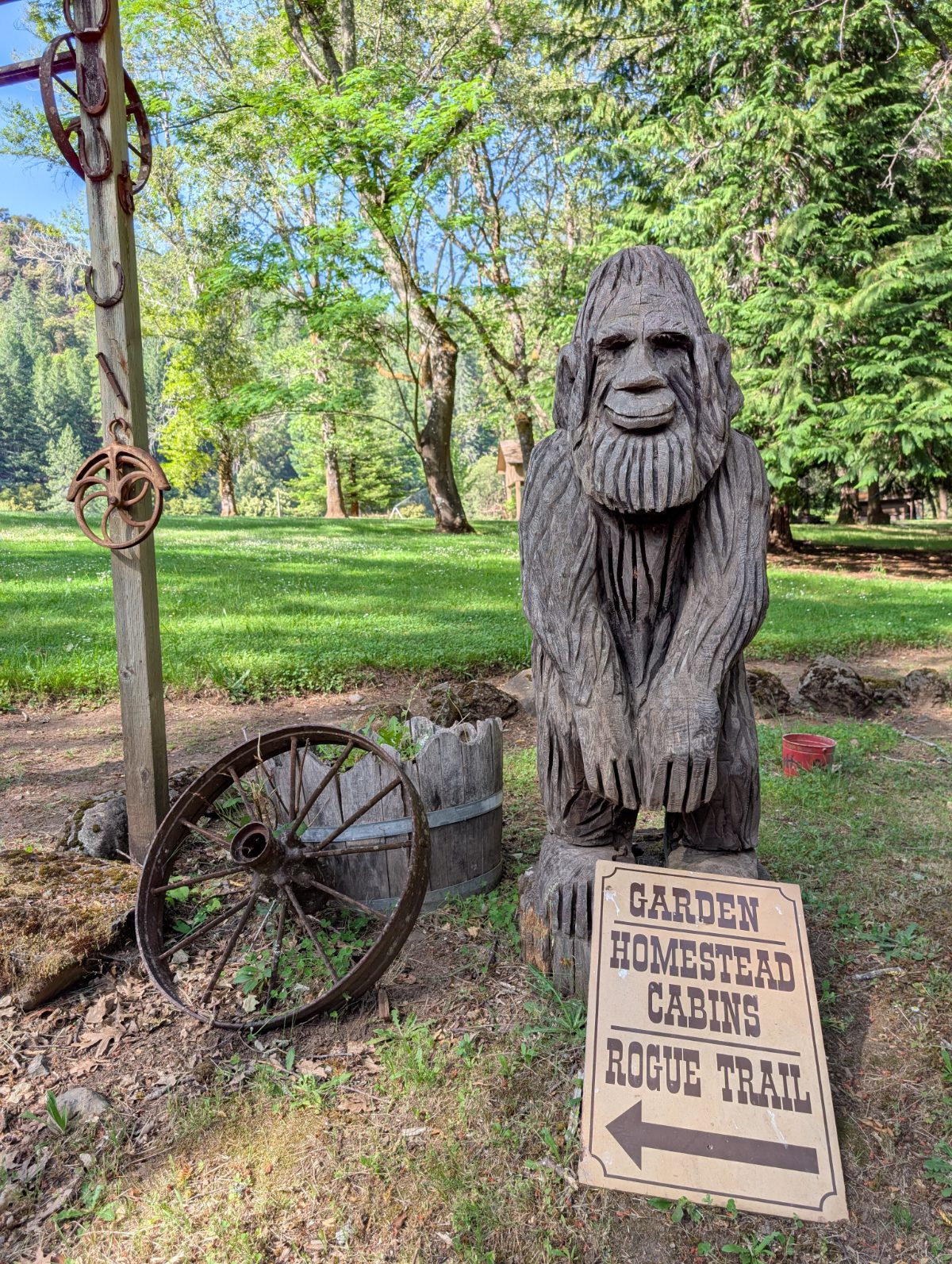
Leaving the guides to unpack our gear, we climbed the rocky bank up to a trail that led to the lodge itself, signs promising the best food in 50 miles around. At the screen door to the wooden building, Dannie greeted us wrapped in an apron and full of helpful directions – lemonade and cookies inside, cabin down the path, don’t disturb the birds’ nest above the rocking chair, and please wash your sandy feet over there.
KC, the youngest of the two boys we saw earlier, offered to help with the garden hose, and blasted my foot at full power and I felt the particular joy of watching someone else’s kid be exactly as proud and incompetent as my own boys once were. His mom left to prepare our fried chicken dinner, and dad was helping our guides haul gear and get folks settled into their cabins — simple affairs with plain wood walls, a curtain for a bathroom door, and a mattress with a permanent dip in the middle, the only complaint of an otherwise rustic and idyllic stop.
Day Two: A Tuba, a Warning, and a River That Changed My Mind
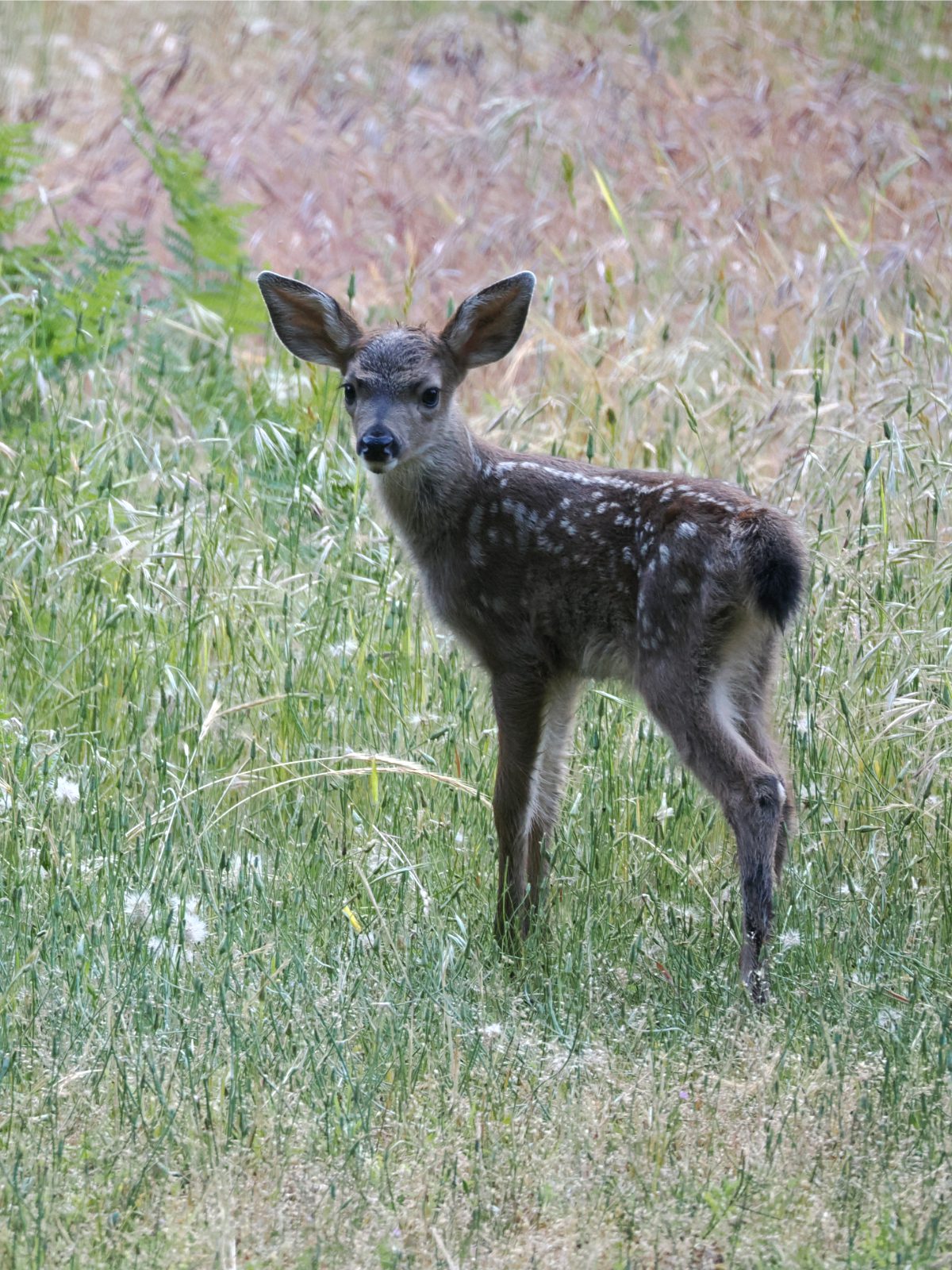
I awoke with the sun, as I am apt to do, and headed out to find some birds. I found a few but the early morning treasure was a doe and two fawns, so recently born that their gangly legs seemed slightly uncoordinated as they dashed back and forth, playing catch me if you can with an imaginary friend. I checked the flicker nest by our front door. The evening before, I watched three chicks compete for attention as mama bird crammed food into their maws. This morning, appetites seemed to be sated.
Not so for our crew. By 8 am, we were gathered for a hearty breakfast of pancakes, scrambled eggs, ham, and potatoes. All washed down with excellent coffee. Dannie reminded us to leave a comment in the guest book, where she hoped our children and grandchildren might read our names in some distant future. They’ve kept these books as long as the lodge has been open.
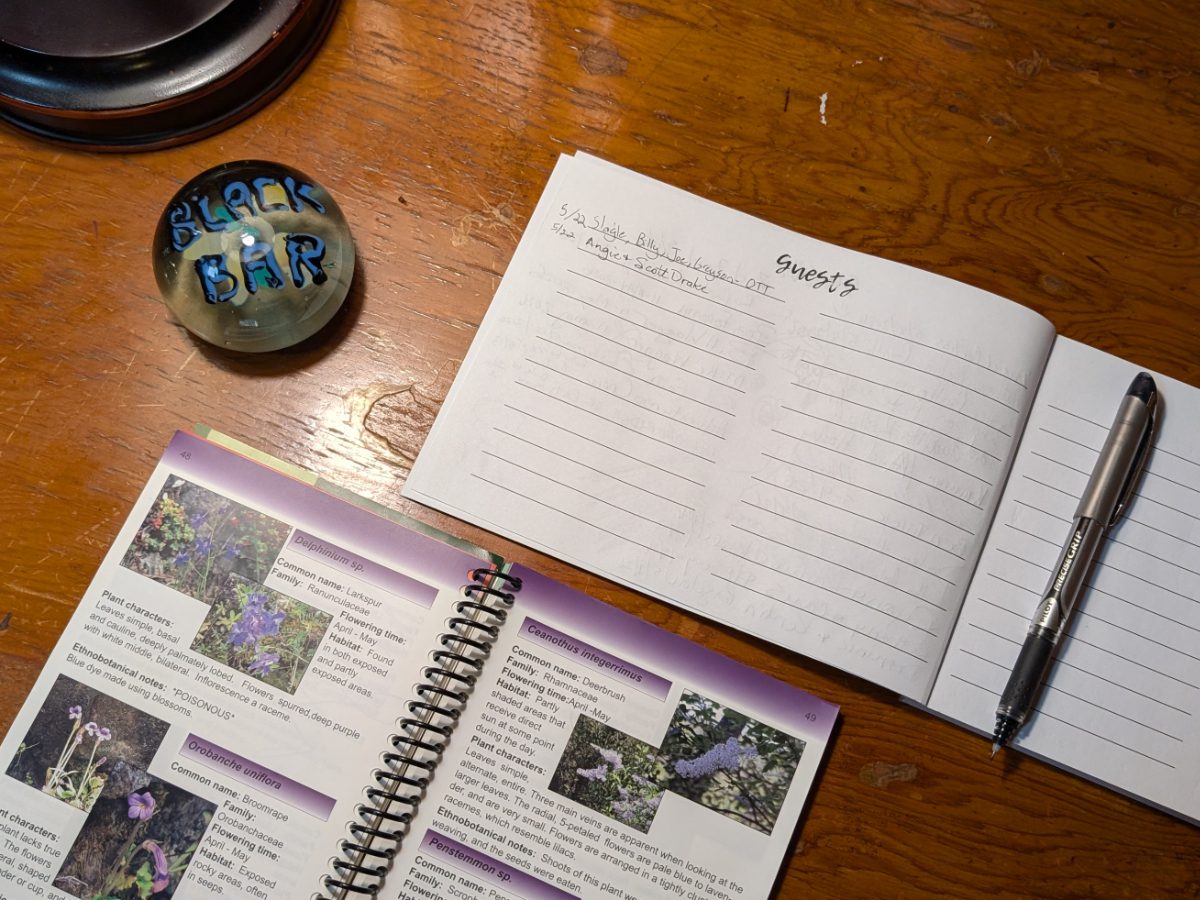
Soon after, we met at the rafts and watched our gear get loaded. Connor, the eldest of the Black Bar Lodge children, came to see us off, holding a few items in his hand. Someone had forgotten to double check their room and he managed to save the day. It’s not easy to recover items left behind at a Rogue River Lodge.
We floated four miles downriver to Battle Bar this morning — the easiest way past a steep climb to the trailhead, and the kind of small built-in help this trip kept offering. If I could save myself a steep climb, I could hike further on the actual trail.
Drifting along in the cool of early morning, we passed a man camped on the bank. He greeted Grayson and hollered that he had a surprise for a fellow guide, Mike Slagle, who was rumored to be retiring after 50 years of guiding on the Rogue. Shockingly, he grabbed his tuba and proceeded to play Darth Vader’s theme from Star Wars, the sounds echoing off the water for miles downriver. I don’t know who was more surprised, Mike, when he took his turn around the bend to find his tuba playing friend, or myself, who never expected to see a brass instrument played along a wild and scenic river. Local culture indeed.
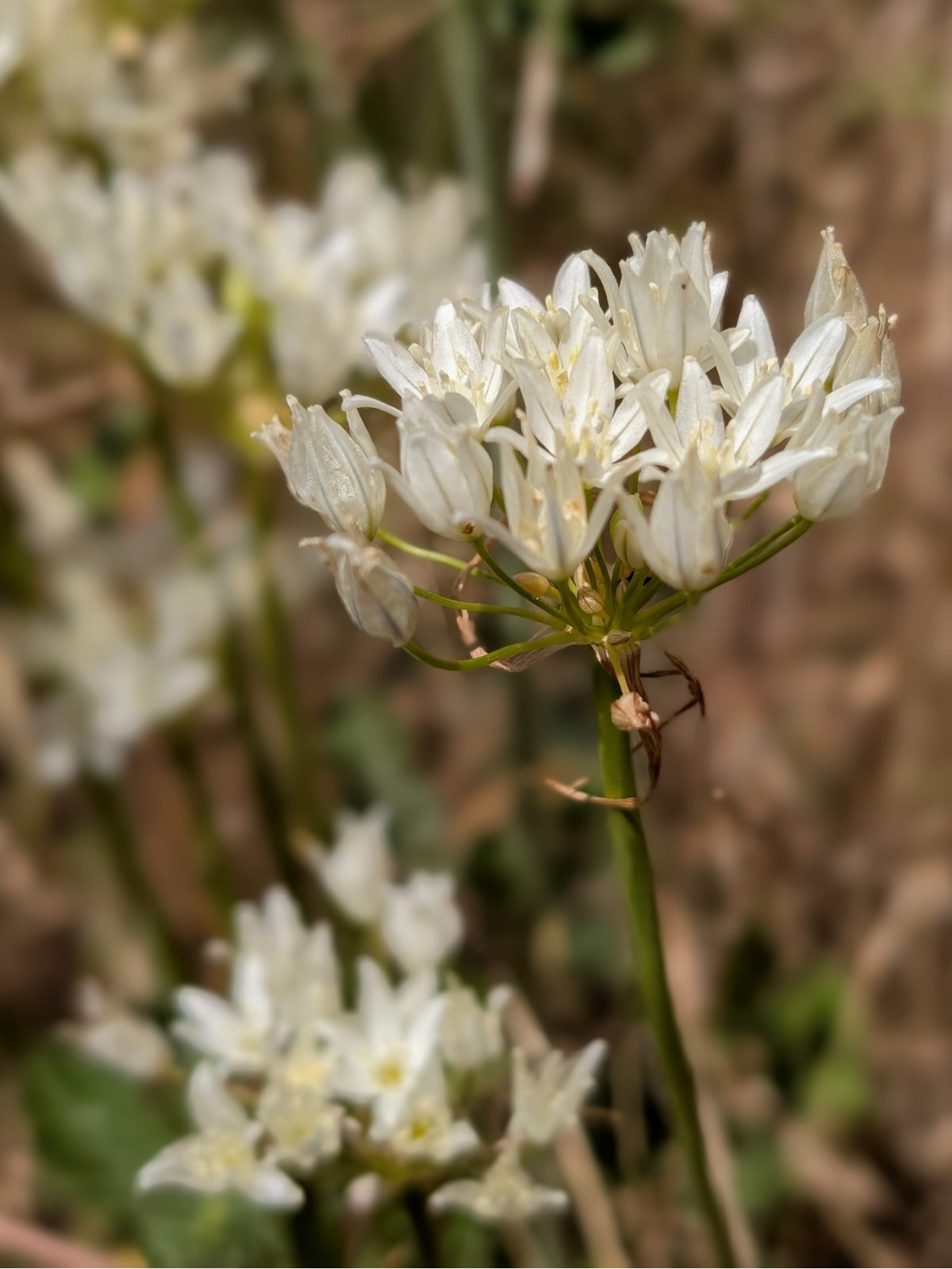
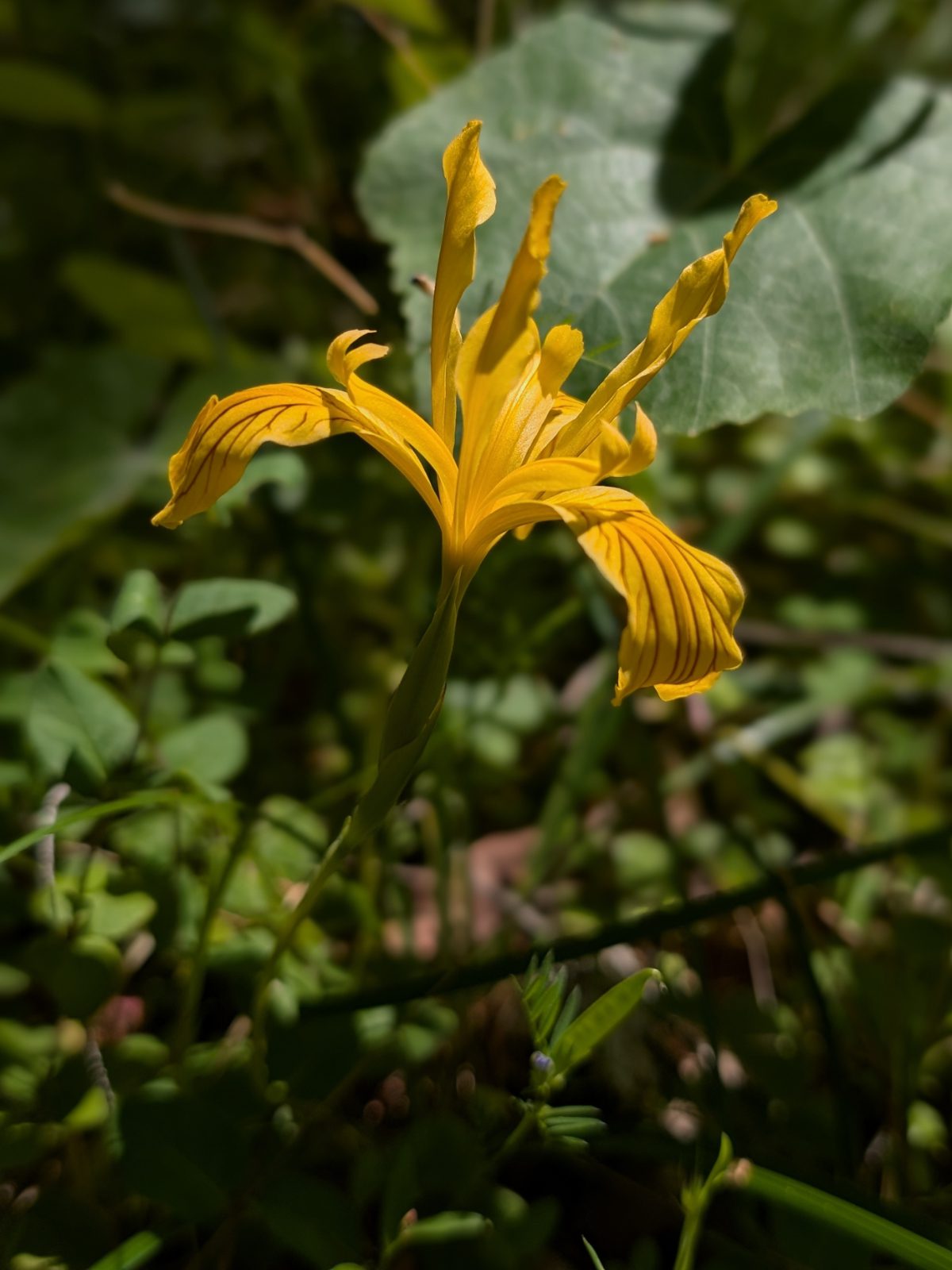
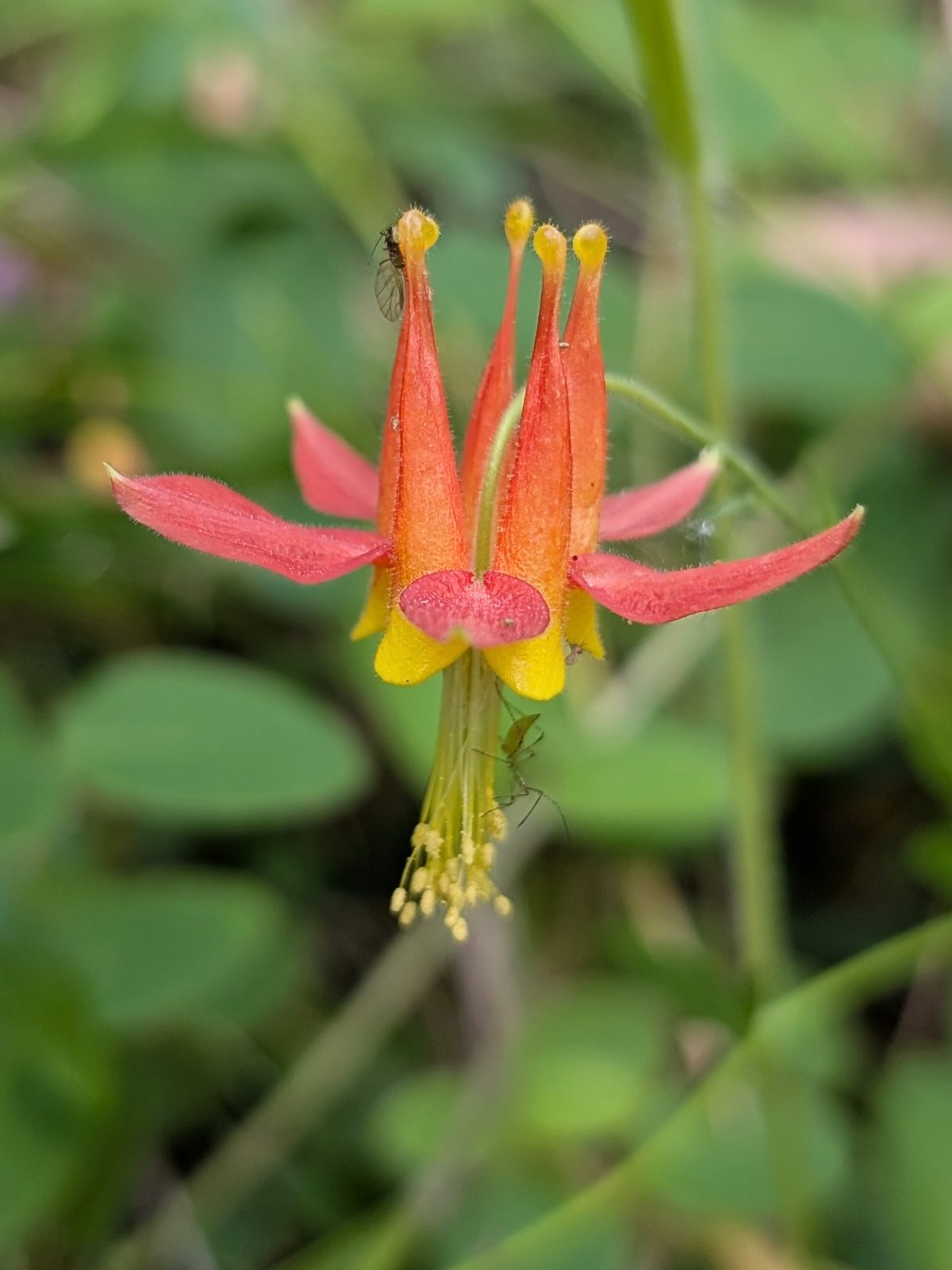
At Battle Bar — the site of the only real battle of the Rogue River Indian Wars, though we never found the marker — we set off on a quieter trail than the day before. Fewer hikers, more birdsong than birds. Wildflowers kept appearing as we climbed: fool’s onions, like small white fists, a scattering of California poppies, one stunning yellow iris that finally let me identify a strange seed pod I’d been puzzling over for a mile, red columbine shaped like little rockets about to launch. We pushed through gnarled stands of Oregon white oak and out onto dry, grassy slopes with wonderful views of the river below.
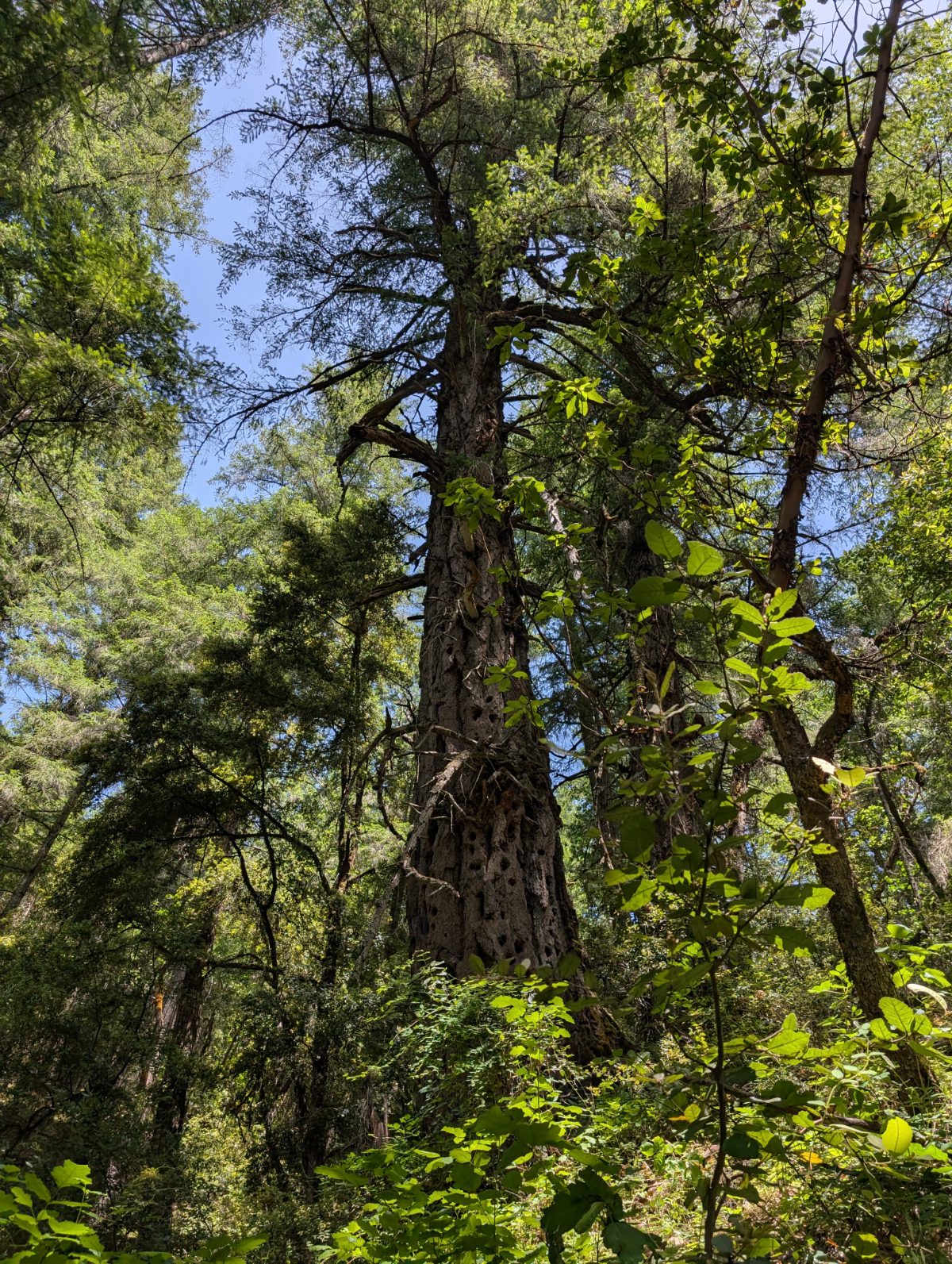
We hiked and hiked, through forests of fir trees and stands of coffee berry, crossing small creeks and streams where the mountain folded together. I found joy in every step, hiking in the cool of the morning. By mid-day however, I was more than ready for the trail to drop back to the river for lunch. I was tired, hungry, and hot. But not exhausted. And looking forward to our afternoon hike up to Inspiration Point.
So imagine my surprise when we arrived at the drop off point after lunch. We were on Billy’s raft for the short distance from lunch to here. I have psyched myself out to hike, despite the warm afternoon, with promises of a shaded trail and the best view along the entire Lower Rogue River Trail. And this harbinger of bad news soaking her feet in the water awaits me with the question, “Why would you want to hike that trail in this heat?”
She had hiked it yesterday and something in her saw a kindred spirit in myself. She had no clue that I had MS. Or that the heat destroys me. But she had hiked the trail yesterday and regretted doing so. I could feel my mind struggling with the decision and not finding it easy to land on an answer. That too was a reminder that the heat was already causing me trouble. I looked at Scott and he shrugged his shoulders, ready to support me either way. Hike or raft?
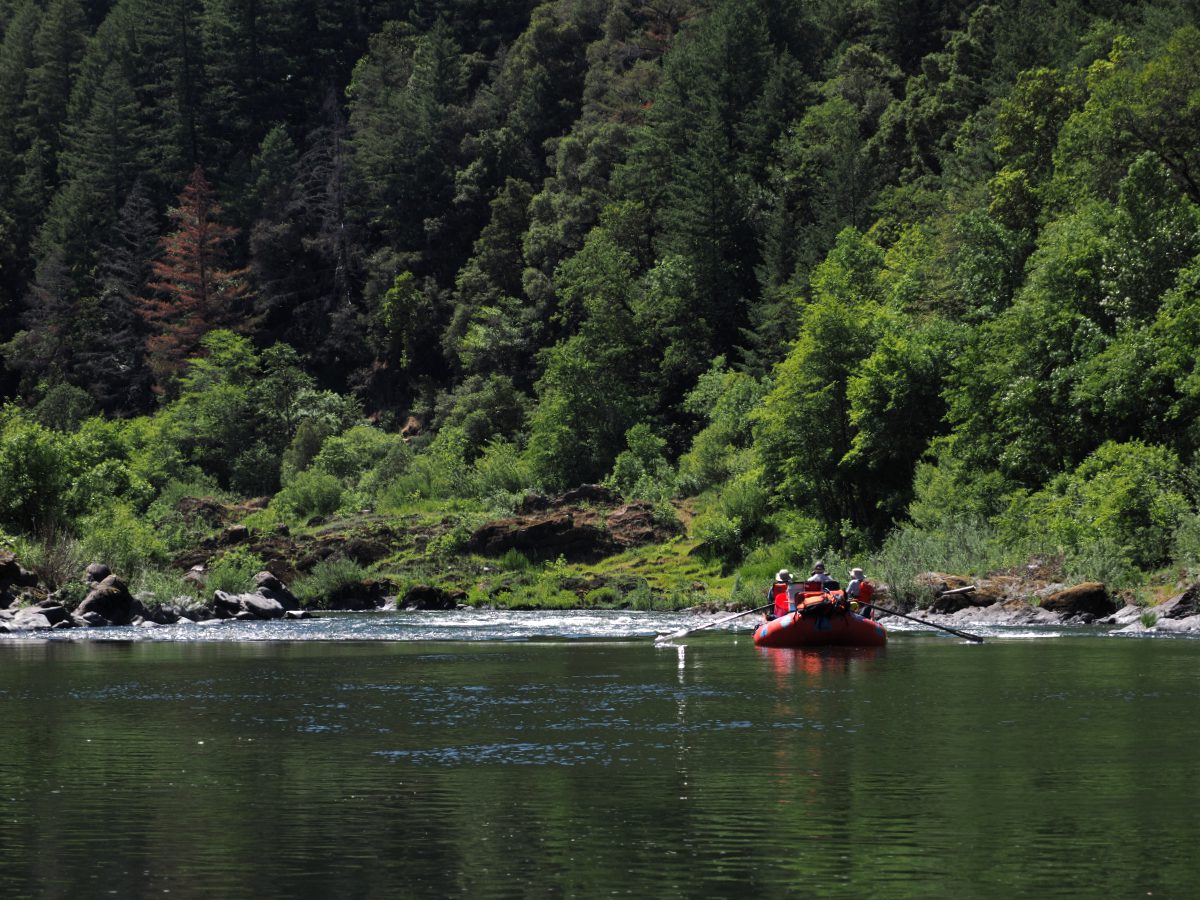
So I did something I don’t often do. I changed my mind. I got back on the raft.
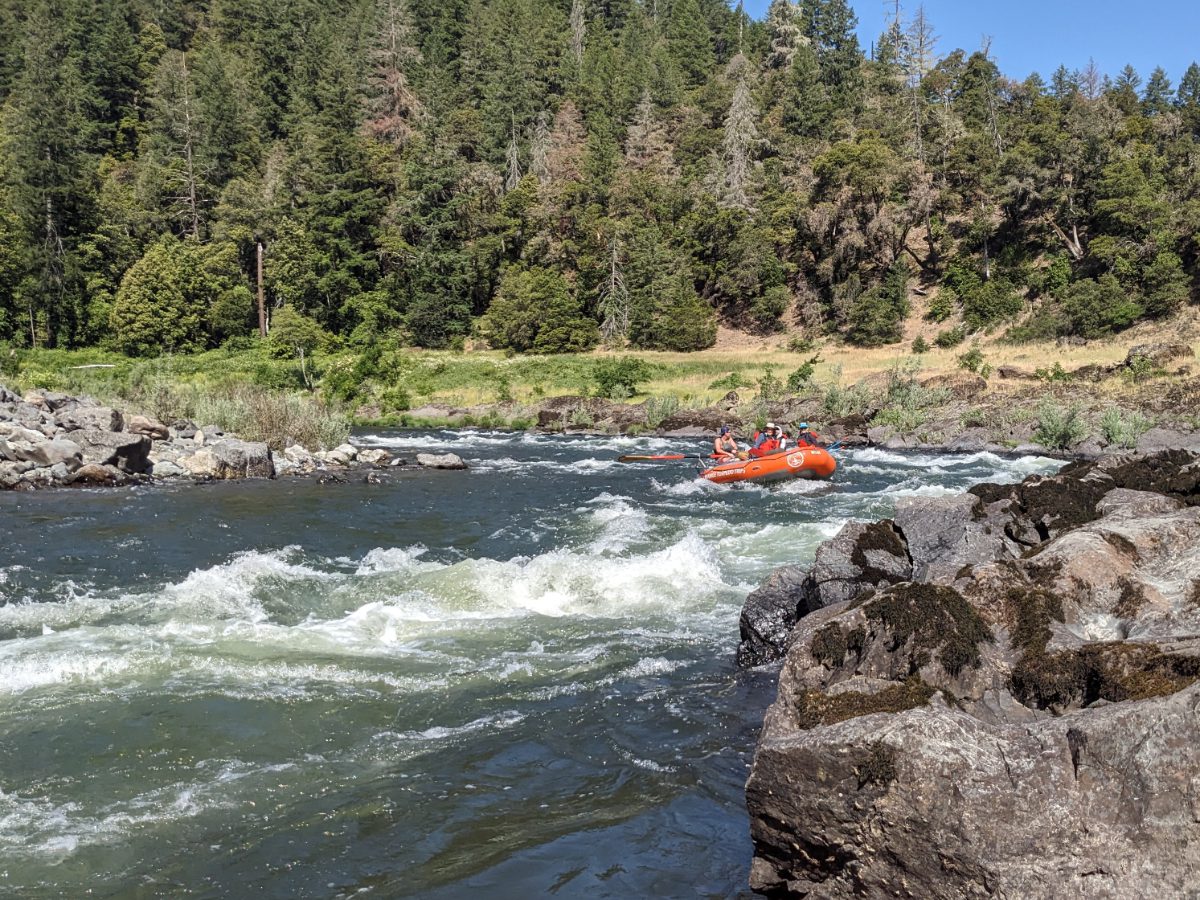
The river changed its personality almost immediately — narrower, the color dropping from blue to steel gray, the current picking up an urgency it hadn’t had early in the morning. We’d entered Mule Creek Canyon. Billy announced our arrival like a train conductor calling the next stop, working the oars to keep us off the canyon walls. At one point we ran straight for the south face and I was certain we’d hit — and then we simply didn’t, Billy easing us clear with what looked like no effort at all.
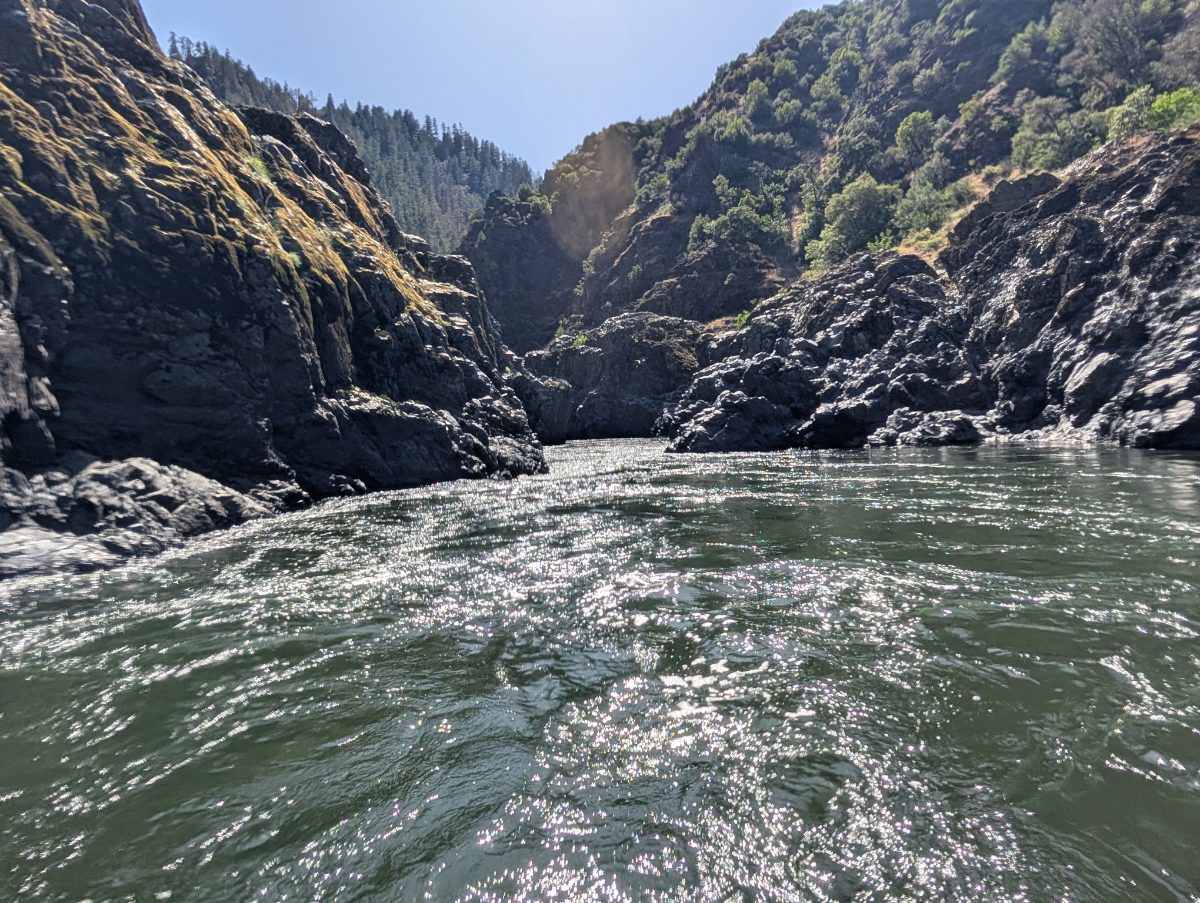
Next came the Coffee Pot, which I privately decided should be called the butter churn. Billy held us in place, circling once, twice, three times, clearly waiting on some signal in the water only he could read. Then we were through, and Blossom Bar was next — the rapid the women on the shore had insisted I shouldn’t miss. It looked less like a single rapid and more like a garden of boulders planted in the middle of the river, with exactly one correct way through and no room for a second guess. Billy made it look almost lazy. We came out the other side grinning like teenagers who got away with something.
Not far downstream, my favorite rapid of the whole trip, the Devil’s Staircase, went by almost too fast to register, a series of aqua-blue chevrons folding into jade-gray steps highlit by bright white froth. If I close my eyes, this part of the river lives in me as I sit here writing this piece, the colors, the cool water, warm air, the entire experience compressed into this single moment and memory.
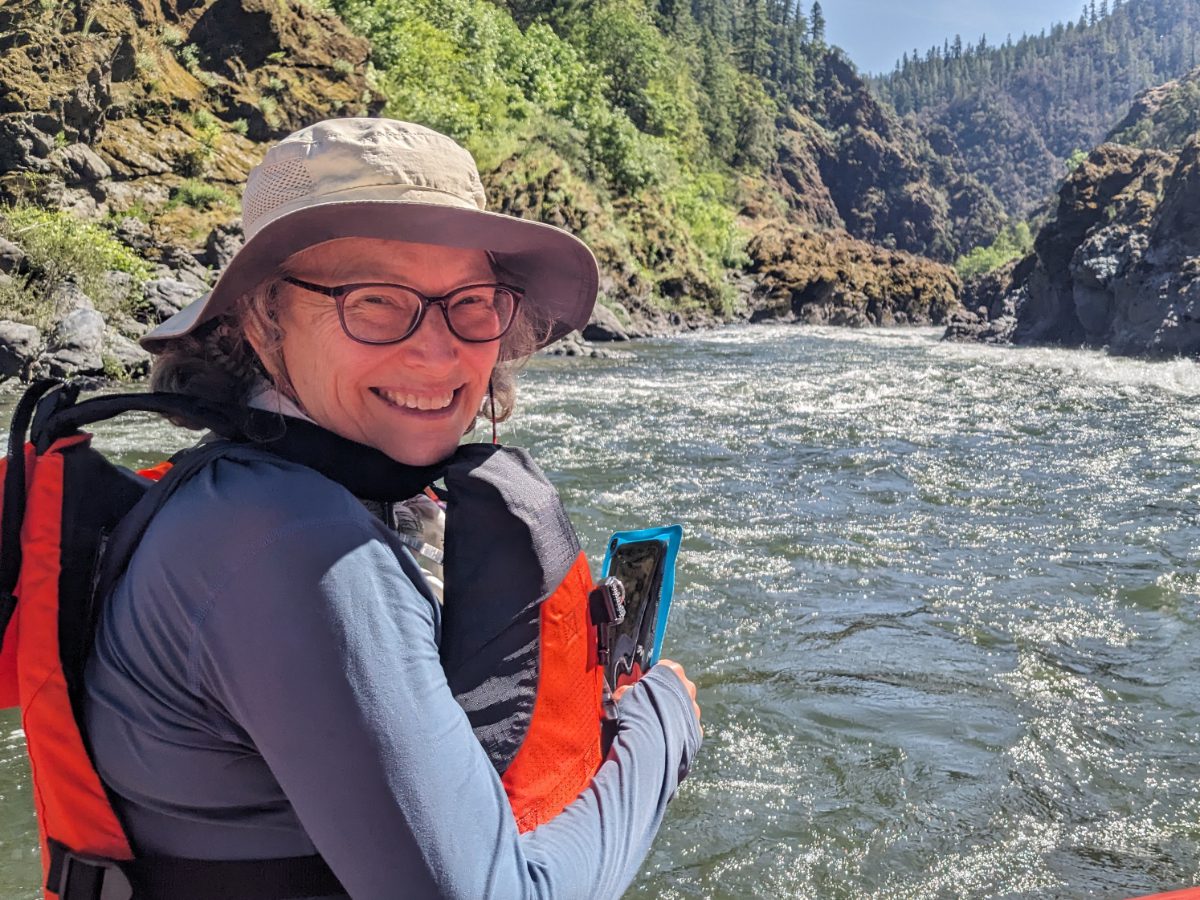
My phone had overheated and quit working by then, a stark reminder of how hot the day actually was. My phone was safely encased in a waterproof plastic pouch and, while protected from the water, overheated like an orchid in an unshaded greenhouse. I don’t think I would have fared much better on the open slopes of the trail high above.
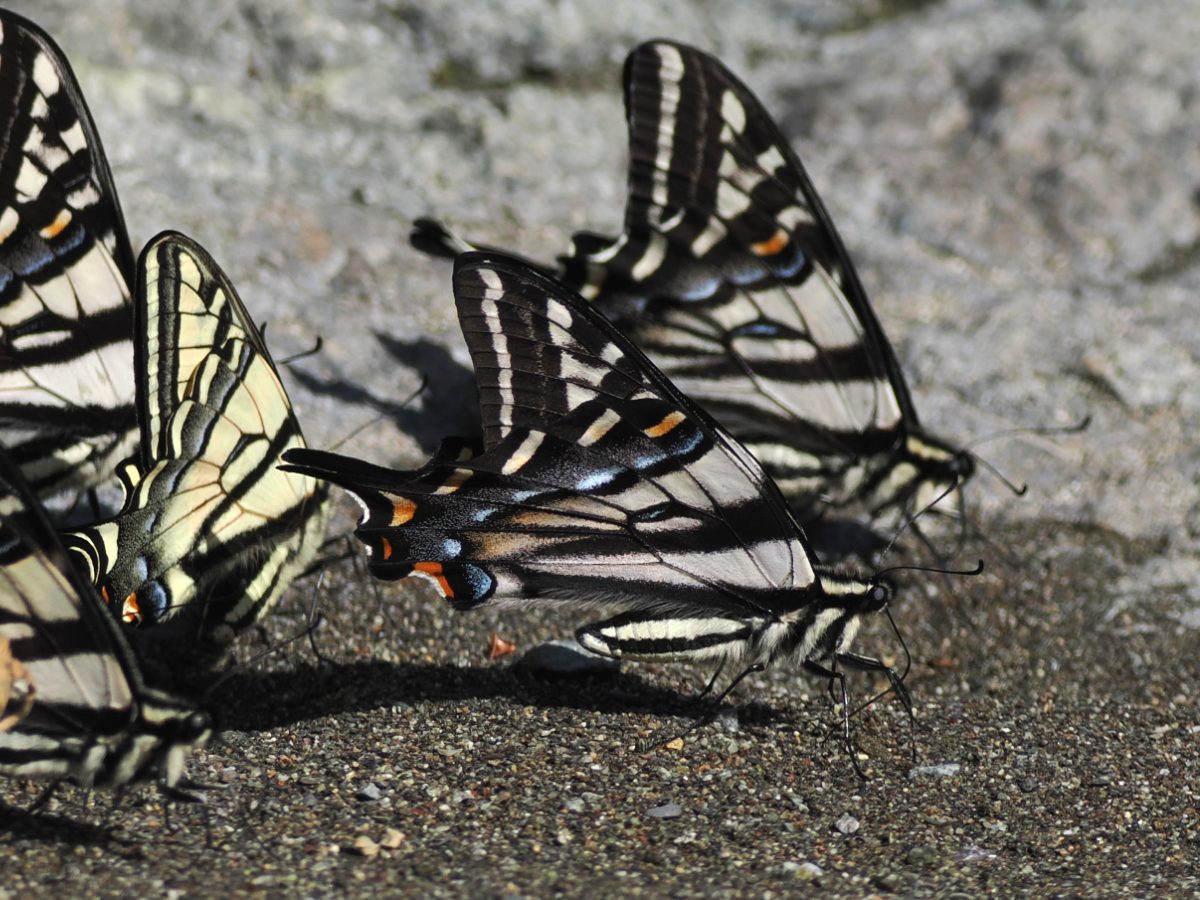
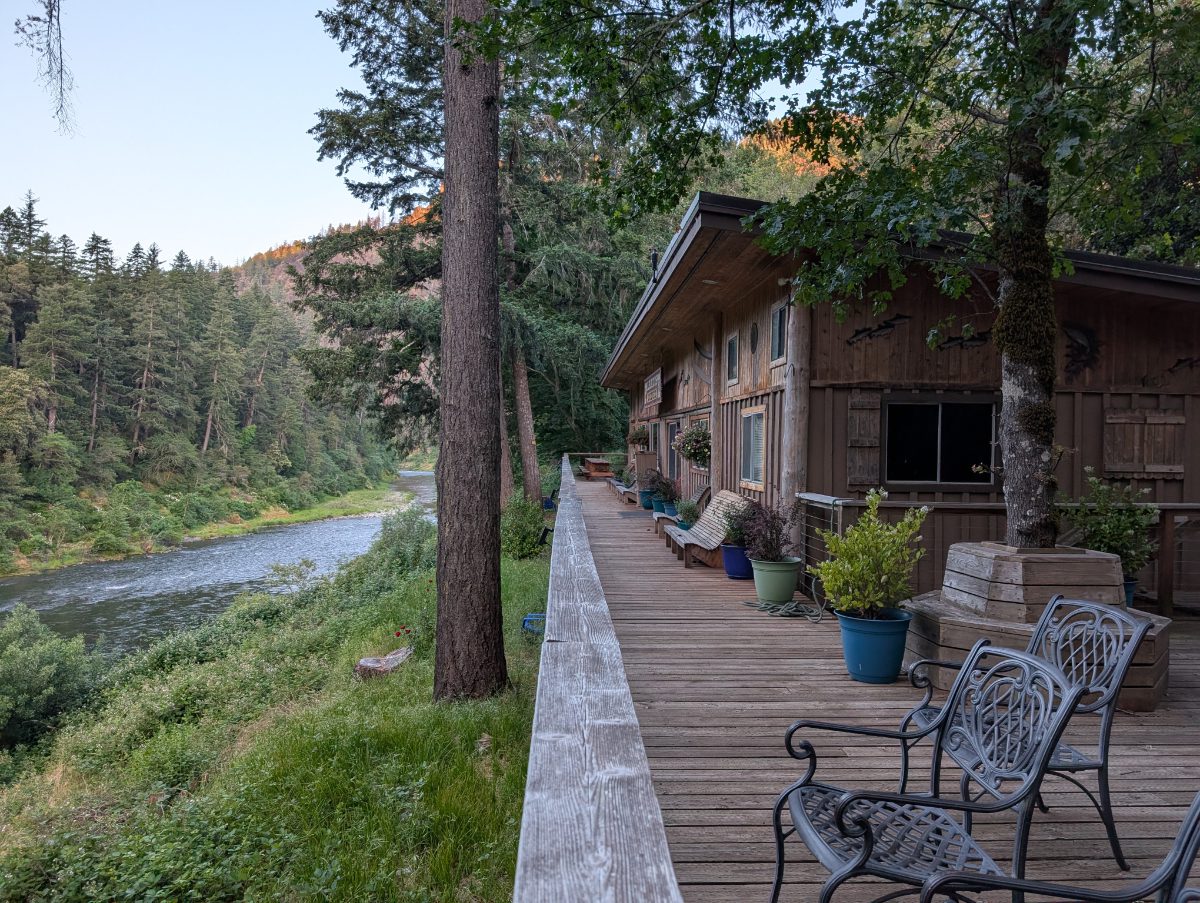
We pulled into Paradise Lodge in the late afternoon, greeted by a host of perfect swallowtail butterflies sipping minerals from the sandy shore. The lodge itself perched above the river with views of the forested south wall. It was quiet compared to the family hustle and bustle of Black Bar Lodge. I missed Dannie’s lemonade and homemade cookies. And no KC to spray off my sandy shoes.
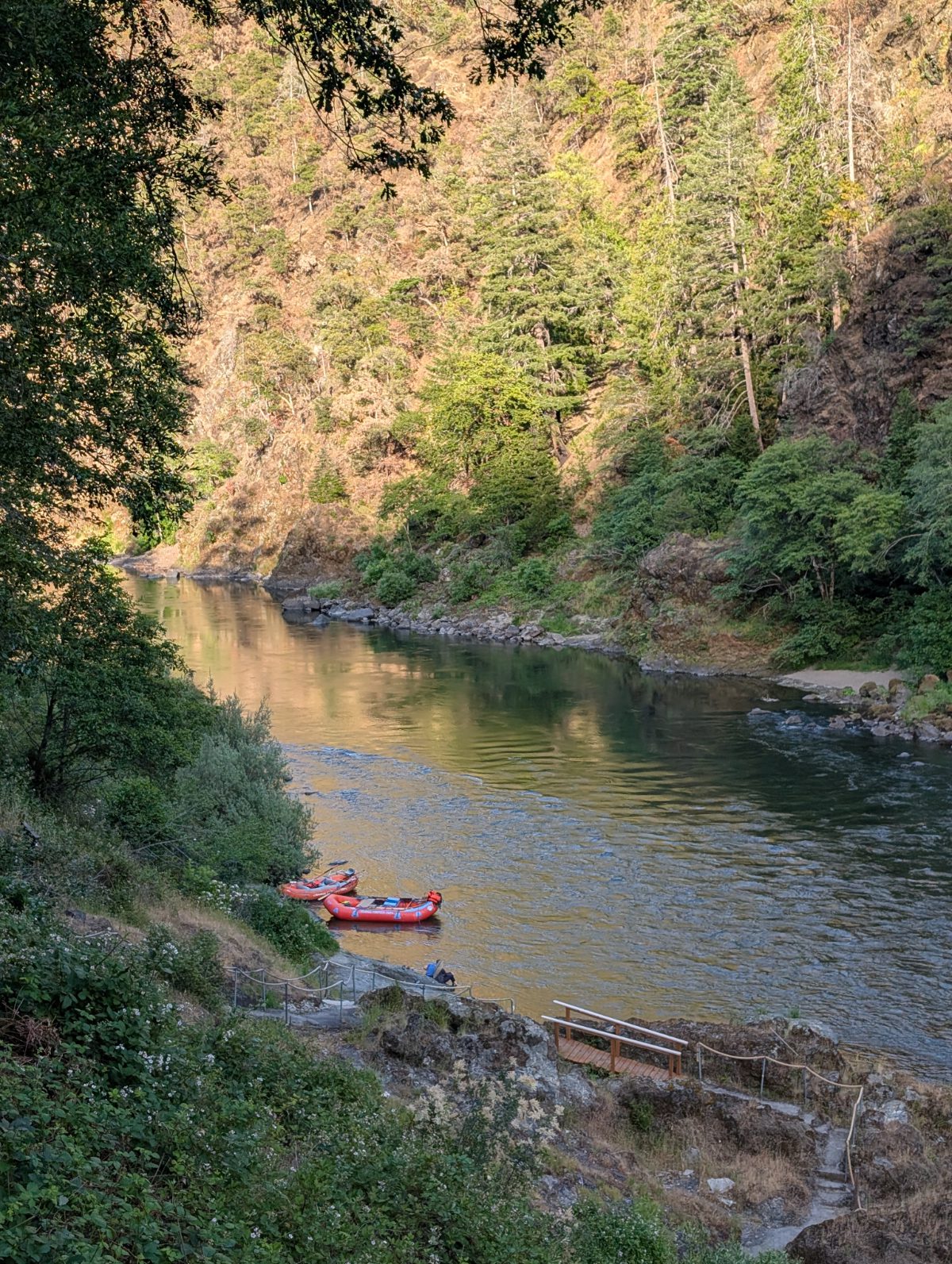
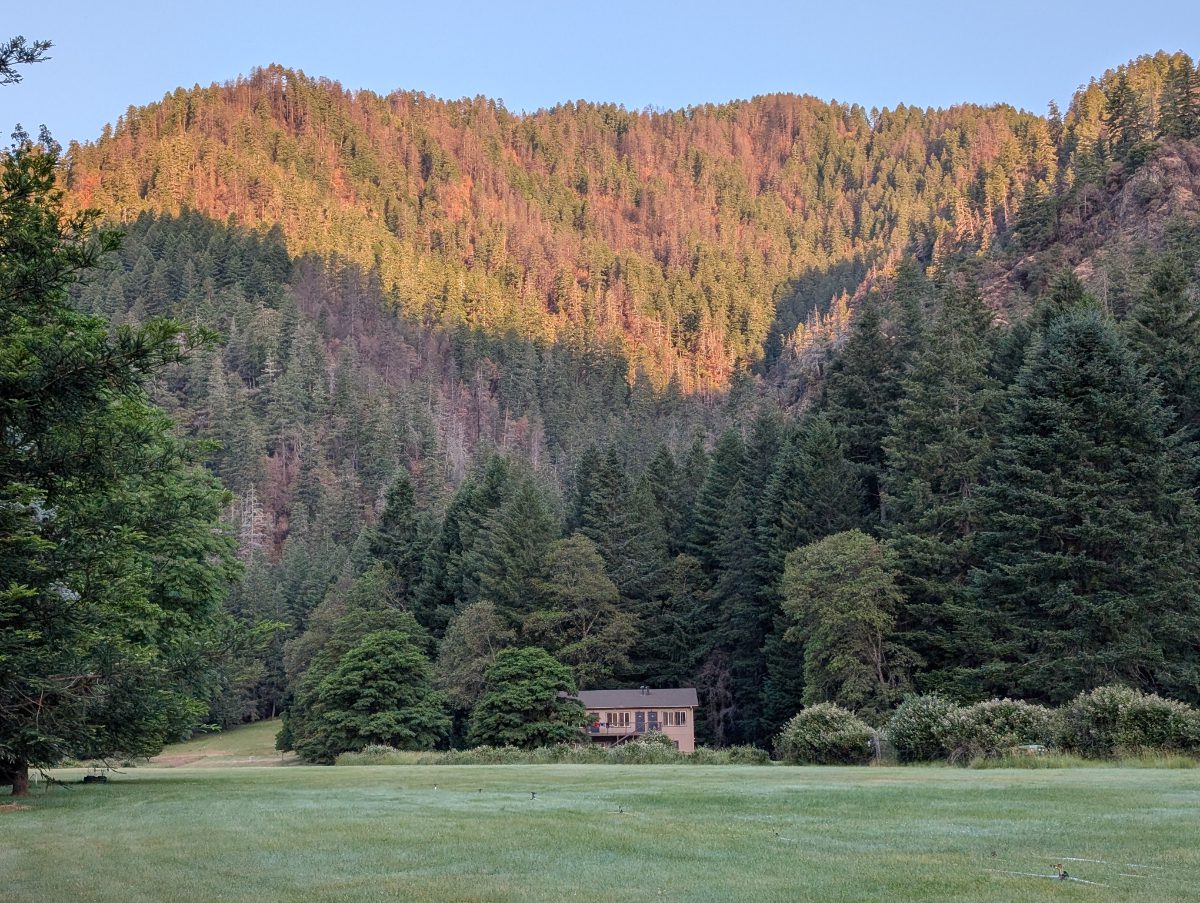
But Billy soon had us settled into our ample room in a newer part of the property, a two story building built back from the river with rooms upstairs and down, a wide porch for all below where we sat and drank beer while resting in Adirondack chairs.
That night, at a family-style dinner of chicken, brisket, and a stunningly fresh salad, I heard about the glorious views at Inspiration Point and felt slightly deflated, disappointed that I had let myself down by choosing not to hike. But I also learned something useful: there’s a road to the Ranch. We could visit it another day, in cooler weather, and hike to Inspiration Point from there. But it wouldn’t be until the following day that I fully grasped why my decision had been the right one.
Day Three: a Bear, Wildflowers, and an Otter That Wasn’t
Paradise Lodge had its own quiet drama that morning. As I headed out on an early morning walk I noticed our container of lunch silverware scattered across a trail and what looked like a pile of scat on the back porch. Come to find out, a bear had gotten into some dishes left over from the night before at the outdoor sink. I’m a little sorry that I missed it. A bear was high on my lists of critters I hoped to photograph.
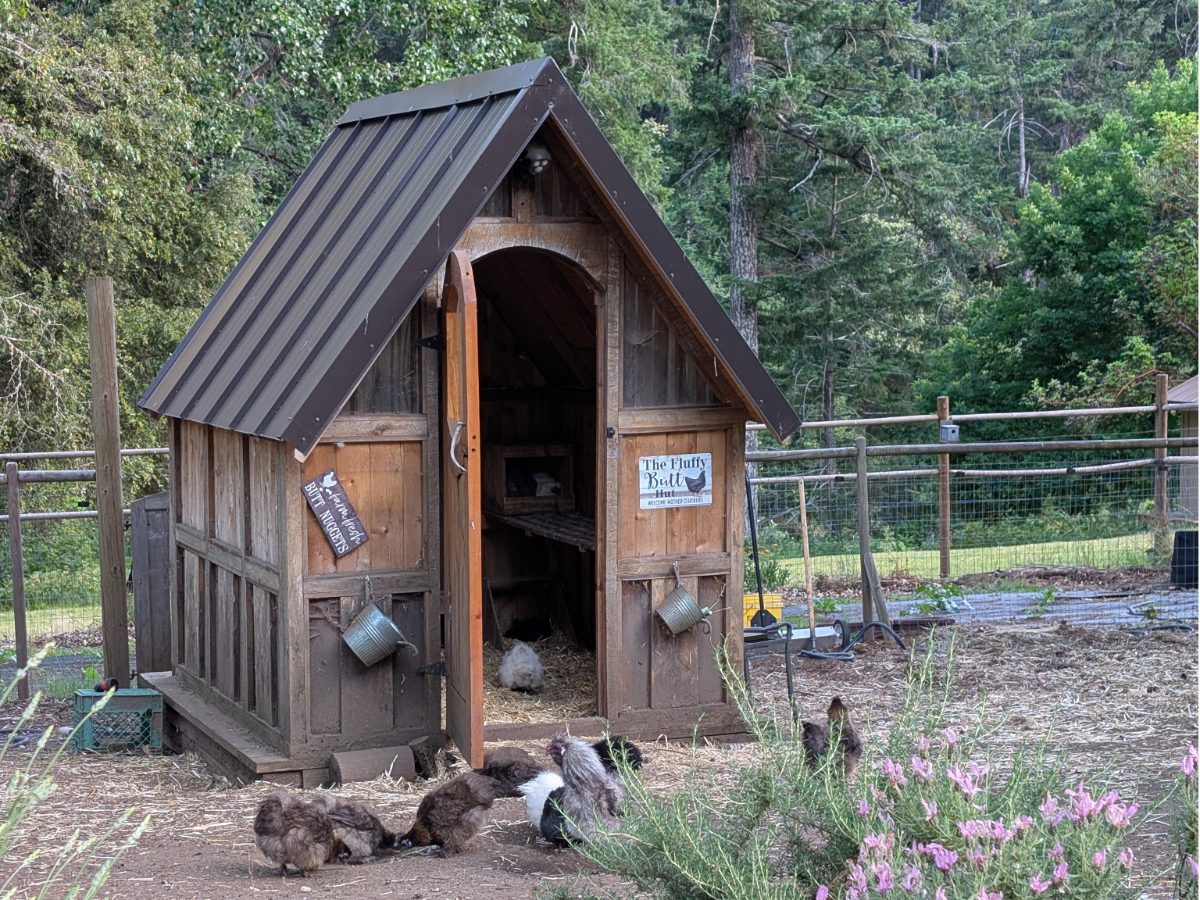
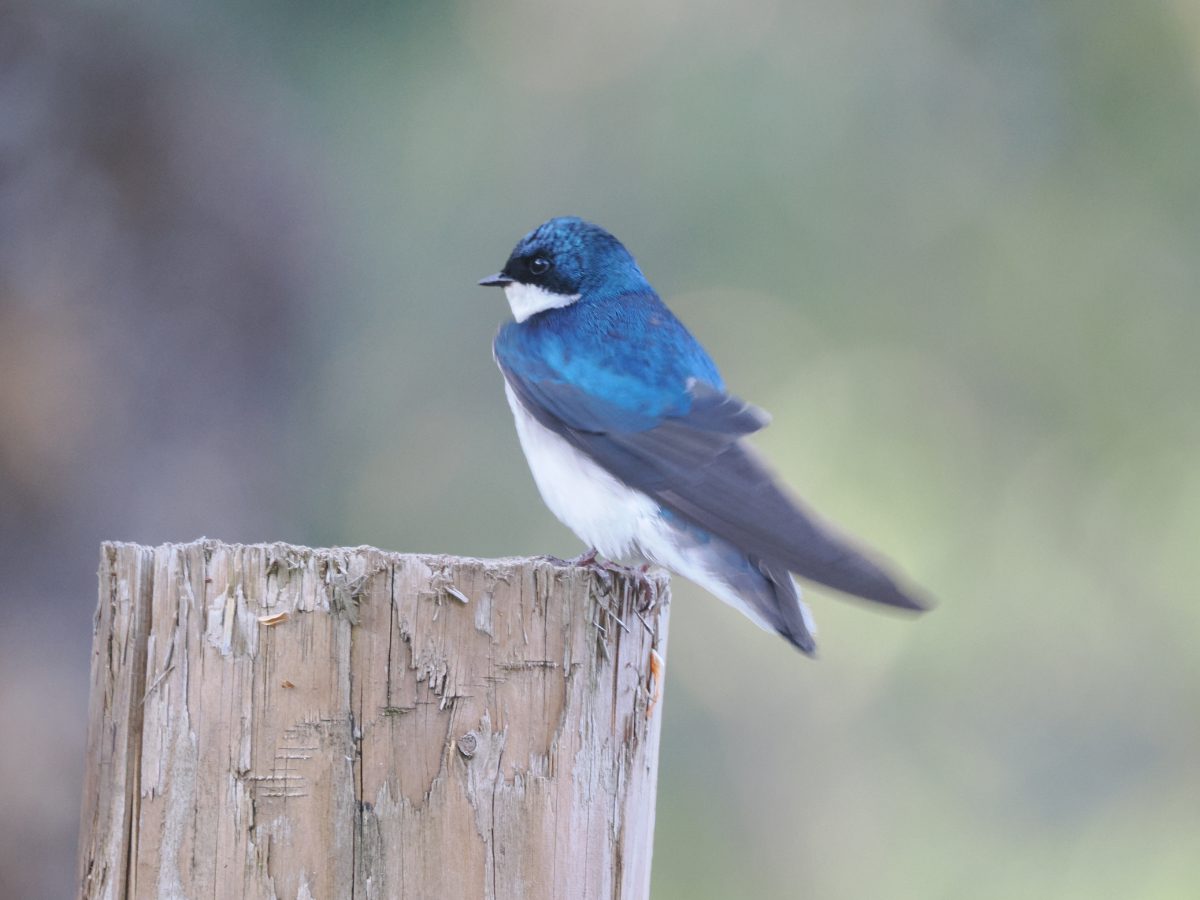
I toured the grounds, saying goodmorning to the well-coifed chickens at the coop, photographing a lone tree swallow, and enjoying the outdoor museum with its rusty farm equipment, old wooden boats, and a small museum’s worth of paraphernalia under a cedar shingle roof. But coffee called and I headed indoors to find a fresh pot waiting for me.
A full set of Zane Grey novels on a shelf called to me so I wandered over to take a look. Mike was sitting nearby and I asked him about the books. He told me that Zane Grey had visited the Rogue River long ago, fell in love, bought land and built a cabin. We’d actually floated by yesterday, between hiking and lunch somewhere, and missed it. This story led to another, and soon all the guides were sitting around, adding their two cents to Mike’s tales. The first night, Grayson noted that Billy and Mike often went at each other like the old men Muppets, Statler and Waldorf. He wasn’t wrong. The two had a long history together and it was easy to tell that both liked being in charge. But they also worked well together, like a well-oiled machine with a single tooth missing from the cog.
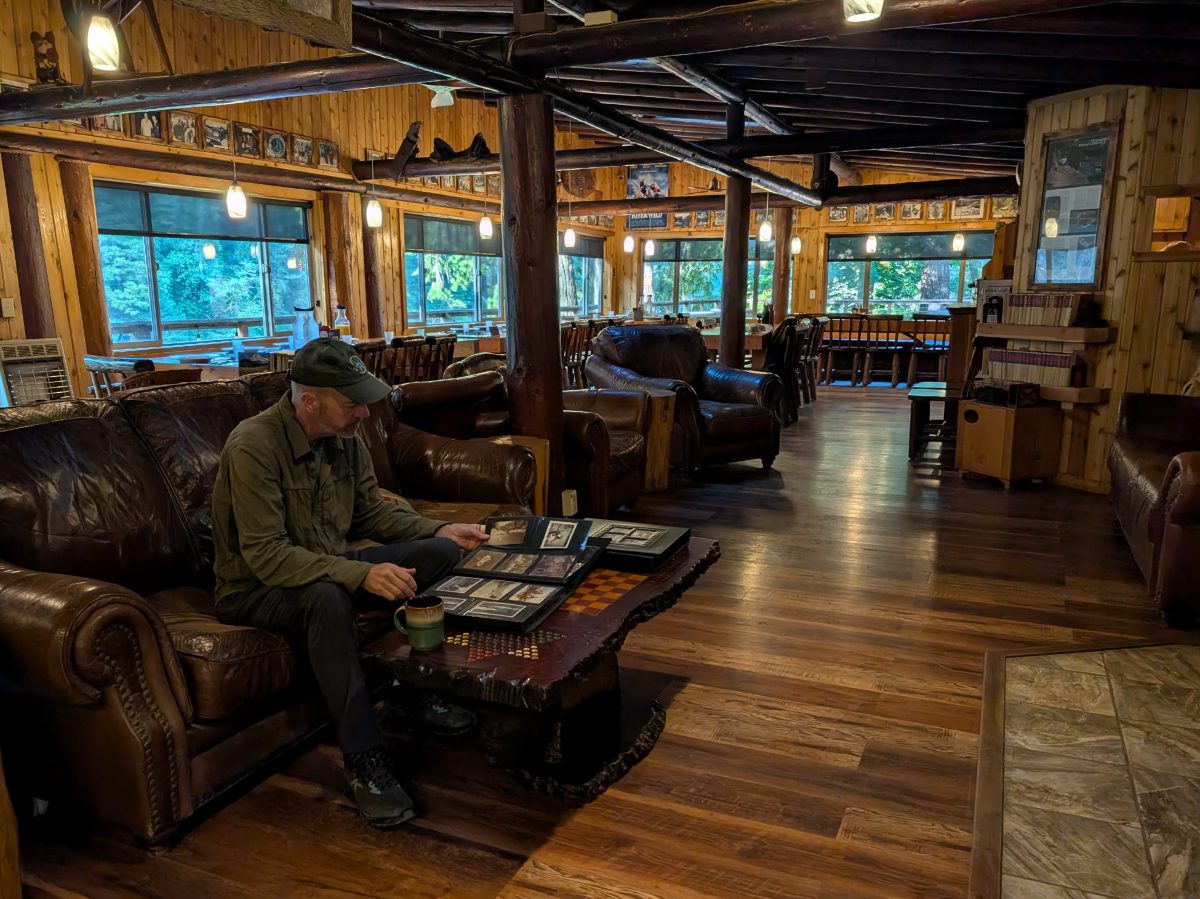
Then I got brave and asked a question I knew the guides would hate but that everyone on our trip had to be thinking. How much is a good tip? The tourism consultant in me couldn’t resist; it’s a question that haunts travelers and guides alike. They fought it like fish on a hook for a while, four perspectives circling without quite landing, before settling on a partial consensus: companies, including their own, need to do a better job helping guests understand what tipping on a raft trip actually looks like.
On the right amount, opinions ranged more widely, anywhere from 10 to 20 percent of the total trip cost. They agreed that guests should tip one guide for the whole trip, who would then split it equitably with the rest of the team. And they agreed, without hesitation, that some people simply can’t afford to tip much, especially families giving their kids a once-in-a-lifetime trip like this one. Better the family enjoy themselves, they said, than scrape together a tip they can’t really spare. It’s anecdotal, but it’s the best tipping advice I’ve heard in a long time: tip generously if you can and you enjoyed yourself, and don’t let tipping keep you from taking the trip in the first place.
That was a heavy conversation before breakfast but, while eating cornflake crusted French toast, eggs, bacon, sausage, and more, several people came over to get details. Especially the how much followed by the when – it was the last day of the trip. Luckily, Billy explained the day and told everyone to make sure that they took time to say goodbye after we arrived at Foster Bar. While he never said, come by and tip us, the implication was there. A heartfelt thank you and goodbye should be had before getting in the van to return to Orange Torpedo Headquarters.
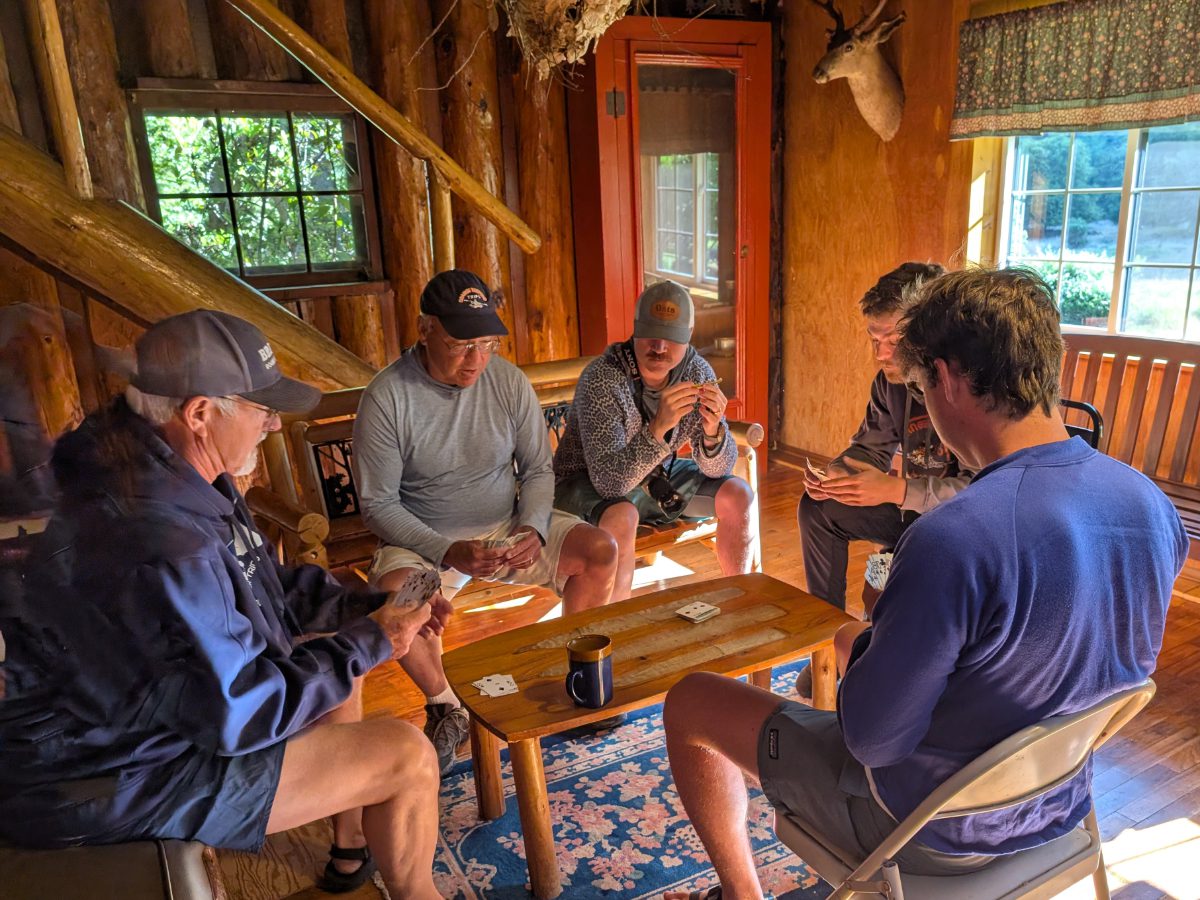
It was 9 am and Scott and I were ready to hit the trail, probably the earliest we managed the entire trip. It was strange for birdwatchers like ourselves, used to 5 am start times. It felt decadent waiting so long to start our day, with a full breakfast in our bellies.
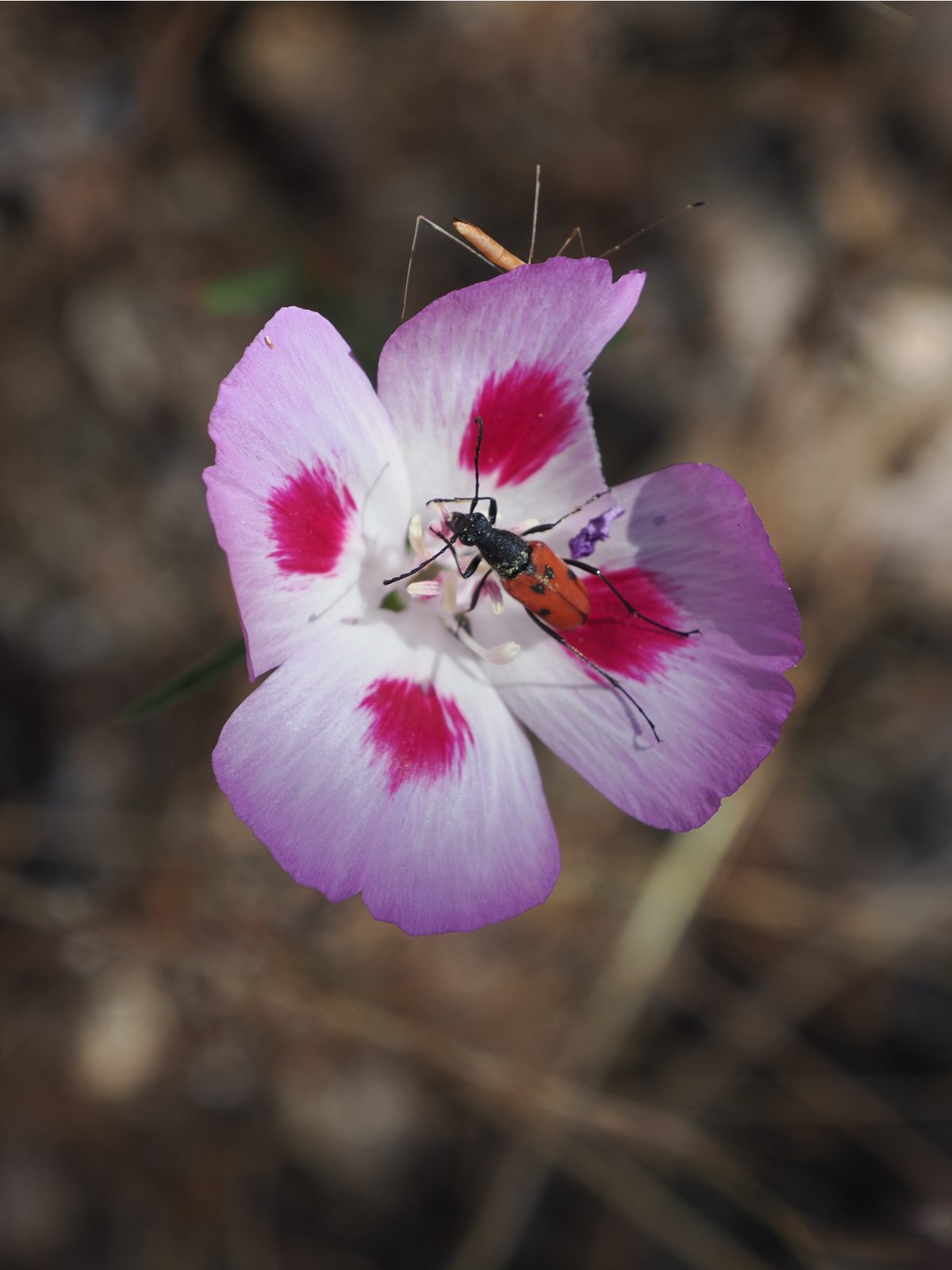
The hike out from Paradise Lodge turned out to be my favorite of the whole trip. We started early, before the heat built, and had the trail almost entirely to ourselves. It wound through old burn scars from the 2025 wildfires — blackened, hollowed trunks, one stump that looked like it had exploded outward from the heat — and then, without warning, opened into fields of confetti like tarweed in full bloom, hundreds of bright yellow flowers that close up once the day gets hot. We were lucky to catch them in the morning. Shaggy fleabane, Ookow, Cluster Lilies, and a Clarkia so perfectly bubble-gum pink I stopped to photograph it twice, all crowded the trail as we climbed.
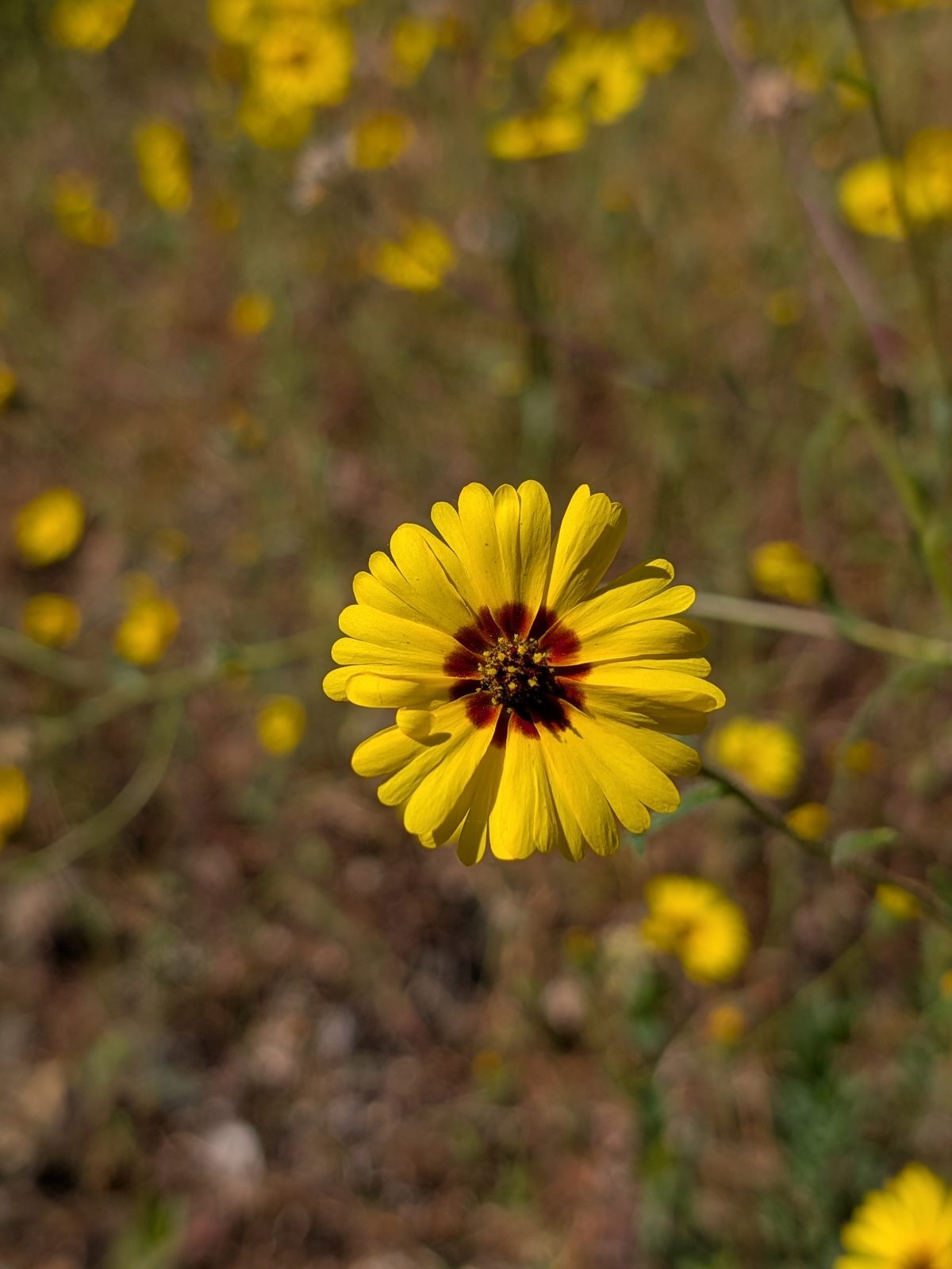
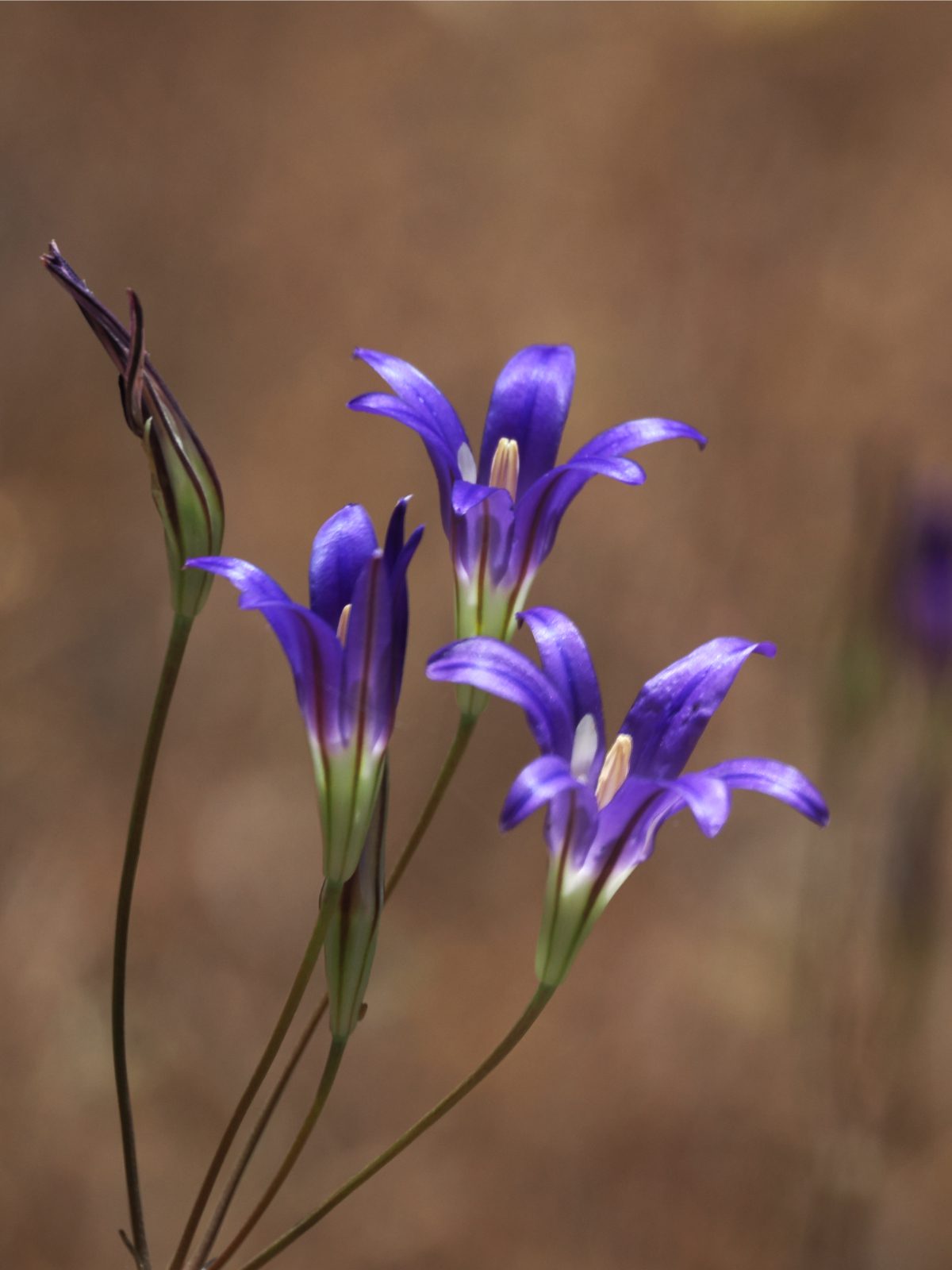
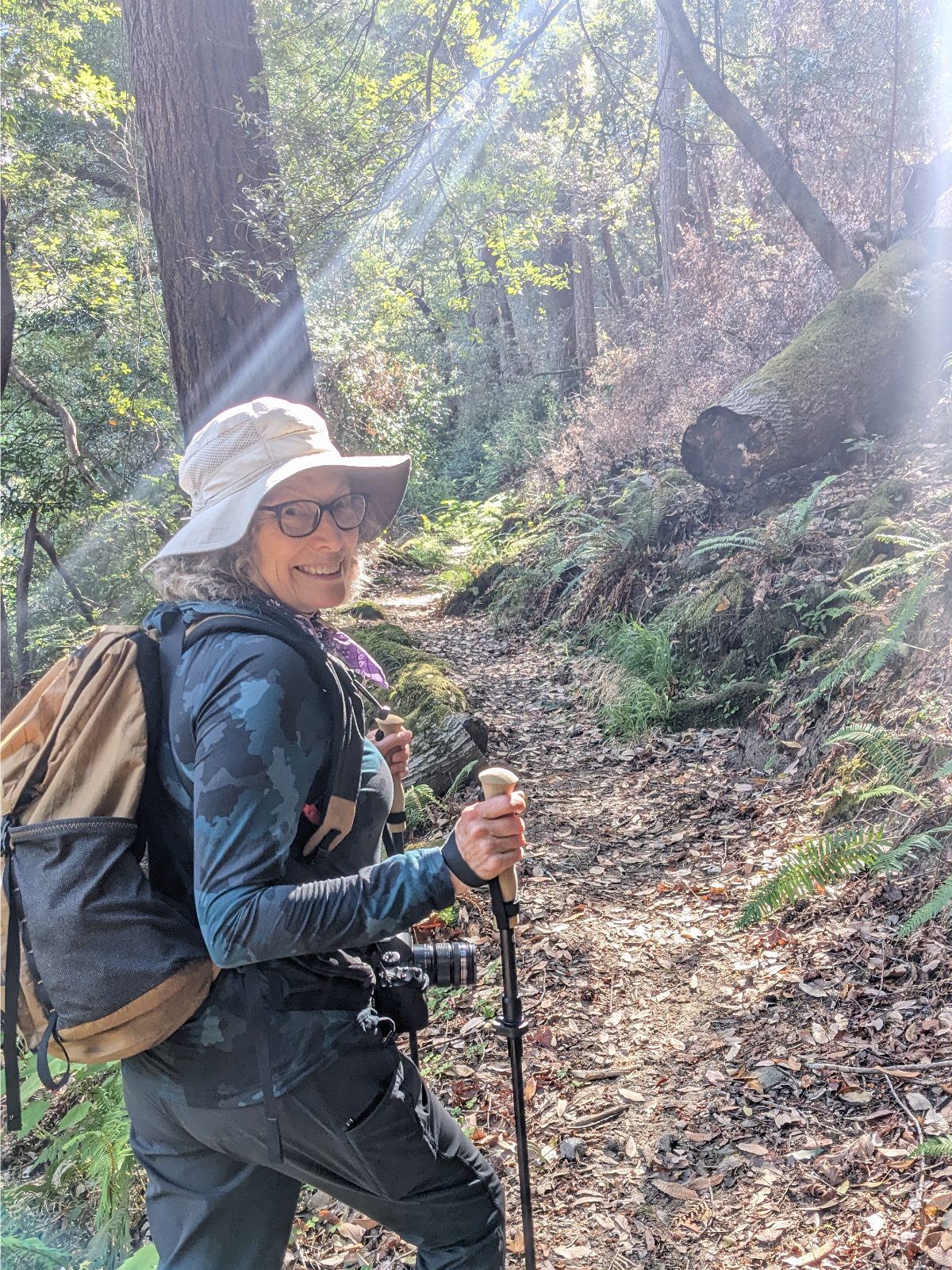
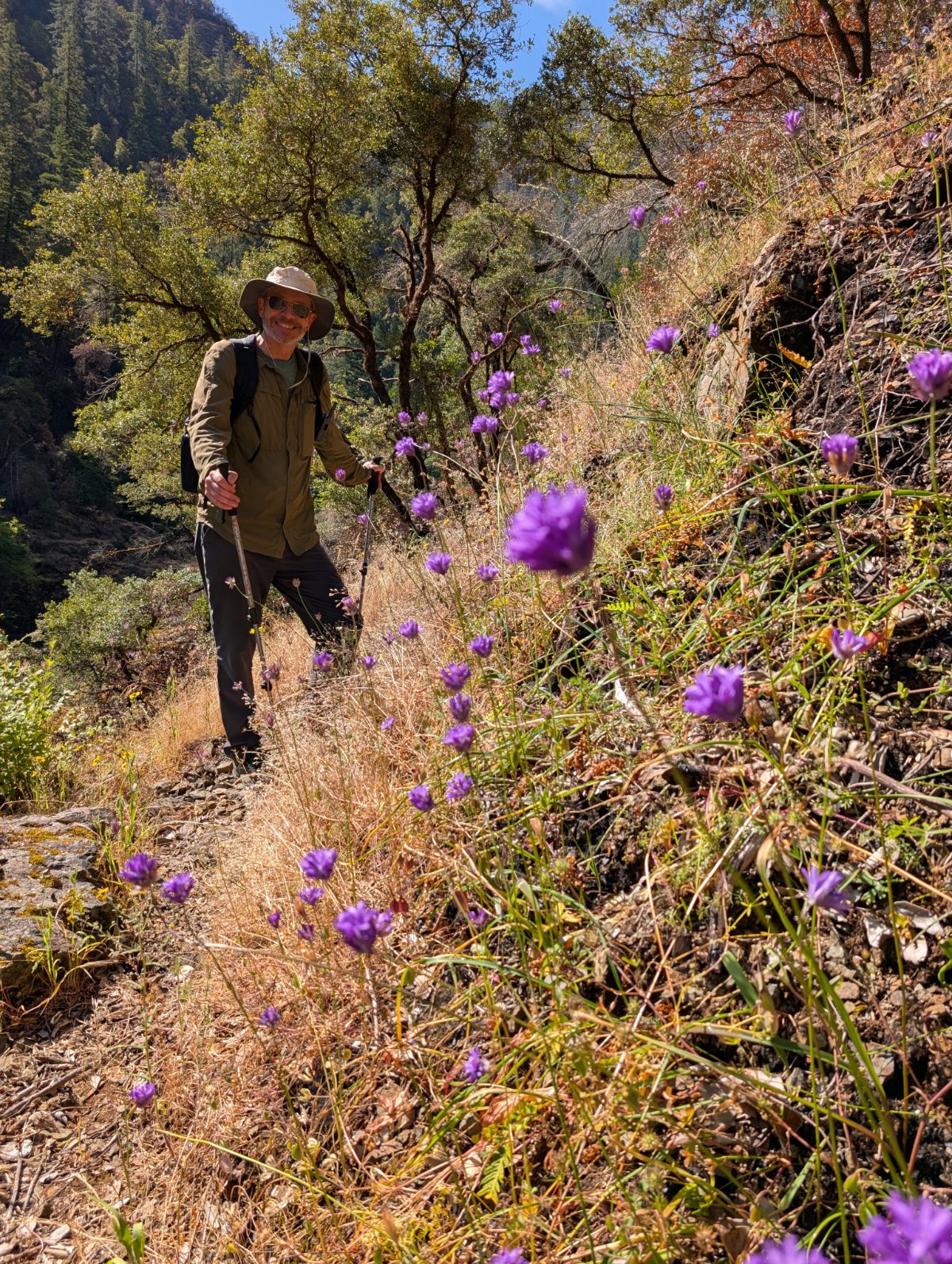
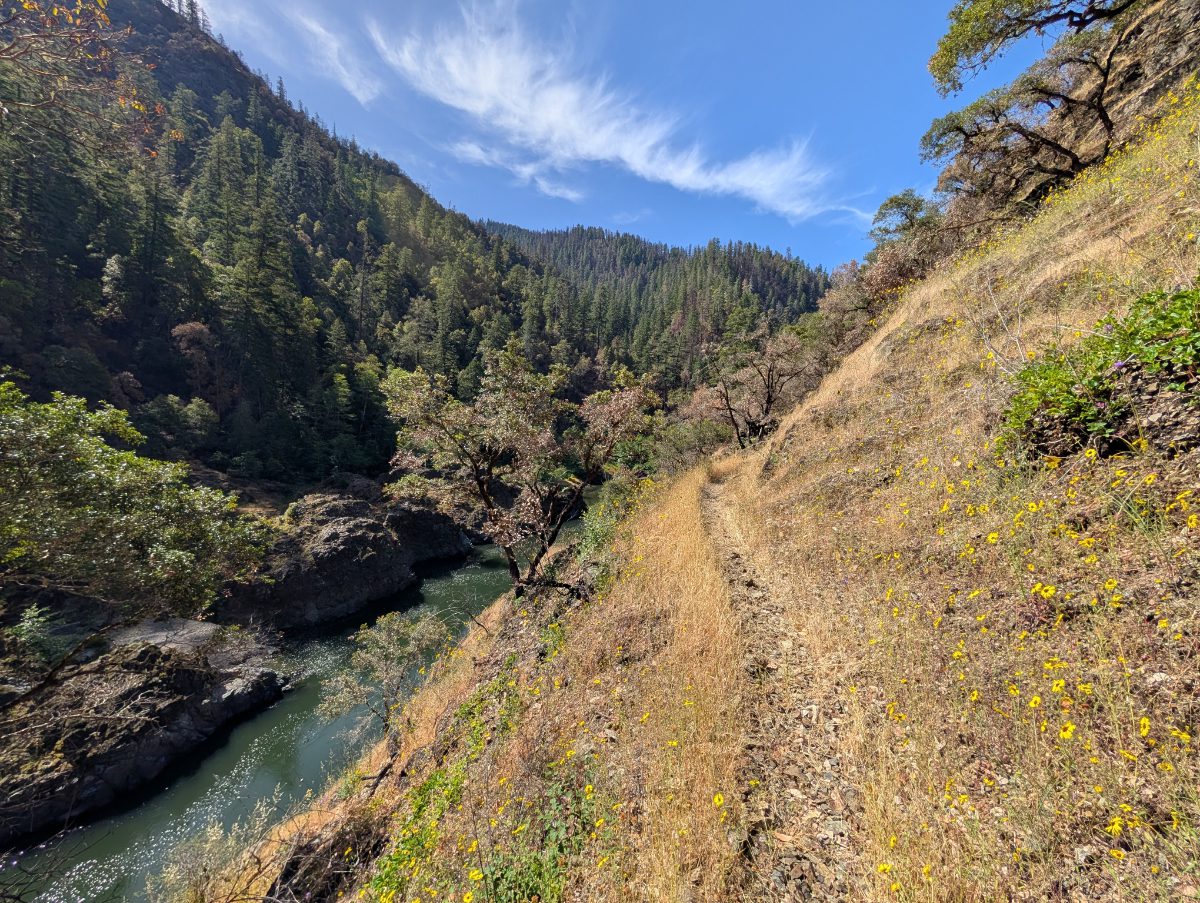
I also think we saw some of the prettiest views along this stretch. Clouds echoed mountain profiles in an otherwise clear blue sky, the river turned a deep army green at points, reflecting the forested slopes around. We hiked and each footstep felt special, whether through the leaf littered trails of the forest or the gravelly stretches on the cliff’s edge. The only outlier was the occasional jet boat coming up from Gold Beach, tourists lined up in rows as the massive engines pushed water aside, a subtle hum becoming an aggressive band of hornets as the boats approached. This part of the Rogue is not wild and scenic. It is, however, very beautiful, no matter how you choose to approach it.
We hiked well but were slow enough that Grayson eventually reached out on the radio to let us know that Mike was hiking up the trail partway to make sure we hadn’t missed the cutoff to the river. By this point, I had warned Scott that my leg was acting up. I was stumbling a little on the rocky path, tripping occasionally, always with my right foot. It wasn’t like wearing an extra heavy hiking boot but I could tell that if I hiked too much further, it wouldn’t be pretty. This is when I realized that my choice the day before to not hike made it possible for me to hike today.
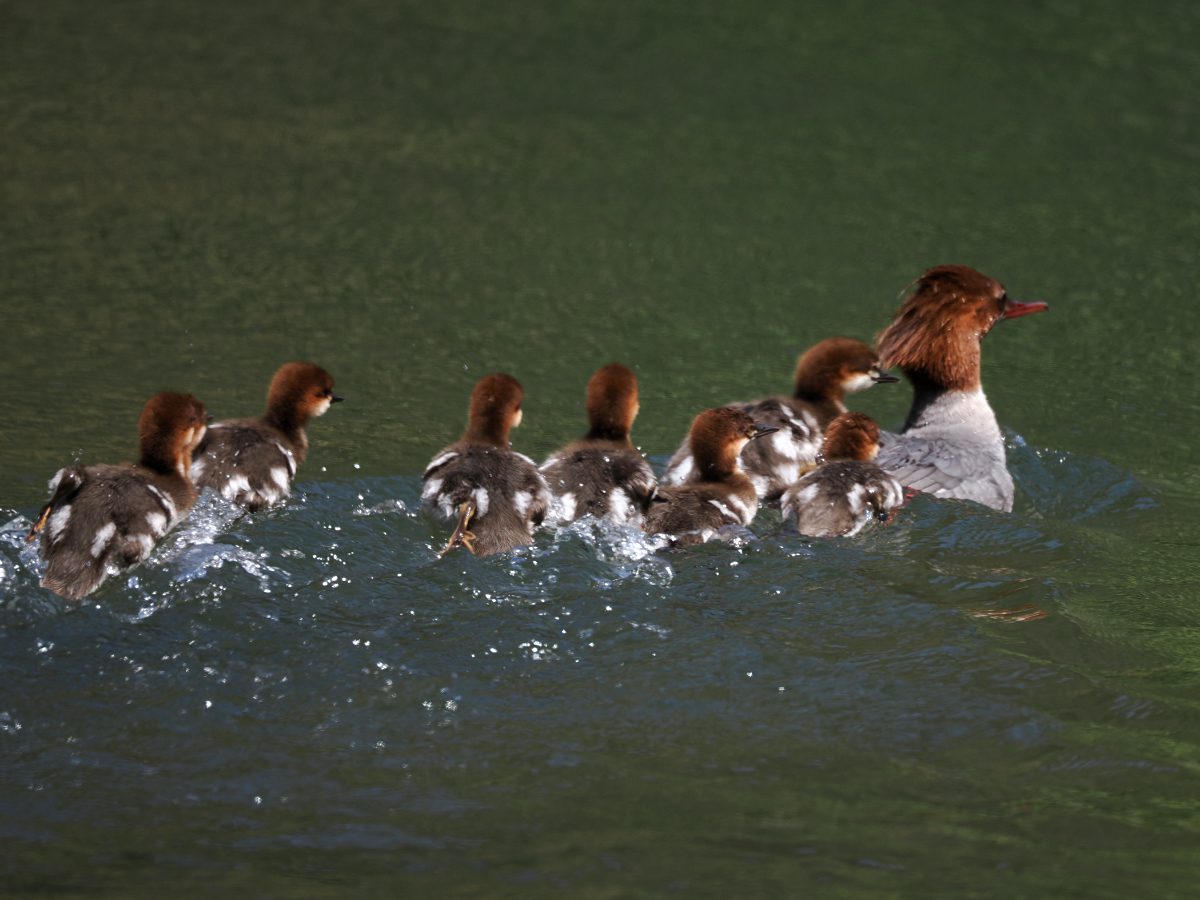
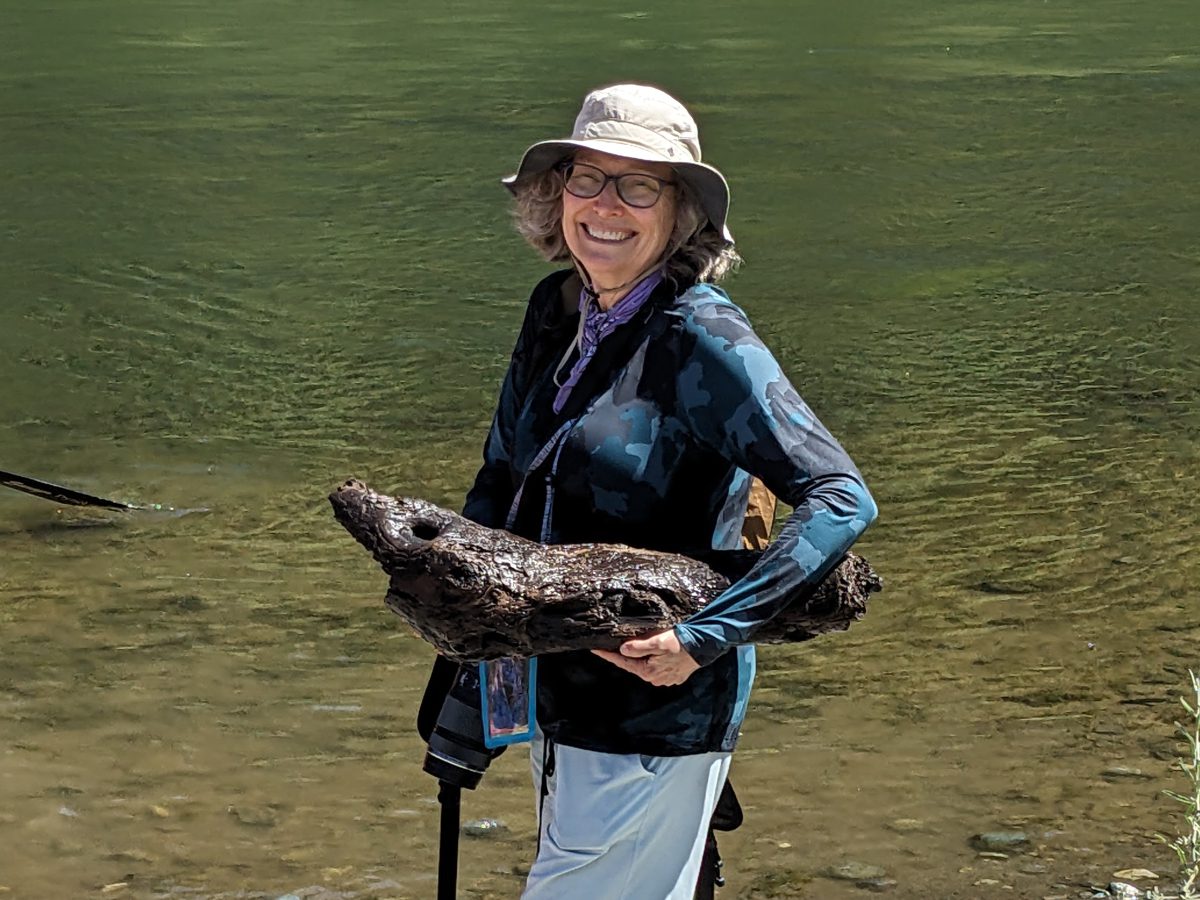
Lunchtime ended up being a great time to spot wildlife, usually birds on the water, like a mother Merganser and her ducklings. Today, someone pointed out what looked like an otter floating past, and I nearly fell over myself scrambling for my camera. By the time I got the lens in focus and was ready to snap its picture, it resolved into… a log. I’m fairly certain Billy knew it the entire time.
We finished the day on the raft with Grayson, easy Class I and Class II rapids the rest of the way to Foster Bar, the end of the trip. We had the runners with us as the final section of the Lower Rogue River Trail remains closed due to last year’s fire. They ran the entire trail up to this point. I had hiked half days. All of us were happy.
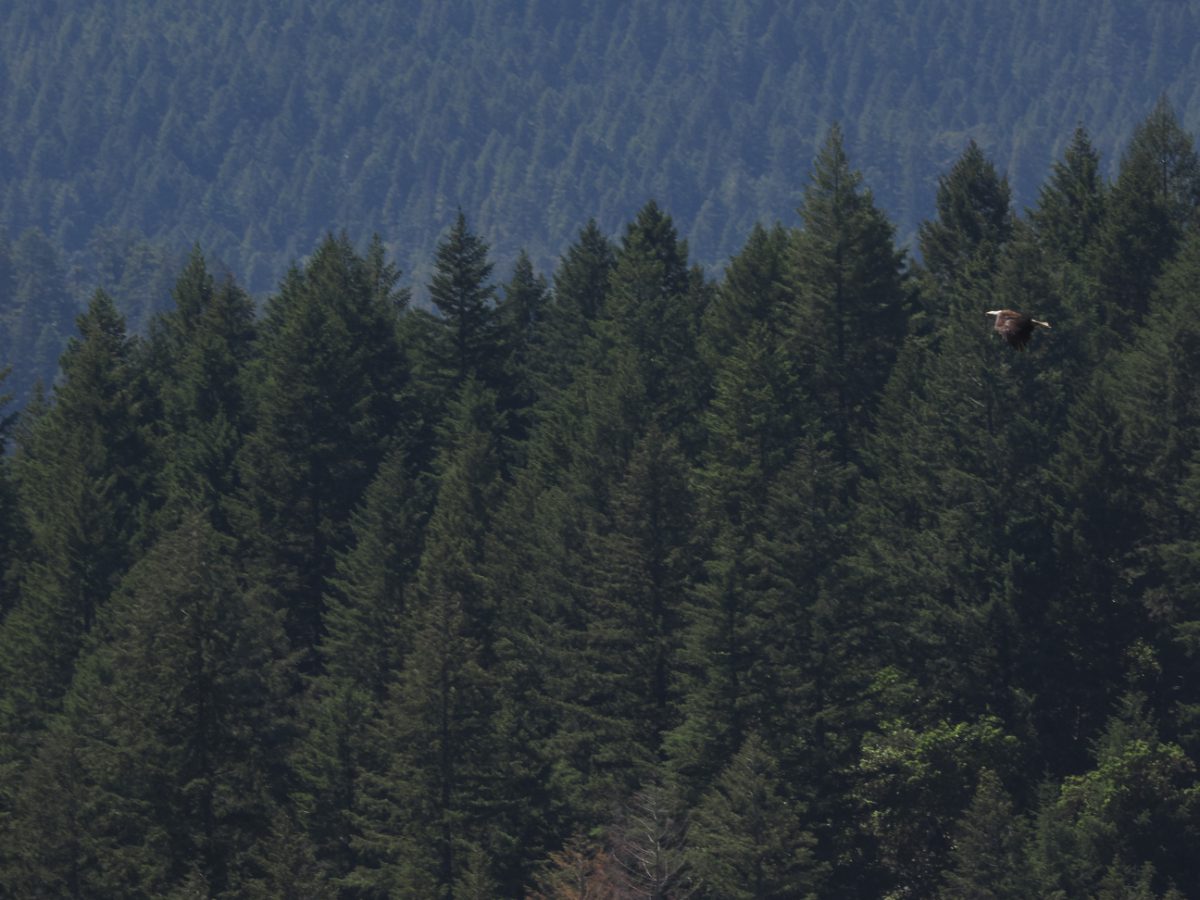
And low and behold, looking up into the sky, what do we see but a Bald Eagle. It flies immediately in front of us to a perch on a tree close by us and we drift underneath, looking high overhead, pondering the possibility of this being the same majestic bird we noted when we set off on the first day.
Just before we pulled in, Grayson said something I keep coming back to. He thanked us, not for being easy customers, but simply for being on the river. Without people like us showing up to float it, he said, there’d be less reason for him to be out here doing the work he loves. It struck me as a small, honest piece of regenerative tourism in action: the reminder that a guide’s ability to keep doing the work that gives his life meaning depends, in part, on travelers choosing to show up for it.
As we pulled up to the boat ramp, Scott pointed at a log sitting at the edge of the water. My otter, apparently, had beaten us there. It was the perfect end to a beautiful hike and raft trip.
What I’d Tell Another Traveler
By the time we reached Foster Bar, I’d settled into a rhythm: hike as early as possible, before the heat builds; take a cold plunge whenever the guides offer one; and treat the raft not as a fallback for failure, but as a fully legitimate, equally good way to experience the same river.
That’s really the heart of what I want other travelers — especially anyone managing a chronic illness, an injury, or just a true sense of their own limits — to take from this trip. A hike/raft itinerary isn’t a compromise. It’s a built-in permission to listen to your body in real time, rather than committing to a single plan miles before you know how the day will actually feel.
I didn’t hike every mile of the Rogue River Trail. I’m at peace with that. I rafted through Mule Creek Canyon and Blossom Bar instead, with a guide who’s spent forty years learning exactly how to read this water, and got a story, and a memory, I wouldn’t trade any of it for the view from Inspiration Point.